2,4,5-Trichlorobenzenesulfonyl Chloride is a chemical compound widely used in organic synthesis reactions. It serves as a key reagent in various laboratory processes, particularly in the activation of sulfonation reactions. This compound is essential for the synthesis of complex organic molecules, including heterocyclic and aromatic compounds. Its role as a sulfonating agent makes it a critical component in the development of pharmaceuticals and industrial chemicals. Due to its high reactivity and chemical stability, it is a preferred choice for researchers aiming to produce specific molecular structures.
The compound’s stability and reactivity make it a favored reagent in synthetic chemistry. It is capable of participating in substitution and nucleophilic reactions, which are fundamental in organic synthesis. Its solid form allows for easy handling and storage, making it a practical choice for laboratory use. The compound’s ability to form stable intermediates during reactions contributes to its effectiveness in various synthetic pathways. These properties ensure that it remains a valuable tool in both academic and industrial research settings.
In Indonesian laboratories, 2,4,5-Trichlorobenzenesulfonyl Chloride is commonly used in organic chemistry research. It plays a significant role in the development of new drugs, industrial chemicals, and synthetic compounds. Its application is particularly prevalent in pharmaceutical and chemical industries, where high-quality reagents are essential for successful experimentation. Due to its reliability and effectiveness, it is a popular choice among researchers and chemists in Indonesia.
Related TCI products
- TCI T2035 51527-73-2 2,4,6-Trichlorobenzenesulfonyl Chloride
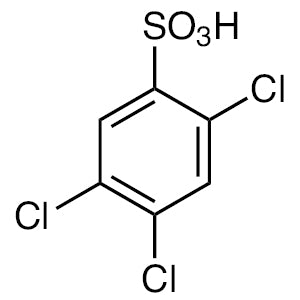
- TCI B0248 6378-25-2 2,4,5-Trichlorobenzenesulfonic Acid
- TCI T0628 62625-17-6 Potassium 2,4,5-Trichlorobenzenesulfonate
- TCI D4222 6579-54-0 2,6-Dichlorobenzenesulfonyl Chloride
- TCI D4037 16271-33-3 2,4-Dichlorobenzenesulfonyl Chloride
- TCI D3568 82417-45-6 2,3-Dichlorobenzenesulfonyl Chloride
- Synthesis of heterocyclic compounds for the development of new pharmaceuticals due to its role in sulfonation reactions.
- Activation of sulfonation processes in the creation of complex aromatic compounds for industrial applications.
- Preparation of industrial chemicals such as detergents and surfactants through its reactivity in substitution reactions.
- Research in organic chemistry for the production of synthetic materials and specialized chemical intermediates.
- Development of drug molecules through its utility in the functionalization of aromatic rings in medicinal chemistry.
| Brand | TCI |
|---|---|
| CAS number | 15945-07-0 |
| Molecular formula | — |
| Purity | — |
| Category | Chemistry > Building Blocks > Non-Heterocyclic Building Blocks |
| Pack sizes | Available in various quantities as per standard laboratory requirements |
| Physical form | Solid |
| Storage | Store in a cool, dry place away from moisture and direct sunlight |
This compound should be stored in a cool, dry environment to maintain its chemical stability. It is recommended to keep it in a sealed container to prevent exposure to moisture and air. Due to its reactivity, it should be handled in a well-ventilated area, ideally in a fume hood, to ensure safety. Avoid contact with incompatible materials such as strong bases or reducing agents. Proper personal protective equipment, including gloves and safety goggles, should be worn during handling. Regular inspection of storage conditions is advised to ensure long-term usability and safety in the laboratory.
—
Produk Terkait
-
2,4,6-TrichlorobenzenesulfonylChloride TCI T2035
Regular price From Rp 2.016.000,00Regular priceRp 1.409.100,00Sale price From Rp 2.016.000,00 -
2,4,5-TrichlorobenzenesulfonicAcid TCI B0248
Regular price From Rp 2.147.250,00Regular priceRp 1.501.500,00Sale price From Rp 2.147.250,00 -
Potassium2,4,5-Trichlorobenzenesulfonate TCI T0628
Regular price Rp 2.359.350,00Regular priceRp 1.649.550,00Sale price Rp 2.359.350,00 -
2,6-DichlorobenzenesulfonylChloride TCI D4222
Regular price From Rp 505.050,00Regular priceRp 352.800,00Sale price From Rp 505.050,00 -
2,4-DichlorobenzenesulfonylChloride TCI D4037
Regular price From Rp 1.035.300,00Regular priceRp 723.450,00Sale price From Rp 1.035.300,00 -
2,3-DichlorobenzenesulfonylChloride TCI D3568
Regular price Rp 1.298.850,00Regular priceRp 908.250,00Sale price Rp 1.298.850,00 -
3,5-DichlorobenzenesulfonylChloride TCI D3503
Regular price From Rp 1.273.650,00Regular priceRp 890.400,00Sale price From Rp 1.273.650,00 -
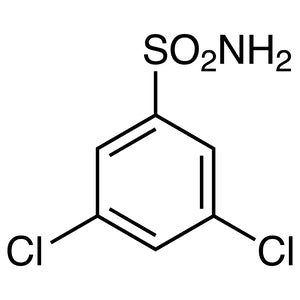
3,5-Dichlorobenzenesulfonamide TCI D3502
Regular price Rp 4.902.450,00Regular priceRp 3.444.000,00Sale price Rp 4.902.450,00