Potassium 2,4,5-Trichlorobenzenesulfonate (KTCBS) is a chemical compound widely used in organic reactions for the synthesis of complex molecules. As a key building block in chemical synthesis, it serves as an essential reagent for creating aromatic compounds with diverse applications in pharmaceuticals, materials science, and organic chemistry. Its role in the laboratory is critical for facilitating substitution and electrophilic reactions, making it a versatile tool for chemists working on advanced synthetic pathways.
The chemical properties of KTCBS make it a preferred choice for researchers. It exhibits good solubility in organic solvents such as ethylamine and dimethyl sulfoxide, enabling it to participate effectively in various reaction conditions. Its stable structure and controlled reactivity allow for predictable outcomes in synthetic processes, which is crucial for reproducibility in laboratory settings. Additionally, its ability to react with amines, alcohols, and other reagents enhances its utility in a wide range of chemical transformations.
In Indonesian laboratories, KTCBS is commonly used in scientific research and chemical product development. It is frequently found in chemistry, pharmaceutical, and materials science labs, where its stability and broad applicability make it a go-to reagent for complex molecule synthesis. Its role in advancing research and innovation in these fields underscores its importance in the scientific community.
Related TCI products
- TCI T2035 51527-73-2 2,4,6-Trichlorobenzenesulfonyl Chloride
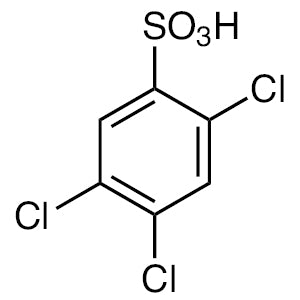
- TCI B0248 6378-25-2 2,4,5-Trichlorobenzenesulfonic Acid
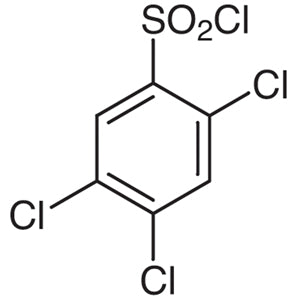
- TCI B0247 15945-07-0 2,4,5-Trichlorobenzenesulfonyl Chloride
- TCI D4222 6579-54-0 2,6-Dichlorobenzenesulfonyl Chloride
- TCI D4037 16271-33-3 2,4-Dichlorobenzenesulfonyl Chloride
- TCI D3568 82417-45-6 2,3-Dichlorobenzenesulfonyl Chloride
- Organic synthesis: KTCBS is ideal for creating complex aromatic compounds due to its reactivity and solubility in organic solvents.
- Pharmaceutical research: It is used in the development of new drugs as a building block for synthesizing bioactive molecules.
- Material science: KTCBS contributes to the production of advanced materials through its participation in substitution reactions.
- Analytical chemistry: Its chemical stability allows it to be used in analytical procedures requiring precise reagent performance.
- Industrial chemical production: It is a key reagent in the manufacturing of specialty chemicals with specific functional groups.
| Brand | TCI |
|---|---|
| CAS number | 62625-17-6 |
| Molecular formula | — |
| Purity | — |
| Category | Chemistry > Building Blocks > Non-Heterocyclic Building Blocks |
| Pack sizes | Available in various quantities as per supplier specifications |
| Physical form | Solid powder |
| Storage | Store in a cool, dry place away from moisture and direct sunlight |
KTCBS should be stored in a cool, dry environment to maintain its chemical stability and prevent degradation. It is recommended to keep the compound in a sealed container to avoid exposure to moisture and air, which can affect its reactivity. Suitable storage containers include glass or high-density polyethylene vessels that are resistant to chemical reactions. In laboratory settings, it is important to handle KTCBS with appropriate personal protective equipment, such as gloves and safety goggles, to ensure safe handling. Avoid contact with incompatible substances, and ensure proper ventilation when working with this compound to minimize any potential health risks. Always follow standard laboratory safety protocols when using or storing KTCBS.
—
Produk Terkait
-
2,4,6-TrichlorobenzenesulfonylChloride TCI T2035
Regular price From Rp 2.016.000,00Regular priceRp 1.409.100,00Sale price From Rp 2.016.000,00 -
2,4,5-TrichlorobenzenesulfonicAcid TCI B0248
Regular price From Rp 2.147.250,00Regular priceRp 1.501.500,00Sale price From Rp 2.147.250,00 -
2,4,5-TrichlorobenzenesulfonylChloride TCI B0247
Regular price From Rp 2.439.150,00Regular priceRp 1.705.200,00Sale price From Rp 2.439.150,00 -
2,6-DichlorobenzenesulfonylChloride TCI D4222
Regular price From Rp 505.050,00Regular priceRp 352.800,00Sale price From Rp 505.050,00 -
2,4-DichlorobenzenesulfonylChloride TCI D4037
Regular price From Rp 1.035.300,00Regular priceRp 723.450,00Sale price From Rp 1.035.300,00 -
2,3-DichlorobenzenesulfonylChloride TCI D3568
Regular price Rp 1.298.850,00Regular priceRp 908.250,00Sale price Rp 1.298.850,00 -
3,5-DichlorobenzenesulfonylChloride TCI D3503
Regular price From Rp 1.273.650,00Regular priceRp 890.400,00Sale price From Rp 1.273.650,00 -
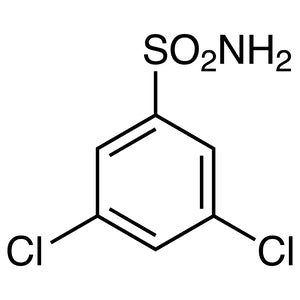
3,5-Dichlorobenzenesulfonamide TCI D3502
Regular price Rp 4.902.450,00Regular priceRp 3.444.000,00Sale price Rp 4.902.450,00