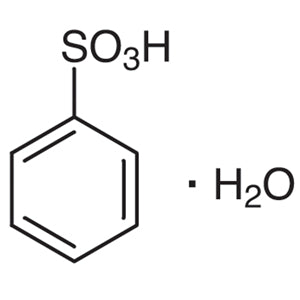
2,4,5-Trichlorobenzenesulfonic Acid (TCI B0248) is a chemical compound widely used in laboratory settings for its versatility in organic and inorganic synthesis. As a key building block in chemical reactions, it plays a crucial role in the development of various compounds with applications across multiple scientific fields. This compound is particularly valued for its ability to participate in substitution, esterification, and other reactions where the presence of a sulfonic acid group is essential. Its chemical structure enables it to act as both a reagent and a functional group donor, making it a fundamental material in synthetic chemistry.
The compound is known for its chemical stability and controlled reactivity, which allows researchers to manipulate reaction conditions with precision. Its solubility in organic solvents further enhances its usability, simplifying the process of mixing and application in laboratory procedures. These properties make it a reliable choice for both small-scale and large-scale experiments. Additionally, its resistance to decomposition ensures consistent performance across different experimental setups, contributing to the reliability of laboratory results.
In Indonesian laboratories, 2,4,5-Trichlorobenzenesulfonic Acid is commonly used by chemists and researchers for both fundamental and applied studies. Its availability and chemical properties make it a preferred material for academic and industrial research. It is often selected for its role in developing new compounds with potential applications in pharmaceuticals, materials science, and environmental studies. Its widespread use underscores its importance in the chemical research landscape in Indonesia.
Related TCI products
- TCI T2035 51527-73-2 2,4,6-Trichlorobenzenesulfonyl Chloride
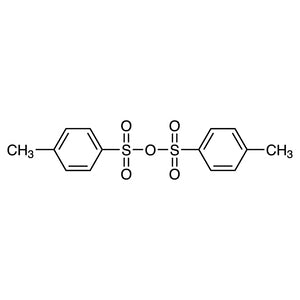
- TCI T1485 4124-41-8 p-Toluenesulfonic Anhydride
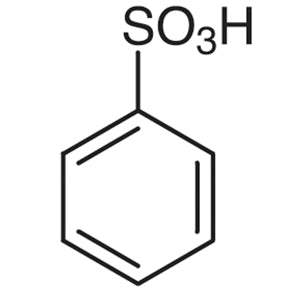
- TCI B3408 98-11-3 Benzenesulfonic Acid Anhydrous
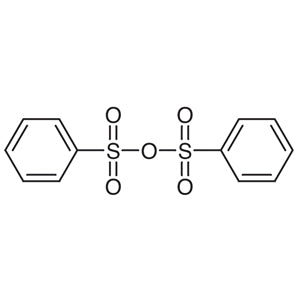
- TCI B1931 512-35-6 Benzenesulfonic Anhydride
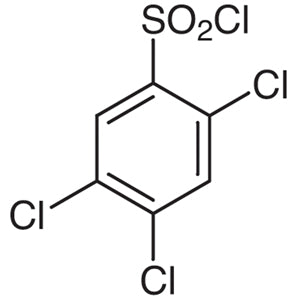
- TCI B0247 15945-07-0 2,4,5-Trichlorobenzenesulfonyl Chloride
- TCI B0030 26158-00-9 Benzenesulfonic Acid Monohydrate
- Organic synthesis where sulfonic acid groups are required for functionalization and derivatization of aromatic compounds.
- Esterification reactions to produce ester derivatives, commonly used in the development of pharmaceutical intermediates.
- Substitution reactions in aromatic rings to create chlorinated or sulfonated derivatives for further chemical modifications.
- Catalytic processes in industrial chemistry to enhance reaction efficiency and selectivity in large-scale production.
- Analytical chemistry for the preparation of standard solutions and reagents used in qualitative and quantitative analysis.
| Brand | TCI |
|---|---|
| CAS number | 6378-25-2 |
| Molecular formula | — |
| Purity | — |
| Category | Chemistry > Building Blocks > Non-Heterocyclic Building Blocks |
| Pack sizes | Available in various quantities as per supplier specifications |
| Physical form | Solid |
| Storage | Store in a cool, dry place away from moisture and direct sunlight |
This compound should be stored in a cool, dry environment to maintain its chemical stability and prevent degradation. It is recommended to use airtight containers to protect it from moisture and humidity, which can affect its reactivity and purity. Due to its chemical nature, it should be handled in a well-ventilated area to minimize exposure to vapors. Appropriate personal protective equipment, such as gloves and safety goggles, should be worn when handling the material. It is important to avoid contact with incompatible substances, such as strong bases or reactive metals, to ensure safe laboratory practices. Regular monitoring of storage conditions will help maintain the integrity of the compound for reliable experimental results.
—
Produk Terkait
-
2,4,6-TrichlorobenzenesulfonylChloride TCI T2035
Regular price From Rp 2.016.000,00Regular priceRp 1.409.100,00Sale price From Rp 2.016.000,00 -
p-ToluenesulfonicAnhydride TCI T1485
Regular price From Rp 1.749.300,00Regular priceRp 1.223.250,00Sale price From Rp 1.749.300,00 -
BenzenesulfonicAcidAnhydrous TCI B3408
Regular price Rp 1.565.550,00Regular priceRp 1.094.100,00Sale price Rp 1.565.550,00 -
BenzenesulfonicAnhydride TCI B1931
Regular price From Rp 5.062.050,00Regular priceRp 3.539.550,00Sale price From Rp 5.062.050,00 -
2,4,5-TrichlorobenzenesulfonylChloride TCI B0247
Regular price From Rp 2.439.150,00Regular priceRp 1.705.200,00Sale price From Rp 2.439.150,00 -
BenzenesulfonicAcidMonohydrate TCI B0030
Regular price From Rp 743.400,00Regular priceRp 519.750,00Sale price From Rp 743.400,00 -
Potassium2,4,5-Trichlorobenzenesulfonate TCI T0628
Regular price Rp 2.359.350,00Regular priceRp 1.649.550,00Sale price Rp 2.359.350,00 -
p-ToluenesulfonicAcidMonohydrate TCI T0267
Regular price From Rp 477.750,00Regular priceRp 333.900,00Sale price From Rp 477.750,00