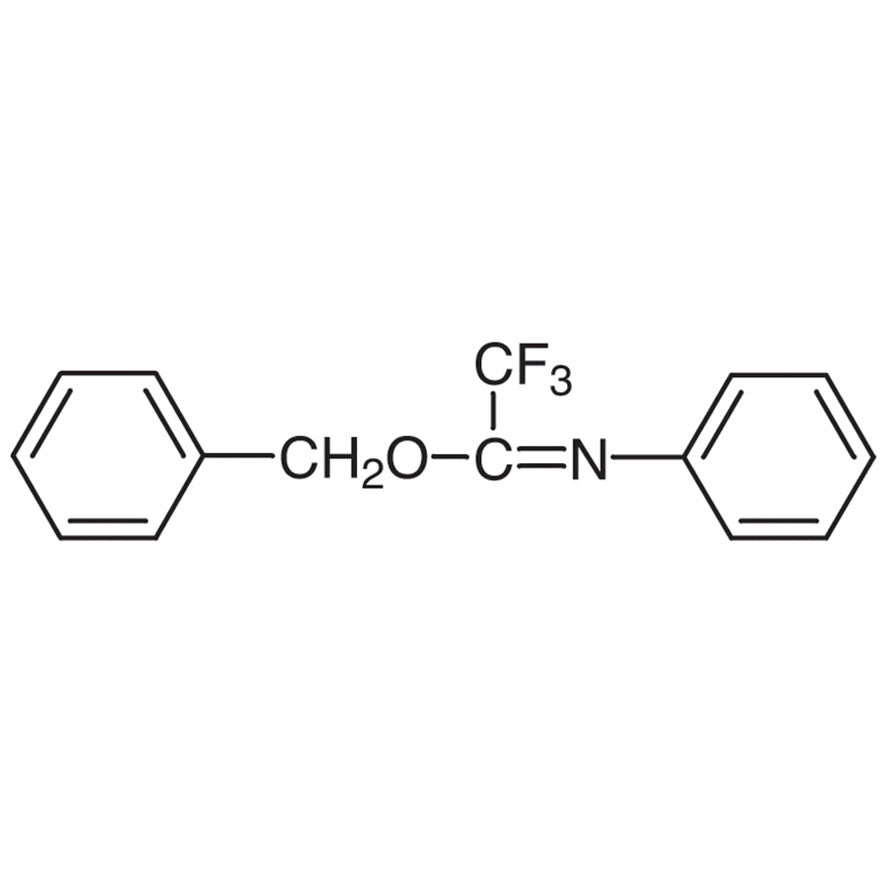
Benzyl 2,2,2-Trifluoro-N-phenylacetimidate is a specialized chemical compound used in organic reactions, particularly in the synthesis of fluorinated compounds. As a fluorinated building block, it plays a crucial role in the development of complex molecular structures. Its unique chemical structure, featuring a benzyl group and a trifluorinated acetimidate moiety, makes it a valuable reagent in synthetic chemistry. This compound is widely utilized in research settings where precision and reactivity are essential. Its ability to participate in various reaction mechanisms, such as nucleophilic and substitution reactions, enhances its utility in the laboratory.
The compound’s fluorinated nature contributes to its reactivity and stability, making it a preferred choice for chemists working on advanced synthetic pathways. The presence of fluorine atoms significantly influences the compound’s electronic properties, enabling it to interact with a variety of functional groups. Its high reactivity and compatibility with different reaction conditions make it a versatile tool in the synthesis of pharmaceuticals, agrochemicals, and specialty chemicals. The compound’s structural complexity also allows for the creation of molecules with specific biological activities, further expanding its application in research.
In Indonesian laboratories, Benzyl 2,2,2-Trifluoro-N-phenylacetimidate is commonly used in organic chemistry research, especially in the synthesis of fluorinated compounds. Its role in creating complex molecular structures is vital for studies involving drug development and material science. Researchers in Indonesia rely on this compound to explore new synthetic routes and to develop compounds with desired properties. The compound’s availability and chemical properties make it a key component in the chemical research infrastructure of the country.
TCI brochures (PDF)
- Alkylation Reagents for Ester Synthesis 2026-04-06 · p. 5
- Protecting Agents 2025-03-25 · p. 10
Related TCI products
- TCI B1496 98946-18-0 tert-Butyl 2,2,2-Trichloroacetimidate
- TCI B1483 81927-55-1 Benzyl 2,2,2-Trichloroacetimidate
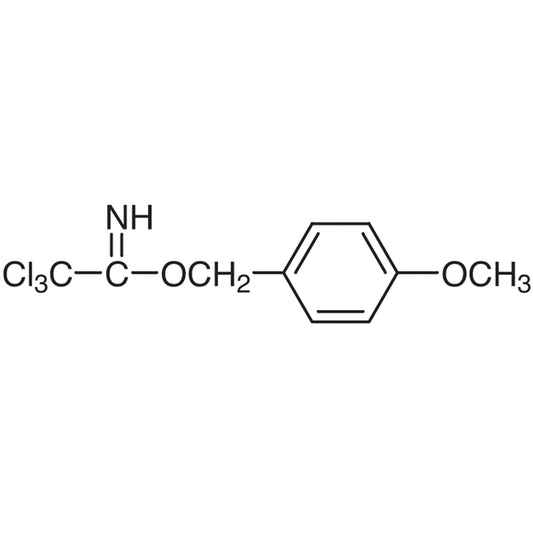
- TCI M2016 89238-99-3 4-Methoxybenzyl 2,2,2-Trichloroacetimidate
- TCI T3654 421-53-4 2,2,2-Trifluoro-1,1-ethanediol (contains Total ca 35% Water)
- TCI T3645 404-24-0 2,2,2-Trifluoro-N-phenylacetamide
- TCI T3426 657-15-8 2,2,2-Trifluoro-3'-nitroacetophenone
- Organic synthesis of fluorinated compounds due to its reactivity and structural versatility.
- Development of pharmaceuticals and agrochemicals through its ability to form complex molecular structures.
- Research into materials science for creating compounds with specific physical and chemical properties.
- Investigation of biological activities in drug discovery and bioorganic chemistry.
- Synthesis of specialty chemicals for industrial applications requiring fluorinated functionalities.
| Brand | TCI |
|---|---|
| CAS number | 952057-61-3 |
| Molecular formula | — |
| Purity | — |
| Category | Chemistry > Building Blocks > Fluorinated Building Blocks |
| Pack sizes | Available in various quantities as per supplier specifications |
| Physical form | Solid or liquid, depending on the specific formulation |
| Storage | Store in a cool, dry place away from moisture and direct sunlight |
This compound should be stored in a cool, dry environment to maintain its chemical integrity. It is recommended to use airtight containers to prevent exposure to moisture and air, which can affect its stability. Due to its reactivity, it should be handled in a well-ventilated area, ideally with appropriate personal protective equipment. Avoid contact with incompatible substances to ensure safe storage and use. Proper labeling and storage conditions are essential to maintain the compound’s effectiveness and safety in the laboratory.
—
Product Categories
- Building BlocksFluorinated Building BlocksNon-Heterocyclic Fluorinated Building Blocks
- Synthetic ReagentsC-X(Non-Halogen) Bond Formation [Synthetic Reagents]Alkylation (Esterification) [Synthetic Reagents]
- Synthetic ReagentsProtection, Deprotection, DerivatizationProtecting and Derivatizing Reagents [Synthetic Reagents]
Produk Terkait
-
tert-Butyl2,2,2-Trichloroacetimidate TCI B1496
Regular price From Rp 1.776.600,00Regular priceRp 1.257.900,00Sale price From Rp 1.776.600,00 -
Benzyl2,2,2-Trichloroacetimidate TCI B1483
Regular price Rp 3.285.450,00Regular priceRp 2.313.150,00Sale price Rp 3.285.450,00 -
4-Methoxybenzyl2,2,2-Trichloroacetimidate TCI M2016
Regular price From Rp 2.835.000,00Regular priceRp 1.998.150,00Sale price From Rp 2.835.000,00 -
2,2,2-Trifluoro-1,1-ethanediol(containsTotalca35%Water) TCI T3654
Regular price From Rp 1.193.850,00Regular priceRp 834.750,00Sale price From Rp 1.193.850,00 -
2,2,2-Trifluoro-N-phenylacetamide TCI T3645
Regular price From Rp 1.538.250,00Regular priceRp 1.090.950,00Sale price From Rp 1.538.250,00 -
2,2,2-Trifluoro-3'-nitroacetophenone TCI T3426
Regular price From Rp 2.544.150,00Regular priceRp 1.794.450,00Sale price From Rp 2.544.150,00 -
2,2,2-Trifluoro-N-methoxy-N-methylacetamide TCI T3326
Regular price From Rp 1.431.150,00Regular priceRp 1.016.400,00Sale price From Rp 1.431.150,00