(R)-1-Benzyl-3-pyrrolidinecarbonitrile is a chiral compound widely used in asymmetric synthesis to construct complex molecular structures. This material plays a crucial role in laboratories where the development of bioactive compounds is essential. Its chiral nature allows for the creation of molecules with specific biological activities, such as pharmaceuticals and pharmacological agents. Due to its structural complexity, it is highly valued in organic chemistry research for its ability to facilitate precise asymmetric reactions.
The compound's chemical stability under normal conditions makes it a reliable choice for synthetic processes. It can react with various reagents, enabling the synthesis of compounds with antioxidant, anti-inflammatory, or anticancer properties. Its versatility and effectiveness in asymmetric synthesis make it a preferred option for chemists aiming to produce enantiomerically pure compounds. The chiral nature of this molecule ensures that the resulting compounds possess unique biological activities not found in their enantiomers.
In Indonesian laboratories, (R)-1-Benzyl-3-pyrrolidinecarbonitrile is commonly used in pharmaceutical research and the synthesis of bioactive compounds. Local researchers utilize this material for the development of health products, drugs, and chemical industry raw materials. Its limited availability further highlights its importance in both academic and industrial research settings.
TCI brochures (PDF)
- Chiral Building Blocks 2025-04-14 · p. 3
Related TCI products
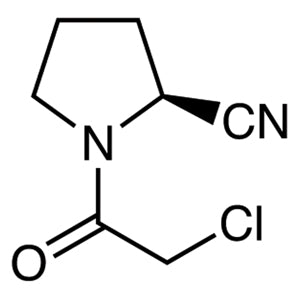
- TCI C3202 207557-35-5 (S)-1-(Chloroacetyl)-2-pyrrolidinecarbonitrile
- TCI B2054 116258-17-4 (1S,4S)-2-Benzyl-2,5-diazabicyclo[2.2.1]heptane Dihydrobromide
- TCI B1932 131878-23-4 (3R)-(+)-1-Benzyl-3-(tert-butoxycarbonylamino)pyrrolidine
- TCI B1583 169749-99-9 (3S)-(+)-1-Benzyl-3-(methylamino)pyrrolidine
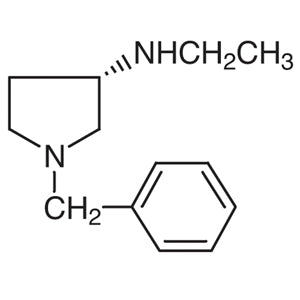
- TCI B1581 169750-99-6 (3S)-(+)-1-Benzyl-3-(ethylamino)pyrrolidine
- TCI B1580 376591-05-8 (3R)-(-)-1-Benzyl-3-(ethylamino)pyrrolidine
- Asymmetric Synthesis: This compound is ideal for creating enantiomerically pure molecules, which are essential in pharmaceutical development due to their specific biological activities.
- Bioactive Compound Synthesis: Its chiral structure enables the production of compounds with antioxidant, anti-inflammatory, and anticancer properties, making it valuable in drug discovery.
- Organic Chemistry Research: The compound’s structural complexity supports precise asymmetric reactions, aiding in the study of organic chemical mechanisms and reaction pathways.
- Pharmaceutical Development: It is used in the synthesis of active pharmaceutical ingredients, contributing to the creation of new therapeutic agents.
- Industrial Chemical Production: Its role in synthesizing chemical intermediates makes it a key component in the production of various industrial chemicals.
| Brand | TCI |
|---|---|
| CAS number | 157528-56-8 |
| Molecular formula | — |
| Purity | — |
| Category | Chemistry > Asymmetric Synthesis > Chiral Building Blocks |
| Pack sizes | — |
| Physical form | — |
| Storage | Store in a cool, dry place away from light and moisture |
This compound should be stored in a cool, dry environment, away from direct light and moisture to maintain its chemical stability. It is recommended to use airtight containers to prevent exposure to air and potential degradation. Due to its chiral nature, it is important to handle it with care to avoid contamination or cross-contamination with other substances. Laboratory personnel should wear appropriate personal protective equipment, such as gloves and safety goggles, when handling this material. Proper ventilation should be maintained in the workspace to ensure safe handling. The compound should not be stored near incompatible materials to prevent any chemical reactions. Regular monitoring of storage conditions is advised to ensure the integrity of the compound remains intact.
—
Produk Terkait
-
(S)-1-(Chloroacetyl)-2-pyrrolidinecarbonitrile TCI C3202
Regular price From Rp 2.650.200,00Regular priceRp 1.869.000,00Sale price From Rp 2.650.200,00 -
(1S,4S)-2-Benzyl-2,5-diazabicyclo[2.2.1]heptaneDihydrobromide TCI B2054
Regular price Rp 2.942.100,00Regular priceRp 2.072.700,00Sale price Rp 2.942.100,00 -
(3R)-(+)-1-Benzyl-3-(tert-butoxycarbonylamino)pyrrolidine TCI B1932
Regular price Rp 2.121.000,00Regular priceRp 1.498.350,00Sale price Rp 2.121.000,00 -
(3S)-(+)-1-Benzyl-3-(methylamino)pyrrolidine TCI B1583
Regular price From Rp 1.008.000,00Regular priceRp 720.300,00Sale price From Rp 1.008.000,00 -
(3S)-(+)-1-Benzyl-3-(ethylamino)pyrrolidine TCI B1581
Regular price From Rp 2.252.250,00Regular priceRp 1.590.750,00Sale price From Rp 2.252.250,00 -
(3R)-(-)-1-Benzyl-3-(ethylamino)pyrrolidine TCI B1580
Regular price From Rp 1.881.600,00Regular priceRp 1.331.400,00Sale price From Rp 1.881.600,00 -
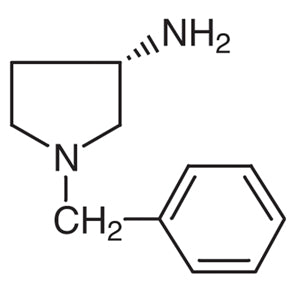
(3S)-(+)-1-Benzyl-3-aminopyrrolidine TCI A1174
Regular price From Rp 5.617.500,00Regular priceRp 3.943.800,00Sale price From Rp 5.617.500,00 -
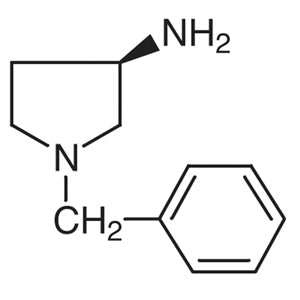
(3R)-(-)-1-Benzyl-3-aminopyrrolidine TCI A1173
Regular price From Rp 900.900,00Regular priceRp 645.750,00Sale price From Rp 900.900,00