

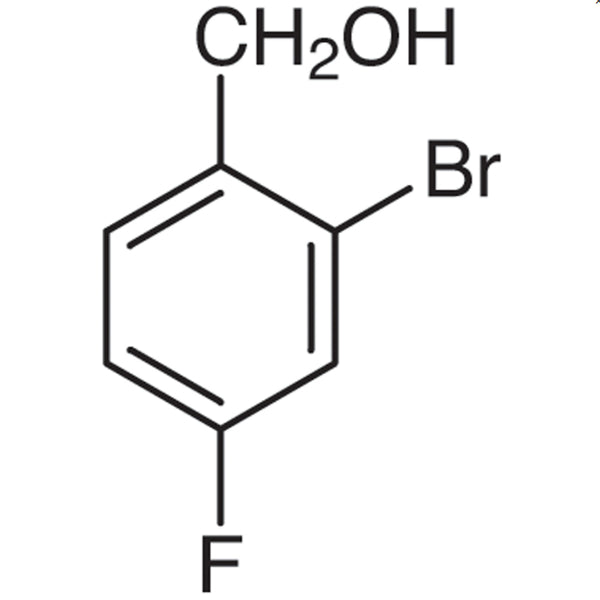
2-Bromo-4-fluorobenzyl Alcohol is a chemical compound widely used as a building block in the synthesis of complex organic molecules. This compound features a benzyl group with bromo and fluoro substituents, along with a hydroxyl group at the end of the chain. Its unique molecular structure makes it a valuable resource for researchers aiming to develop compounds with specific biological activities. In laboratory settings, it serves as a versatile intermediate in the creation of pharmaceuticals and industrial chemicals. Its chemical versatility and reactivity make it an essential tool for organic synthesis and functional group manipulation.
The compound's bromo and fluoro groups contribute to its distinct electronic properties, enabling it to participate in various chemical reactions such as substitution and nucleophilic attacks. These characteristics make it a preferred choice for chemists working on synthetic pathways that require precise functional group transformations. Additionally, its stability under controlled conditions allows for reliable use in a wide range of experimental protocols. The combination of reactivity and stability ensures that it remains a key component in both academic and industrial research environments.
In Indonesian laboratories, 2-Bromo-4-fluorobenzyl Alcohol is commonly used in pharmaceutical and organic chemistry research. It plays a crucial role in the development of new drugs and chemical compounds with potential medical or industrial applications. Researchers in Indonesia frequently utilize this compound to explore its reactivity and to synthesize more complex molecules. Its presence in scientific studies highlights its importance in advancing chemical research and innovation within the region.
TCI brochures (PDF)
- Fluorination Reagents, Fluorinated Building Blocks 2026-03-18 · p. 24
- Organic synthesis is a primary application where this compound is used to build complex molecules with specific functional groups.
- Pharmaceutical research benefits from its ability to participate in substitution reactions, aiding in the development of new drug candidates.
- Fluorinated building blocks are essential in creating compounds with enhanced biological activity, making this material ideal for medicinal chemistry.
- Industrial chemical production utilizes its reactivity for the synthesis of specialty chemicals and intermediates.
- Academic research in Indonesian universities often incorporates this compound for teaching and experimental studies in organic chemistry.
| Brand | TCI |
|---|---|
| CAS number | 229027-89-8 |
| Molecular formula | — |
| Purity | — |
| Category | Chemistry > Building Blocks > Fluorinated Building Blocks |
| Pack sizes | Available in various quantities as per supplier specifications |
| Physical form | Liquid or crystalline, depending on the specific formulation |
| Storage | Store in a cool, dry place away from light and incompatible materials |
This compound should be stored in a cool, dry environment, away from direct sunlight and sources of heat. It is recommended to use airtight containers made of glass or high-density polyethylene to prevent contamination and maintain chemical integrity. Due to its reactivity, it should be kept separate from strong oxidizing agents and incompatible substances. Laboratory personnel should wear appropriate personal protective equipment, including gloves and safety goggles, when handling this material. Proper ventilation is essential to minimize exposure to vapors. Regular monitoring of storage conditions ensures the compound remains stable and safe for use in research applications.
—
Produk Terkait
-
3-Bromo-2-fluorobenzylAlcohol TCI B5143
Regular price From Rp 875.700,00Regular priceRp 612.150,00Sale price From Rp 875.700,00 -
4-Bromo-3-fluorobenzylAlcohol TCI B4956
Regular price Rp 1.298.850,00Regular priceRp 908.250,00Sale price Rp 1.298.850,00 -
3-Bromo-4-fluorobenzylAlcohol TCI B4656
Regular price From Rp 1.590.750,00Regular priceRp 1.111.950,00Sale price From Rp 1.590.750,00 -
3-FluorobenzylAlcohol TCI F0370
Regular price From Rp 928.200,00Regular priceRp 648.900,00Sale price From Rp 928.200,00 -
2-FluorobenzylAlcohol TCI F0259
Regular price From Rp 505.050,00Regular priceRp 352.800,00Sale price From Rp 505.050,00 -
4-FluorobenzylAlcohol TCI F0251
Regular price From Rp 477.750,00Regular priceRp 333.900,00Sale price From Rp 477.750,00 -
2-Chloro-4-fluorobenzylAlcohol TCI C2527
Regular price Rp 1.431.150,00Regular priceRp 1.000.650,00Sale price Rp 1.431.150,00 -
4-Bromo-2,6-difluorobenzylAlcohol TCI B5090
Regular price From Rp 1.035.300,00Regular priceRp 723.450,00Sale price From Rp 1.035.300,00


