

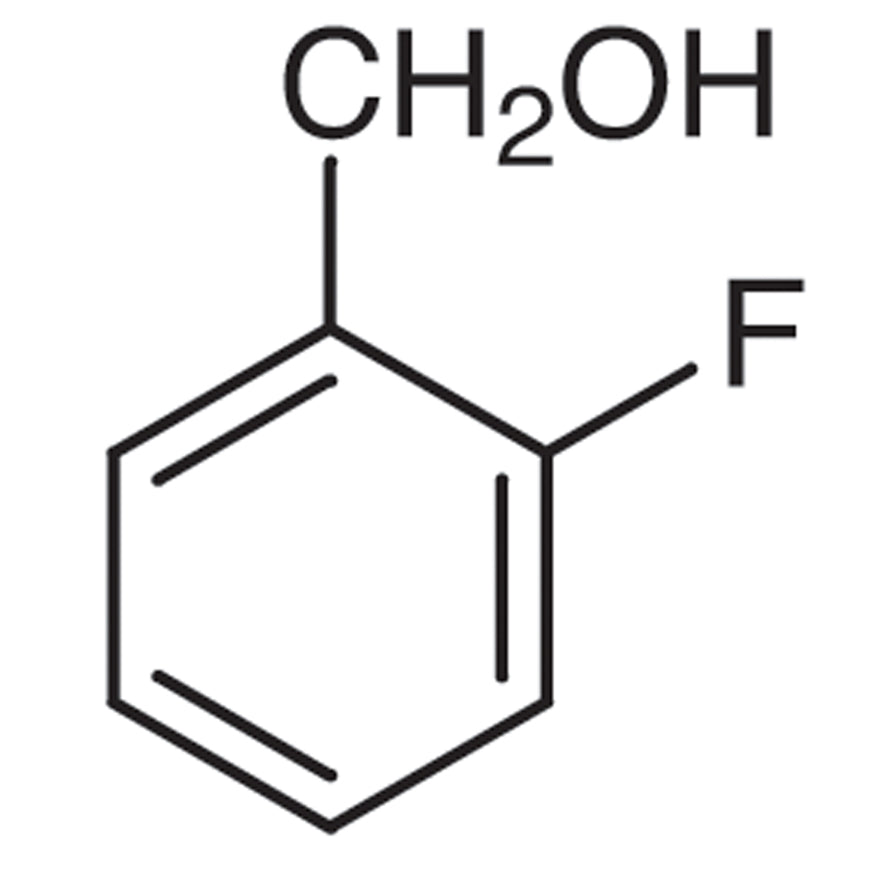
2-Fluorobenzyl Alcohol (TCI F0259) is a chemical compound widely used in organic synthesis reactions within laboratory settings. This compound belongs to the family of fluorinated building blocks, featuring a benzyl structure with a fluorine atom substituted at the second carbon position. Its unique molecular structure makes it a valuable reagent for creating complex molecules that require fluorine substitution. It is commonly utilized in the development of pharmaceuticals, industrial chemicals, and pharmacological compounds due to its versatility and chemical stability.
The compound is known for its controlled reactivity and polar characteristics, which allow it to dissolve in organic solvents such as ethyl acetate and acetone. These properties make it ideal for separation and purification processes in laboratory workflows. Its stability under various reaction conditions ensures consistent performance, making it a reliable choice for synthetic chemists. The compound’s predictable behavior in different chemical environments enhances its applicability across a range of experimental setups.
In Indonesian laboratories, 2-Fluorobenzyl Alcohol is extensively used in both pure and applied chemical research, particularly in the fields of pharmacy and organic chemistry. Research institutions and universities rely on this compound to develop new substances with potential medical or industrial applications. Its role in synthesizing fluorinated compounds is crucial for advancing scientific innovation in the region.
TCI brochures (PDF)
- Fluorination Reagents, Fluorinated Building Blocks 2026-03-18 · p. 11
Related TCI products
- Fluorinated Compound Synthesis: This item is ideal for creating fluorinated molecules due to its stable structure and controlled reactivity, enabling precise chemical modifications.
- Pharmaceutical Research: It is widely used in drug development to introduce fluorine atoms, enhancing the pharmacological properties of target compounds.
- Organic Chemistry Experiments: Its polar nature and solubility in organic solvents make it suitable for various synthetic reactions and purification processes.
- Industrial Chemical Development: It supports the creation of specialized chemicals used in manufacturing and material science applications.
- Analytical Chemistry: Its predictable behavior in different reaction conditions allows for accurate and reproducible experimental results.
| Brand | TCI |
|---|---|
| CAS number | 446-51-5 |
| Molecular formula | — |
| Purity | — |
| Category | Chemistry > Building Blocks > Fluorinated Building Blocks |
| Pack sizes | As per supplier specifications |
| Physical form | Liquid |
| Storage | Store in a cool, dry place away from light and incompatible materials |
This compound should be stored in a cool, dry location, away from direct sunlight and sources of heat. It is recommended to keep it in a sealed container to prevent exposure to air and moisture. Due to its polar nature, it is advisable to use glass or polyethylene containers to avoid chemical interactions. Always ensure proper ventilation when handling the compound to minimize inhalation risks. Laboratory personnel should wear appropriate personal protective equipment, such as gloves and safety goggles, to ensure safe handling. The compound should not be stored near incompatible substances like strong oxidizers or acids to prevent potential chemical reactions. Proper storage conditions are essential to maintain the compound’s stability and effectiveness in laboratory applications.
—
Produk Terkait
-
3-Bromo-2-fluorobenzylAlcohol TCI B5143
Regular price From Rp 875.700,00Regular priceRp 612.150,00Sale price From Rp 875.700,00 -
4-Bromo-3-fluorobenzylAlcohol TCI B4956
Regular price Rp 1.298.850,00Regular priceRp 908.250,00Sale price Rp 1.298.850,00 -
3-Bromo-4-fluorobenzylAlcohol TCI B4656
Regular price From Rp 1.590.750,00Regular priceRp 1.111.950,00Sale price From Rp 1.590.750,00 -
2-Bromo-4-fluorobenzylAlcohol TCI B3417
Regular price From Rp 1.115.100,00Regular priceRp 779.100,00Sale price From Rp 1.115.100,00 -
3-FluorobenzylAlcohol TCI F0370
Regular price From Rp 928.200,00Regular priceRp 648.900,00Sale price From Rp 928.200,00 -
4-FluorobenzylAlcohol TCI F0251
Regular price From Rp 477.750,00Regular priceRp 333.900,00Sale price From Rp 477.750,00 -
2-Chloro-4-fluorobenzylAlcohol TCI C2527
Regular price Rp 1.431.150,00Regular priceRp 1.000.650,00Sale price Rp 1.431.150,00 -
2,3,5,6-TetrafluorobenzylAlcohol TCI T1884
Regular price From Rp 610.050,00Regular priceRp 426.300,00Sale price From Rp 610.050,00


