Trans-2-[3-(4-tert-Butylphenyl)-2-methyl-2-propenylidene]malononitrile is a specialized chemical compound used extensively in analytical chemistry, particularly in mass spectrometry applications. This compound serves as a key reagent in laboratory settings, where it is employed to enhance sample analysis or as a tool for identifying complex chemical structures. Its role in analytical procedures is critical, especially when high-resolution data is required for accurate compound characterization. Due to its chemical stability and well-defined molecular structure, it is widely trusted in both research and educational environments.
The compound's molecular structure is highly complex, making it ideal for use in advanced analytical techniques. Its stability under various conditions ensures reliable results without significant degradation, which is essential for maintaining the integrity of experimental data. Additionally, its non-reactive nature in many environments simplifies handling and storage, reducing the risk of contamination or unintended chemical interactions. These properties collectively make it a preferred choice for laboratories requiring precision and consistency in their analytical workflows.
In Indonesian laboratories, this compound is commonly used in scientific research, particularly in analytical chemistry and mass spectrometry. It is frequently employed in both academic and industrial settings to support research applications and educational programs. Its availability through reputable suppliers ensures that it remains a valuable resource for researchers and students alike, contributing to the advancement of chemical analysis in the region.
TCI brochures (PDF)
- MALDI Matrix 2025-01-17 · p. 1
Related TCI products
- Mass Spectrometry Analysis: This compound is ideal for use in mass spectrometry due to its stable molecular structure, which allows for accurate and consistent spectral data collection.
- Sample Preparation: It is often used as a reagent to enhance sample preparation processes, ensuring that complex compounds are effectively analyzed without interference.
- Internal Standard Calibration: Its chemical stability and well-defined molecular structure make it a reliable internal standard for calibration in analytical instruments.
- Compound Identification: The compound's unique molecular structure aids in the identification of complex chemical compounds through spectral comparison.
- Educational Research: It is widely used in academic settings for teaching and research, supporting both theoretical and practical learning in analytical chemistry.
| Brand | TCI |
|---|---|
| CAS number | 300364-84-5 |
| Molecular formula | — |
| Purity | — |
| Category | Analytical Chemistry > Analytical Reagents > Mass Spectrometry (MS) Reagents |
| Pack sizes | Available in various quantities as per supplier specifications |
| Physical form | Solid (as per standard product description) |
| Storage | Store in a cool, dry place away from direct sunlight and moisture |
This compound should be stored in a cool, dry environment, away from direct sunlight and moisture to maintain its chemical stability. It is recommended to use airtight containers to prevent exposure to air and potential contamination. Since it is a chemical reagent, it should be handled with appropriate laboratory safety precautions, including the use of personal protective equipment such as gloves and safety goggles. While it is generally non-reactive, it is important to avoid contact with incompatible substances. Proper labeling of storage containers is essential for safe handling and to ensure that all laboratory personnel are aware of its properties and potential hazards. Maintaining a controlled storage environment helps preserve the compound's integrity and ensures its effectiveness in analytical applications.
—
Produk Terkait
-
trans-FerulicAcid TCI H0267
Regular price From Rp 1.934.100,00Regular priceRp 1.368.150,00Sale price From Rp 1.934.100,00 -
trans-FerulicAcid(purifiedbysublimation) TCI F1257
Regular price From Rp 2.464.350,00Regular priceRp 1.738.800,00Sale price From Rp 2.464.350,00 -
trans-CinnamicAcid[MatrixforMALDI-TOF/MS] TCI C3412
Regular price Rp 1.351.350,00Regular priceRp 960.750,00Sale price Rp 1.351.350,00 -
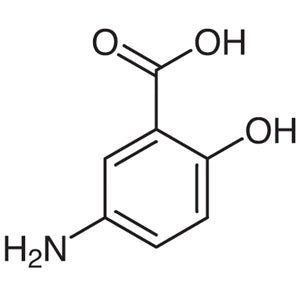
5-AminosalicylicAcid TCI A0317
Regular price From Rp 1.008.000,00Regular priceRp 720.300,00Sale price From Rp 1.008.000,00 -
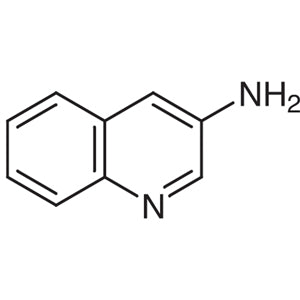
3-Aminoquinoline TCI A0418
Regular price From Rp 1.326.150,00Regular priceRp 942.900,00Sale price From Rp 1.326.150,00 -
2-Amino-5-mercapto-1,3,4-thiadiazole TCI A0425
Regular price From Rp 822.150,00Regular priceRp 590.100,00Sale price From Rp 822.150,00 -
2',4',6'-TrihydroxyacetophenoneMonohydrate TCI T1888
Regular price From Rp 1.246.350,00Regular priceRp 887.250,00Sale price From Rp 1.246.350,00 -
1,8-Bis(dimethylamino)naphthalene[forDehydrohalogenation] TCI B1018
Regular price From Rp 980.700,00Regular priceRp 701.400,00Sale price From Rp 980.700,00