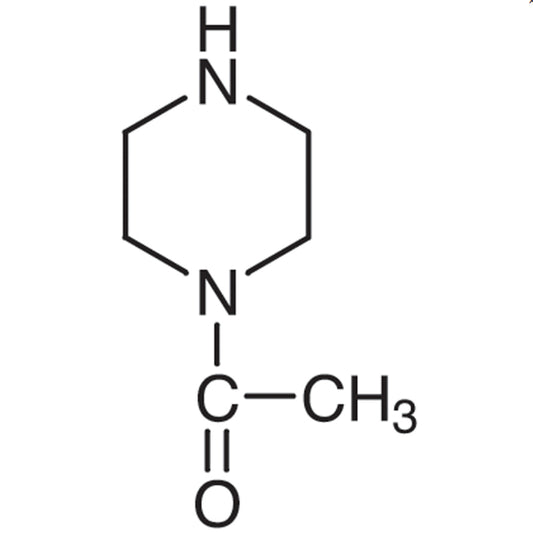
1-Benzhydrylpiperazine is a chemical compound widely used in organic synthesis reactions, particularly in the formation of heterocyclic compounds. As a building block in chemical synthesis, it plays a crucial role in the development of complex molecules with heterocyclic structures. Its versatility makes it an essential reagent for chemists working on the synthesis of various organic compounds. This compound is commonly found in chemical laboratories as a raw material for creating more intricate chemical structures through reactions such as acylation or substitution.
The chemical properties of 1-Benzhydrylpiperazine make it a preferred choice for laboratory applications. It exhibits stability under certain conditions and can react with a variety of reagents, including acids, bases, and organic solvents. Its molecular structure, featuring an amine group and a heterocyclic ring, allows it to participate in multiple chemical reactions. This makes it particularly useful in research areas that require the presence of amine or heterocyclic groups.
In Indonesian laboratories, 1-Benzhydrylpiperazine is frequently used in scientific research related to organic chemistry, pharmacology, and industrial chemical materials. Researchers and students in local laboratories often rely on this compound for experiments that require a building block with a specific chemical structure. Its availability and chemical properties make it a valuable tool in both academic and industrial settings.
Related TCI products
- Organic synthesis applications benefit from 1-Benzhydrylpiperazine due to its role in forming heterocyclic compounds, which are essential in pharmaceutical and chemical research.
- Pharmacological research utilizes this compound as a key reagent in the development of new drugs, leveraging its amine group and heterocyclic structure for molecular design.
- Industrial chemical synthesis relies on 1-Benzhydrylpiperazine as a building block for creating complex organic molecules used in various manufacturing processes.
- Academic research in chemistry frequently incorporates this compound to explore reaction mechanisms and synthetic pathways involving heterocyclic structures.
- Analytical chemistry laboratories use it as a standard reference material for testing and characterizing chemical compounds with specific functional groups.
| Brand | TCI |
|---|---|
| CAS number | 841-77-0 |
| Molecular formula | — |
| Purity | — |
| Category | Chemistry > Building Blocks > Heterocyclic Building Blocks |
| Pack sizes | Available in various quantities as per supplier specifications |
| Physical form | Solid or powder, depending on the specific product variant |
| Storage | Store in a cool, dry place away from direct sunlight and moisture |
1-Benzhydrylpiperazine should be stored in a cool, dry environment to maintain its chemical stability. It is recommended to keep the compound in a sealed container to prevent exposure to moisture and air. Proper ventilation is essential when handling this material to avoid inhalation of vapors. It is advisable to use appropriate personal protective equipment, such as gloves and safety goggles, when working with this compound. Avoid contact with skin and eyes, and ensure that spillage is cleaned up promptly. Storage conditions should be controlled to prevent degradation and ensure the compound remains suitable for laboratory use.
—
Produk Terkait
-
1-Benzhydryl-3-azetidinone TCI B4799
Regular price From Rp 557.550,00Regular priceRp 405.300,00Sale price From Rp 557.550,00 -
1-Butylpiperazine TCI B4078
Regular price From Rp 1.618.050,00Regular priceRp 1.146.600,00Sale price From Rp 1.618.050,00 -
1-Allylpiperazine TCI A3172
Regular price From Rp 2.571.450,00Regular priceRp 1.813.350,00Sale price From Rp 2.571.450,00 -
1-Ethylpiperazine TCI E0355
Regular price From Rp 689.850,00Regular priceRp 497.700,00Sale price From Rp 689.850,00 -
tert-Butyl3-Ethylpiperazine-1-carboxylate TCI D6422
Regular price From Rp 1.538.250,00Regular priceRp 1.090.950,00Sale price From Rp 1.538.250,00 -
3-(4-Methylpiperazin-1-yl)propan-1-amine TCI A3772
Regular price From Rp 2.411.850,00Regular priceRp 1.702.050,00Sale price From Rp 2.411.850,00 -
1-Acetylpiperazine TCI A1399
Regular price From Rp 1.087.800,00Regular priceRp 775.950,00Sale price From Rp 1.087.800,00 -
1-Amino-4-methylpiperazine TCI A1192
Regular price From Rp 1.961.400,00Regular priceRp 1.387.050,00Sale price From Rp 1.961.400,00