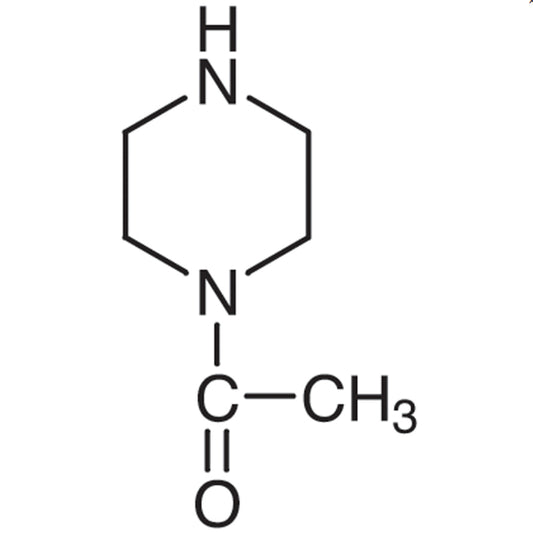
1-Butylpiperazine is a chemical compound widely used as a foundational building block in the synthesis of heterocyclic compounds. Its unique structure combines the piperazine ring with a butyl chain, offering versatility in chemical reactivity and functional group compatibility. In laboratory settings, this compound plays a crucial role in the development of complex molecules, particularly in organic synthesis and pharmaceutical research. Due to its stability and reactivity, it is a preferred material for experiments requiring structural modification and functional group manipulation.
The compound's chemical properties make it an ideal choice for various synthetic applications. It exhibits good solubility in organic solvents and aqueous solutions, including ethylamine and water, facilitating efficient reactions and purification processes. Its ability to react with acids, bases, and organic solvents further enhances its utility in diverse chemical transformations. These characteristics make it a reliable and adaptable reagent for both academic and industrial research environments.
In Indonesian laboratories, 1-Butylpiperazine is commonly used in both fundamental and applied chemical research. Its relevance spans across multiple disciplines, including medicinal chemistry and materials science. Researchers rely on this compound for its predictable behavior and compatibility with a wide range of reagents, making it a staple in modern chemical laboratories across Indonesia.
- Organic synthesis: 1-Butylpiperazine is widely used in the synthesis of complex organic molecules due to its reactivity and structural versatility.
- Pharmaceutical research: It serves as a key intermediate in the development of new drugs, particularly in the design of heterocyclic compounds with therapeutic potential.
- Functional group modification: Its ability to react with various reagents allows for the modification of molecular structures, making it essential in synthetic pathways.
- Analytical chemistry: It is used as a standard or reagent in analytical procedures requiring precise chemical interactions and solubility properties.
- Materials science: It contributes to the creation of new materials by enabling the synthesis of compounds with specific chemical and physical properties.
| Brand | TCI |
|---|---|
| CAS number | 5610-49-1 |
| Molecular formula | — |
| Purity | — |
| Category | Chemistry > Building Blocks > Heterocyclic Building Blocks |
| Pack sizes | Available in various quantities as per supplier specifications |
| Physical form | Liquid or crystalline, depending on formulation |
| Storage | Store in a cool, dry place away from direct sunlight |
1-Butylpiperazine should be stored in a cool, dry environment, away from direct sunlight and sources of heat. It is recommended to keep the compound in a tightly sealed container to prevent exposure to moisture and air. Due to its chemical reactivity, it should be handled in a well-ventilated area, preferably under a fume hood, to minimize inhalation risks. Appropriate personal protective equipment, such as gloves and safety goggles, should be worn when handling this material. It is important to avoid contact with skin and eyes, and in case of accidental exposure, immediate rinsing with water is advised. Proper disposal procedures should follow local regulations to ensure environmental safety.
—
Produk Terkait
-
1-Acetylpiperazine TCI A1399
Regular price From Rp 1.087.800,00Regular priceRp 775.950,00Sale price From Rp 1.087.800,00 -
1-Cyclopentylpiperazine TCI C2466
Regular price Rp 2.439.150,00Regular priceRp 1.720.950,00Sale price Rp 2.439.150,00 -
1-Isopropylpiperazine TCI I0745
Regular price From Rp 1.776.600,00Regular priceRp 1.257.900,00Sale price From Rp 1.776.600,00 -
1-Benzhydrylpiperazine TCI B3760
Regular price From Rp 1.060.500,00Regular priceRp 757.050,00Sale price From Rp 1.060.500,00 -
1-Benzoylpiperazine TCI B3676
Regular price Rp 2.068.500,00Regular priceRp 1.461.600,00Sale price Rp 2.068.500,00 -
3-(4-Methylpiperazin-1-yl)propan-1-amine TCI A3772
Regular price From Rp 2.411.850,00Regular priceRp 1.702.050,00Sale price From Rp 2.411.850,00 -
1-Allylpiperazine TCI A3172
Regular price From Rp 2.571.450,00Regular priceRp 1.813.350,00Sale price From Rp 2.571.450,00 -
1-Amino-4-methylpiperazine TCI A1192
Regular price From Rp 1.961.400,00Regular priceRp 1.387.050,00Sale price From Rp 1.961.400,00