1,4-Benzodioxane-6-carboxylic Acid is a chemical compound widely used in laboratory settings for the synthesis of heterocyclic compounds and their derivatives. This versatile building block plays a crucial role in organic chemistry by providing a stable core structure that can be modified through various chemical reactions. Its presence in research laboratories makes it an essential reagent for the development of pharmaceuticals, polymers, and other organic materials. Due to its structural versatility, it is frequently employed in synthetic pathways that require functional group manipulation and ring-opening reactions.
The compound's chemical stability under controlled conditions, along with its reactivity toward acids, bases, and organic solvents, makes it a preferred choice for chemists. Its heterocyclic framework enables it to participate in substitution reactions and ring-opening processes, which are fundamental in the creation of complex molecular structures. These properties make it a reliable and adaptable material for a wide range of synthetic applications. Additionally, its compatibility with various reagents allows for flexible experimentation in both academic and industrial research environments.
In Indonesian laboratories, 1,4-Benzodioxane-6-carboxylic Acid is commonly used in organic chemistry, pharmaceutical research, and material science. Due to its limited availability in the local market, it is often imported or ordered from international suppliers. Researchers in universities and research institutions rely on this compound for experiments that require a flexible and stable starting material. Its widespread use in diverse scientific fields highlights its importance in modern chemical research.
Related TCI products
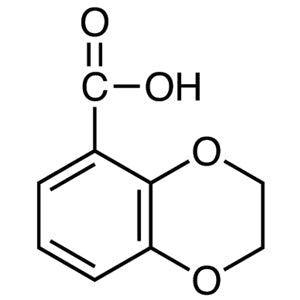
- TCI B3864 4442-53-9 1,4-Benzodioxane-5-carboxylic Acid
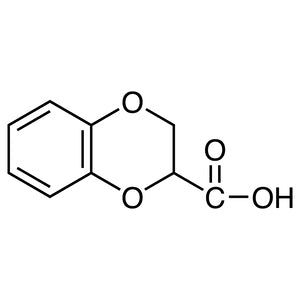
- TCI B3406 3663-80-7 1,4-Benzodioxane-2-carboxylic Acid
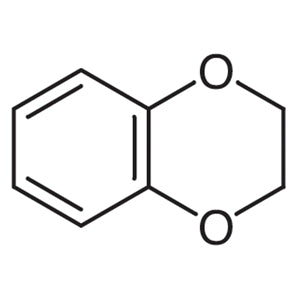
- TCI B1198 493-09-4 1,4-Benzodioxane
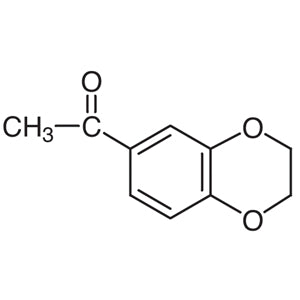
- TCI A1629 2879-20-1 6-Acetyl-1,4-benzodioxane
- TCI P1890 70918-74-0 2-(1-Piperazinylcarbonyl)-1,4-benzodioxane Hydrochloride
- TCI P1836 70918-00-2 2-(1-Piperazinylcarbonyl)-1,4-benzodioxane
- Organic synthesis applications benefit from this compound's stable heterocyclic structure, enabling the creation of complex molecules through substitution and ring-opening reactions.
- Pharmaceutical research utilizes this material as a building block for the development of new drugs, leveraging its reactivity and structural adaptability.
- Polymer science applications take advantage of its chemical stability and compatibility with various reagents, facilitating the synthesis of functional polymers.
- Material science experiments often incorporate this compound to explore its potential in creating advanced organic materials with tailored properties.
- Analytical chemistry laboratories use it as a reference standard for characterizing and analyzing heterocyclic compounds in various chemical matrices.
| Brand | TCI |
|---|---|
| CAS number | 4442-54-0 |
| Molecular formula | — |
| Purity | — |
| Category | Chemistry > Building Blocks > Heterocyclic Building Blocks |
| Pack sizes | Available in various quantities as per supplier specifications |
| Physical form | Solid (crystalline or powder, depending on supplier) |
| Storage | Store in a cool, dry place away from moisture and direct sunlight |
This compound should be stored in a cool, dry environment to maintain its chemical stability. It is recommended to use airtight containers to prevent exposure to moisture and air, which may affect its integrity. Due to its reactivity with acids and bases, it should be handled in a well-ventilated area, preferably with appropriate personal protective equipment. Avoid contact with incompatible substances to ensure safe handling. In laboratory settings, it is advisable to keep it in a designated chemical storage cabinet to minimize risks. Regular monitoring of storage conditions is essential to preserve its quality and effectiveness for research purposes.
—
Produk Terkait
-
1,4-Benzodioxane-5-carboxylicAcid TCI B3864
Regular price From Rp 1.220.100,00Regular priceRp 868.350,00Sale price From Rp 1.220.100,00 -
1,4-Benzodioxane-2-carboxylicAcid TCI B3406
Regular price From Rp 717.150,00Regular priceRp 516.600,00Sale price From Rp 717.150,00 -
1,4-Benzodioxane TCI B1198
Regular price Rp 1.246.350,00Regular priceRp 887.250,00Sale price Rp 1.246.350,00 -
6-Acetyl-1,4-benzodioxane TCI A1629
Regular price Rp 1.272.600,00Regular priceRp 905.100,00Sale price Rp 1.272.600,00 -
2-(1-Piperazinylcarbonyl)-1,4-benzodioxaneHydrochloride TCI P1890
Regular price From Rp 1.590.750,00Regular priceRp 1.127.700,00Sale price From Rp 1.590.750,00 -
2-(1-Piperazinylcarbonyl)-1,4-benzodioxane TCI P1836
Regular price Rp 1.458.450,00Regular priceRp 1.035.300,00Sale price Rp 1.458.450,00 -
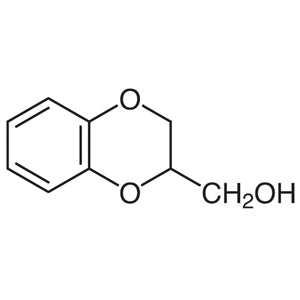
2-Hydroxymethyl-1,4-benzodioxane TCI H0801
Regular price From Rp 1.458.450,00Regular priceRp 1.035.300,00Sale price From Rp 1.458.450,00 -
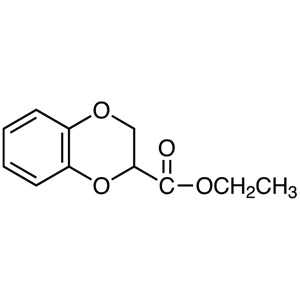
Ethyl1,4-Benzodioxane-2-carboxylate TCI E0902
Regular price From Rp 1.590.750,00Regular priceRp 1.127.700,00Sale price From Rp 1.590.750,00