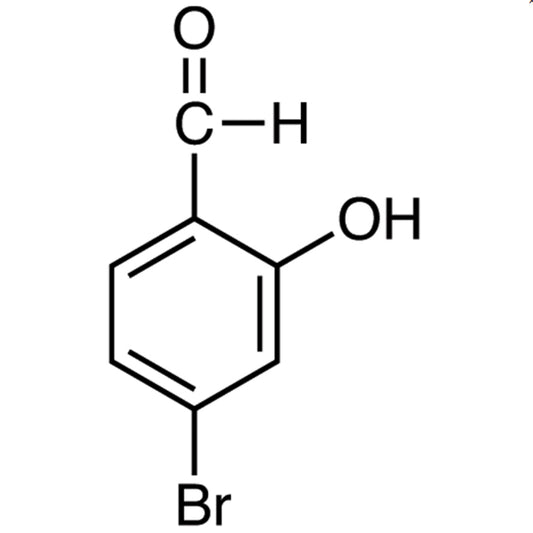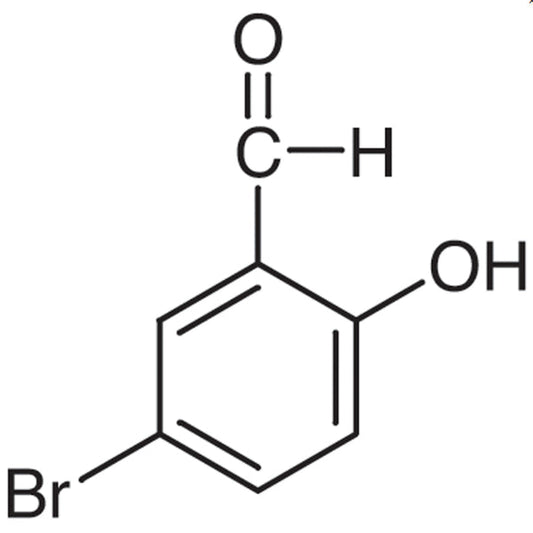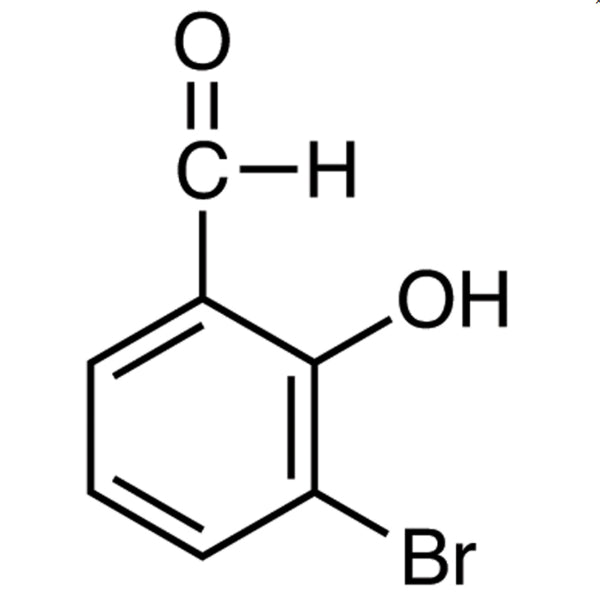
3-Bromosalicylaldehyde (TCI B3922), with CAS number 1829-34-1, is a chemical compound widely used as a building block in the synthesis of complex molecules. It is a versatile reagent that plays a crucial role in organic chemistry laboratories, where it serves as a key intermediate in various synthetic pathways. Its aldehyde functional group allows it to participate in multiple reactions, making it an essential component in the development of new compounds. This compound is particularly valuable for its ability to undergo substitution and condensation reactions, which are fundamental in the creation of heterocyclic and organic structures.
The chemical properties of 3-Bromosalicylaldehyde make it a preferred choice for laboratory applications. Its high reactivity, driven by the presence of both bromo and aldehyde groups, enables it to engage in a wide range of chemical transformations. However, it is sensitive to moisture and light, which requires careful handling and storage. These characteristics make it ideal for use in controlled environments where precise reaction conditions are necessary. Its stability under specific conditions also ensures reliable results in synthetic processes.
In Indonesian laboratories, 3-Bromosalicylaldehyde is commonly used in research related to organic chemistry, pharmaceutical development, and material science. It is a staple in academic and industrial settings, supporting the creation of new compounds with potential applications in medicine and industry. Its availability in the local market facilitates research activities, allowing scientists to conduct experiments that require this essential building block.
- Organic synthesis applications benefit from 3-Bromosalicylaldehyde due to its reactivity and ability to form diverse chemical structures.
- Pharmaceutical research utilizes this compound for the development of new drugs, as it can participate in critical synthetic steps.
- Material science experiments often incorporate this reagent to create novel compounds with unique properties.
- Academic research in chemistry relies on this compound for teaching and experimental purposes in undergraduate and graduate programs.
- Industrial chemical production uses this building block to manufacture specialty chemicals and intermediates for various applications.
| Brand | TCI |
|---|---|
| CAS number | 1829-34-1 |
| Molecular formula | — |
| Purity | — |
| Category | Chemistry > Building Blocks > Non-Heterocyclic Building Blocks |
| Pack sizes | Available in various quantities as per standard supplier offerings |
| Physical form | Solid, typically in crystalline or powder form |
| Storage | Store in a cool, dry place away from light and moisture |
3-Bromosalicylaldehyde should be stored in a cool, dry environment, away from direct light and moisture. It is recommended to use airtight containers to prevent exposure to humidity, which can affect its stability. Due to its sensitivity to light, it is advisable to store the compound in a dark cabinet or under a light-protective cover. In laboratory settings, it should be handled with appropriate personal protective equipment, such as gloves and safety goggles, to ensure safety. The compound should be kept in a well-ventilated area to minimize inhalation risks. Regular monitoring of storage conditions is essential to maintain its chemical integrity and ensure safe usage in experimental procedures.
—
Produk Terkait
-
4-Bromosalicylaldehyde TCI B3637
Regular price From Rp 1.936.200,00Regular priceRp 1.353.450,00Sale price From Rp 1.936.200,00 -
5-Bromosalicylaldehyde TCI B0893
Regular price Rp 2.837.100,00Regular priceRp 1.983.450,00Sale price Rp 2.837.100,00 -
Salicylaldehyde TCI S0275
Regular price From Rp 584.850,00Regular priceRp 408.450,00Sale price From Rp 584.850,00 -
Salicylaldehyde TCI S0004
Regular price From Rp 689.850,00Regular priceRp 481.950,00Sale price From Rp 689.850,00 -
3,5-Dibromosalicylaldehyde TCI D0188
Regular price From Rp 1.035.300,00Regular priceRp 723.450,00Sale price From Rp 1.035.300,00 -
4-(Diethylamino)salicylaldehyde TCI D1752
Regular price From Rp 1.538.250,00Regular priceRp 1.090.950,00Sale price From Rp 1.538.250,00 -
5-BromosalicylicAcid TCI B0895
Regular price Rp 1.405.950,00Regular priceRp 998.550,00Sale price Rp 1.405.950,00 -
3-Bromo-5-nitrosalicylaldehyde TCI B3198
Regular price From Rp 1.167.600,00Regular priceRp 815.850,00Sale price From Rp 1.167.600,00