TCI B3935, with the CAS number 1676-90-0, is a chemical compound known as 4-tert-Butyl N-(tert-Butoxycarbonyl)-L-aspartate. It is a key reagent in organic and biochemical research, particularly in peptide chemistry. This compound is widely used in the synthesis of protected amino acids, which are essential for the development of peptides and proteins. Its role in laboratory settings is critical for creating intermediates that are used in drug development, chemical synthesis, and biotechnology applications.
The compound's unique structure, featuring a tert-butoxycarbonyl (Boc) group, makes it highly suitable for controlled chemical reactions. The Boc group provides stability under certain conditions, allowing for precise manipulation during synthesis. This characteristic is vital for maintaining the integrity of the molecule during various stages of chemical processing. Its ability to participate in deprotection and peptidation reactions further enhances its utility in synthetic chemistry.
In Indonesian laboratories, this compound is a staple in organic chemistry, biochemical research, and pharmaceutical development. It is frequently used in academic and industrial settings for the synthesis of novel compounds, drug discovery, and biotechnological applications. Its reliability and chemical versatility make it an essential tool for researchers aiming for high precision in their experiments.
TCI brochures (PDF)
- Amino Acids and Peptide Synthesis Reagents 2025-08-14 · p. 14
Related TCI products
- TCI B2408 30925-18-9 1-Benzyl N-(tert-Butoxycarbonyl)-L-aspartate
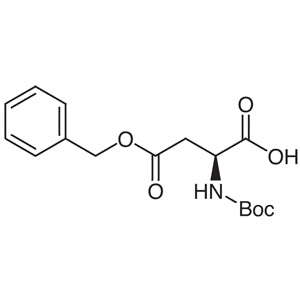
- TCI B1628 7536-58-5 4-Benzyl N-(tert-Butoxycarbonyl)-L-aspartate
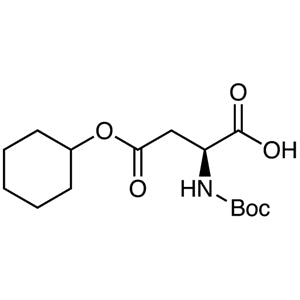
- TCI C2535 73821-95-1 4-Cyclohexyl N-(tert-Butoxycarbonyl)-L-aspartate
- TCI B4619 112883-39-3 4-tert-Butyl N-[(9H-Fluoren-9-ylmethoxy)carbonyl]-D-aspartate
- TCI B3903 3479-47-8 4-Benzyl N-Carbobenzoxy-L-aspartate
- TCI B3887 86060-84-6 4-Benzyl N-[(9H-Fluoren-9-ylmethoxy)carbonyl]-L-aspartate
- Peptide Synthesis: This compound is ideal for synthesizing protected amino acids, which are crucial in building complex peptide sequences.
- Drug Development: It is used in the creation of intermediates for pharmaceutical compounds, supporting the development of new therapeutic agents.
- Biochemical Research: Its role in organic chemistry makes it valuable for studying molecular interactions and reaction mechanisms.
- Biotecnological Applications: It contributes to the production of bioactive compounds used in biotechnology and biopharmaceutical industries.
- Academic Research: It is widely utilized in universities and research institutions for teaching and experimental studies in chemical biology.
| Brand | TCI |
|---|---|
| CAS number | 1676-90-0 |
| Molecular formula | — |
| Purity | — |
| Category | Chemistry > Chemical Biology > Peptide Chemistry |
| Pack sizes | Available in various quantities as per standard laboratory supply |
| Physical form | Solid powder |
| Storage | Store in a cool, dry place away from moisture and direct sunlight |
This compound should be stored in a cool, dry environment to maintain its chemical stability. It is recommended to keep it in airtight containers to prevent exposure to moisture and air. Due to its chemical nature, it should be handled with appropriate personal protective equipment, such as gloves and safety goggles. Storage conditions should avoid extreme temperatures and direct sunlight. It is important to ensure that the compound is kept in a secure location away from incompatible materials to prevent any potential chemical reactions. Proper labeling of containers is essential for safe handling and storage in a laboratory setting.
—
Product Categories
Produk Terkait
-
1-BenzylN-(tert-Butoxycarbonyl)-L-aspartate TCI B2408
Regular price From Rp 1.008.000,00Regular priceRp 720.300,00Sale price From Rp 1.008.000,00 -
4-BenzylN-(tert-Butoxycarbonyl)-L-aspartate TCI B1628
Regular price From Rp 769.650,00Regular priceRp 553.350,00Sale price From Rp 769.650,00 -
4-CyclohexylN-(tert-Butoxycarbonyl)-L-aspartate TCI C2535
Regular price From Rp 822.150,00Regular priceRp 590.100,00Sale price From Rp 822.150,00 -
4-tert-ButylN-[(9H-Fluoren-9-ylmethoxy)carbonyl]-D-aspartate TCI B4619
Regular price From Rp 557.550,00Regular priceRp 405.300,00Sale price From Rp 557.550,00 -
4-BenzylN-Carbobenzoxy-L-aspartate TCI B3903
Regular price From Rp 1.246.350,00Regular priceRp 887.250,00Sale price From Rp 1.246.350,00 -
4-BenzylN-[(9H-Fluoren-9-ylmethoxy)carbonyl]-L-aspartate TCI B3887
Regular price From Rp 1.510.950,00Regular priceRp 1.072.050,00Sale price From Rp 1.510.950,00 -
4-tert-ButylN-[(9H-Fluoren-9-ylmethoxy)carbonyl]-L-aspartate TCI B3150
Regular price From Rp 875.700,00Regular priceRp 627.900,00Sale price From Rp 875.700,00 -
1-AllylN-[(9H-Fluoren-9-ylmethoxy)carbonyl]-L-aspartate TCI A2894
Regular price From Rp 1.881.600,00Regular priceRp 1.331.400,00Sale price From Rp 1.881.600,00