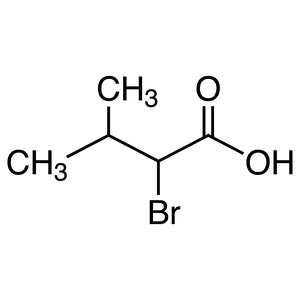
(R)-2-Bromo-3-methylbutyric Acid is a chiral compound widely used in asymmetric synthesis to construct molecules with specific biological activities. This material plays a crucial role in laboratories where the development of complex organic structures is required. Its chiral nature allows for the selective formation of enantiomers, which is essential in pharmaceutical and industrial chemical research. As a building block in chiral synthesis, it provides researchers with the flexibility to design molecules with precise stereochemistry.
The compound's unique stereochemistry and reactivity make it a preferred choice for synthetic chemists. Its ability to participate in various reaction mechanisms, such as nucleophilic substitution and elimination, enhances its utility in creating diverse molecular frameworks. The presence of both bromine and methyl groups contributes to its reactivity, enabling it to be a versatile intermediate in the synthesis of bioactive compounds. These properties ensure its relevance in both academic and industrial research settings.
In Indonesian laboratories, (R)-2-Bromo-3-methylbutyric Acid is commonly used in organic chemistry research and drug development projects. Its availability supports the work of scientists and researchers who require chiral building blocks for their experiments. The compound is particularly valuable in studies involving pharmacology and synthetic chemistry, where precise control over molecular structure is essential.
TCI brochures (PDF)
- Chiral Building Blocks 2025-04-14 · p. 12
Related TCI products
- TCI C1365 26782-74-1 (S)-2-Chloro-3-methylbutyric Acid
- TCI T1595 38261-81-3 (S)-2-Methylbutyl p-Toluenesulfonate
- TCI B0668 565-74-2 2-Bromo-3-methylbutyric Acid
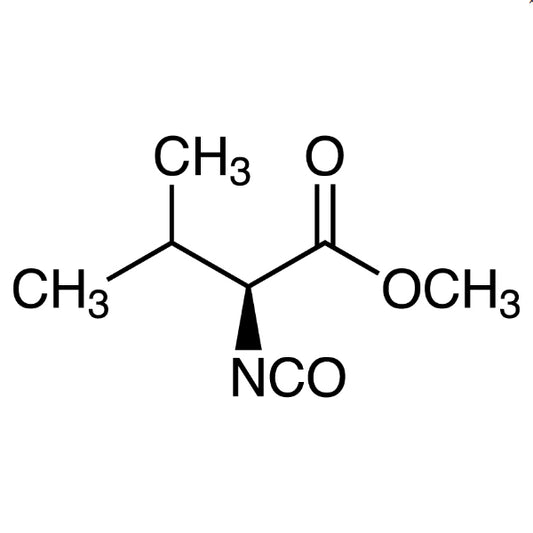
- TCI I0466 30293-86-8 Methyl (S)-(-)-2-Isocyanato-3-methylbutyrate
- TCI B4819 261904-39-6 (R)-3-Bromo-2-hydroxy-2-methylpropionic Acid
- TCI H1338 29678-81-7 (R)-2-Hydroxy-4-phenylbutyric Acid
- Asymmetric Synthesis: This compound is ideal for creating enantiomerically pure compounds, which are essential in pharmaceutical research.
- Organic Chemistry Research: It serves as a key building block for synthesizing complex organic molecules with specific stereochemical configurations.
- Drug Development: Its chiral nature makes it suitable for the synthesis of bioactive compounds used in medicinal chemistry.
- Industrial Chemical Production: It is used in the development of specialty chemicals that require precise stereochemical control.
- Academic Research: It supports teaching and research in synthetic chemistry, providing students and researchers with a fundamental chiral reagent.
| Brand | TCI |
|---|---|
| CAS number | 76792-22-8 |
| Molecular formula | — |
| Purity | — |
| Category | Chemistry > Asymmetric Synthesis > Chiral Building Blocks |
| Pack sizes | Available in various quantities as per supplier specifications |
| Physical form | Solid or liquid, depending on supplier packaging |
| Storage | Store in a cool, dry place away from light and moisture |
This compound should be stored in a cool, dry environment, away from direct sunlight and moisture. It is recommended to use airtight containers to prevent exposure to air and humidity. Due to its chemical nature, it should be handled with appropriate personal protective equipment, such as gloves and safety goggles. Avoid contact with incompatible substances, and ensure proper ventilation in the laboratory. Regular monitoring of storage conditions is advised to maintain the integrity of the material. Proper labeling and storage practices help ensure the safety of laboratory personnel and the quality of the compound.
—
Produk Terkait
-
(S)-2-Chloro-3-methylbutyricAcid TCI C1365
Regular price From Rp 2.730.000,00Regular priceRp 1.924.650,00Sale price From Rp 2.730.000,00 -
(S)-2-Methylbutylp-Toluenesulfonate TCI T1595
Regular price From Rp 1.458.450,00Regular priceRp 1.019.550,00Sale price From Rp 1.458.450,00 -
2-Bromo-3-methylbutyricAcid TCI B0668
Regular price Rp 2.068.500,00Regular priceRp 1.461.600,00Sale price Rp 2.068.500,00 -
Methyl(S)-(-)-2-Isocyanato-3-methylbutyrate TCI I0466
Regular price From Rp 1.378.650,00Regular priceRp 963.900,00Sale price From Rp 1.378.650,00 -
(R)-3-Bromo-2-hydroxy-2-methylpropionicAcid TCI B4819
Regular price From Rp 2.252.250,00Regular priceRp 1.590.750,00Sale price From Rp 2.252.250,00 -
(R)-2-Hydroxy-4-phenylbutyricAcid TCI H1338
Regular price From Rp 2.757.300,00Regular priceRp 1.943.550,00Sale price From Rp 2.757.300,00 -
DL-2-MethylbutyricAcid TCI M0181
Regular price From Rp 955.500,00Regular priceRp 667.800,00Sale price From Rp 955.500,00 -
2-Hydroxy-2-methylbutyricAcid TCI H0636
Regular price From Rp 1.220.100,00Regular priceRp 868.350,00Sale price From Rp 1.220.100,00