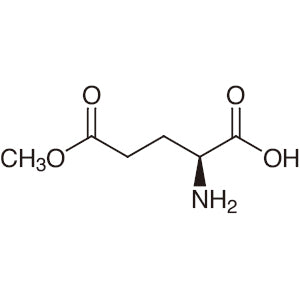
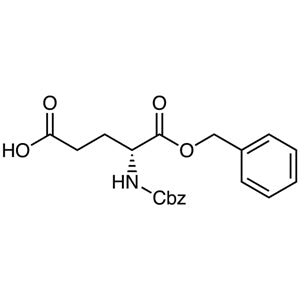
5-Tert-Butyl L-Glutamate is a chemical compound widely utilized in chemical and biochemical experiments, particularly in the synthesis of complex molecules and peptide modification. As a key reagent in organic chemistry, it plays a vital role in the development of bioactive compounds and pharmaceutical research. Its stability and predictable chemical behavior make it a reliable choice for laboratory applications requiring precision and consistency. This compound is commonly found in laboratories focused on biochemical and pharmacological studies, where it serves as a building block for more advanced molecular structures.
The compound's molecular structure allows it to form stable bonds with various functional groups, enhancing its versatility in synthetic processes. Its chemical properties ensure compatibility with a wide range of reaction conditions, making it suitable for both academic and industrial research settings. Additionally, its non-toxic nature and ease of handling contribute to its safety profile in controlled laboratory environments. These characteristics make it an essential tool for researchers working on protein-based chemical compounds and drug development.
In Indonesian laboratories, 5-Tert-Butyl L-Glutamate is frequently used in chemical and biological research, especially in higher education institutions and research centers. It is a fundamental component in experiments involving peptide synthesis and the development of bioactive substances. Its availability and reliability make it a preferred choice for scientists engaged in biochemical and pharmaceutical studies within the country.
TCI brochures (PDF)
- Amino Acids and Peptide Synthesis Reagents 2025-08-14 · p. 30
Related TCI products
- TCI M1690 1499-55-4 5-Methyl L-Glutamate
- TCI B4912 5891-45-2 1-tert-Butyl N-Carbobenzoxy-L-glutamate
- TCI B4303 34404-30-3 1-Benzyl N-(tert-Butoxycarbonyl)-D-glutamate
- TCI B4281 65706-99-2 1-Benzyl N-Benzyloxycarbonyl-D-glutamate
- TCI B3989 3705-42-8 1-Benzyl N-Benzyloxycarbonyl-L-glutamate
- TCI B3902 5680-86-4 5-Benzyl N-Benzyloxycarbonyl-L-glutamate
- Biochemical synthesis: This compound is ideal for synthesizing complex organic molecules due to its stable molecular structure and predictable chemical behavior.
- Peptide modification: It serves as a key reagent in modifying peptide chains, enabling the creation of bioactive peptides for pharmaceutical applications.
- Organic chemistry research: Its versatility in forming bonds with various functional groups makes it suitable for a wide range of organic reactions.
- Drug development: As a precursor to bioactive compounds, it plays a crucial role in the development of new pharmaceuticals and therapeutic agents.
- Academic research: It is commonly used in university laboratories for teaching and research in chemical biology and pharmacology.
| Brand | TCI |
|---|---|
| CAS number | 2419-56-9 |
| Molecular formula | — |
| Purity | — |
| Category | Chemistry > Chemical Biology > Peptide Chemistry |
| Pack sizes | Available in various quantities as per supplier specifications |
| Physical form | Solid (as per standard chemical properties) |
| Storage | Store in a cool, dry place away from direct sunlight and moisture |
This compound should be stored in a cool, dry environment to maintain its chemical stability. It is recommended to keep it in a tightly sealed container to prevent exposure to moisture and air. Proper ventilation is essential when handling the material to ensure a safe laboratory environment. Due to its non-toxic nature, it is generally considered safe for use in controlled settings, but standard laboratory safety protocols should still be followed. Avoid contact with incompatible materials and ensure that storage conditions are consistent with general chemical safety guidelines.
—
Product Categories
Produk Terkait
-
5-MethylL-Glutamate TCI M1690
Regular price From Rp 875.700,00Regular priceRp 627.900,00Sale price From Rp 875.700,00 -
1-tert-ButylN-Carbobenzoxy-L-glutamate TCI B4912
Regular price From Rp 742.350,00Regular priceRp 534.450,00Sale price From Rp 742.350,00 -
1-BenzylN-(tert-Butoxycarbonyl)-D-glutamate TCI B4303
Regular price From Rp 1.246.350,00Regular priceRp 887.250,00Sale price From Rp 1.246.350,00 -
1-BenzylN-Benzyloxycarbonyl-D-glutamate TCI B4281
Regular price Rp 2.464.350,00Regular priceRp 1.738.800,00Sale price Rp 2.464.350,00 -
1-BenzylN-Benzyloxycarbonyl-L-glutamate TCI B3989
Regular price From Rp 1.563.450,00Regular priceRp 1.108.800,00Sale price From Rp 1.563.450,00 -
5-BenzylN-Benzyloxycarbonyl-L-glutamate TCI B3902
Regular price Rp 1.510.950,00Regular priceRp 1.072.050,00Sale price Rp 1.510.950,00 -
5-tert-ButylN-[(9H-Fluoren-9-ylmethoxy)carbonyl]-D-glutamate TCI B3669
Regular price From Rp 742.350,00Regular priceRp 534.450,00Sale price From Rp 742.350,00 -
5-tert-Butyl1-PentafluorophenylN-[(9H-Fluoren-9-ylmethoxy)carbonyl]-L-glutamate TCI B3318
Regular price From Rp 1.113.000,00Regular priceRp 793.800,00Sale price From Rp 1.113.000,00