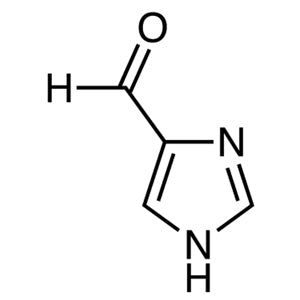
2-Butyl-1H-imidazole-5-carboxaldehyde is a chemical compound widely used as a building block in the synthesis of heterocyclic compounds. Its complex structure enables participation in various chemical reactions, including condensation and substitution, making it a versatile reagent in organic chemistry. In the laboratory, this compound plays a crucial role in the development of more complex molecular structures, particularly in the field of pharmaceutical and industrial chemical research. Its reactivity and structural versatility make it an essential component in the creation of new compounds with specific functional properties.
The compound's heterocyclic structure provides a stable yet reactive framework, allowing it to engage in a wide range of chemical transformations. Its ability to form stable intermediates under controlled conditions makes it a preferred choice for synthetic chemists. The compound exhibits moderate reactivity, which can be fine-tuned through the use of appropriate catalysts or reaction conditions. This balance between stability and reactivity is key to its effectiveness in laboratory settings where precision and control are essential.
In Indonesian laboratories, 2-Butyl-1H-imidazole-5-carboxaldehyde is commonly used in organic chemistry research, particularly in pharmaceutical and materials science applications. Researchers in academic and industrial settings rely on this compound for its ability to participate in diverse synthetic pathways. Its availability and chemical properties make it a valuable tool for advancing chemical research and development in Indonesia.
Related TCI products
- TCI I0809 10111-08-7 Imidazole-2-carboxaldehyde
- TCI I0636 3034-50-2 Imidazole-4-carboxaldehyde
- TCI B2914 83857-96-9 2-Butyl-5-chloro-1H-imidazole-4-carboxaldehyde
- TCI T1985 2232-08-8 1-(p-Toluenesulfonyl)imidazole
- TCI B3941 37734-89-7 1-Benzyl-2-phenyl-1H-imidazole
- TCI B1043 54925-64-3 1-(tert-Butyldimethylsilyl)imidazole [tert-Butyldimethylsilylating Agent]
- Organic synthesis of heterocyclic compounds due to its versatile reactivity and structural framework.
- Pharmaceutical research for the development of new drugs and bioactive molecules.
- Material science applications in the creation of advanced polymers and functional materials.
- Chemical intermediate production for industrial applications requiring specific functional groups.
- Structural modification studies to explore new molecular architectures and reactivity patterns.
| Brand | TCI |
|---|---|
| CAS number | 68282-49-5 |
| Molecular formula | — |
| Purity | — |
| Category | Chemistry > Building Blocks > Heterocyclic Building Blocks |
| Pack sizes | Available in various quantities as per standard chemical supply practices. |
| Physical form | Solid, typically in crystalline or powder form. |
| Storage | Store in a cool, dry place away from light and moisture. |
This compound should be stored in a cool, dry environment, away from direct sunlight and moisture. It is recommended to use airtight containers to prevent exposure to air and humidity. Due to its reactivity, it should be handled with care, using appropriate personal protective equipment such as gloves and safety goggles. Storage conditions should be maintained to ensure stability and prevent degradation. It is advisable to keep the compound in a well-ventilated area to minimize any potential risks associated with its chemical properties. Proper labeling and safe handling procedures are essential to ensure safe laboratory practices.
—
Produk Terkait
-
Imidazole-2-carboxaldehyde TCI I0809
Regular price From Rp 822.150,00Regular priceRp 590.100,00Sale price From Rp 822.150,00 -
Imidazole-4-carboxaldehyde TCI I0636
Regular price From Rp 769.650,00Regular priceRp 553.350,00Sale price From Rp 769.650,00 -
2-Butyl-5-chloro-1H-imidazole-4-carboxaldehyde TCI B2914
Regular price Rp 1.167.600,00Regular priceRp 831.600,00Sale price Rp 1.167.600,00 -
1-(p-Toluenesulfonyl)imidazole TCI T1985
Regular price From Rp 1.140.300,00Regular priceRp 812.700,00Sale price From Rp 1.140.300,00 -
1-Benzyl-2-phenyl-1H-imidazole TCI B3941
Regular price From Rp 928.200,00Regular priceRp 664.650,00Sale price From Rp 928.200,00 -
1-(tert-Butyldimethylsilyl)imidazole[tert-ButyldimethylsilylatingAgent] TCI B1043
Regular price From Rp 2.491.650,00Regular priceRp 1.757.700,00Sale price From Rp 2.491.650,00 -
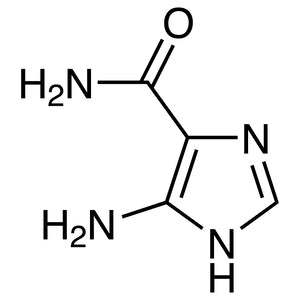
5-Amino-1H-imidazole-4-carboxamide TCI A3078
Regular price From Rp 1.670.550,00Regular priceRp 1.183.350,00Sale price From Rp 1.670.550,00 -
2-Amino-4,5-dicyano-1H-imidazole TCI A1292
Regular price Rp 3.922.800,00Regular priceRp 2.758.350,00Sale price Rp 3.922.800,00