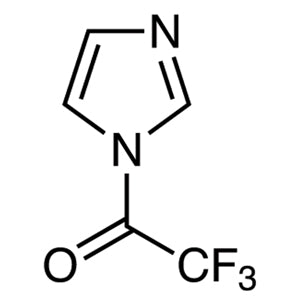
1-(tert-Butyldimethylsilyl)imidazole is a chemical compound widely used as a silylating agent in organic chemistry reactions. It plays a crucial role in laboratories by facilitating substitution and coupling reactions, particularly in the synthesis of complex heterocyclic compounds. This reagent is highly valued for its ability to activate imidazole rings, enabling high reactivity in various chemical processes. Its controlled reactivity and stability make it an essential component in synthetic chemistry workflows.
The compound’s chemical properties, including its stability and controlled reactivity, make it a preferred choice for laboratory applications. It exhibits a high degree of specificity in interacting with different substrates, allowing for precise chemical transformations. Its molecular structure supports efficient participation in synthetic pathways, making it ideal for use in advanced organic synthesis. These characteristics ensure that it remains a reliable and effective reagent in both academic and industrial research settings.
In Indonesian laboratories, 1-(tert-Butyldimethylsilyl)imidazole is commonly used in organic chemistry research, especially in higher education institutions and research organizations. It is a key reagent in the synthesis of heterocyclic compounds, which have broad applications in pharmaceutical and materials science. Its reliability and performance make it a staple in chemical synthesis projects conducted in Indonesia.
Advantages (TCI brochure)
- DMAS ethers generally more stable than TMS ethers and give better GC separation
TCI brochures (PDF)
- GC Derivatization Reagents 2026-03-25 · p. 3
- Protecting Agents 2025-03-25 · p. 5
- Please inquire for pricing and availability of listed products to our local sales representatives. Si Si Et 2026-07-16 · p. 10
Related TCI products
- TCI D1596 81452-04-2 1-(Dimethylisopropylsilyl)imidazole [Dimethylisopropylsilylating Agent]
- TCI D1516 62365-34-8 1-(Dimethylethylsilyl)imidazole [Dimethylethylsilylating Agent]
- TCI T0585 18156-74-6 N-Trimethylsilylimidazole [Trimethylsilylating Reagent]
- TCI H0467 32477-35-3 1-(Heptafluorobutyryl)imidazole [Acylating Agent]
- TCI T1277 13368-42-8 N-(Trimethylsilyl)morpholine
- TCI T0670 1546-79-8 1-(Trifluoroacetyl)imidazole
- Organic synthesis of heterocyclic compounds due to its ability to activate imidazole rings and facilitate coupling reactions.
- Development of pharmaceutical intermediates where controlled reactivity and specificity are essential for synthetic pathways.
- Research in materials science for the creation of complex molecular structures with tailored properties.
- Academic teaching and experimental work in chemistry laboratories requiring precise and reliable reagents.
- Industrial chemical processes involving the synthesis of high-purity compounds with specific functional groups.
From the TCI brochure
- Structural analysis of hydroxysteroids by GC-MS
- Trace analysis of prostaglandins and bile acids
| Brand | TCI |
|---|---|
| CAS number | 54925-64-3 |
| Molecular formula | — |
| Purity | — |
| Category | Chemistry > Building Blocks > Heterocyclic Building Blocks |
| Pack sizes | Available in various quantities as per standard laboratory supply formats |
| Physical form | Solid or liquid, depending on the specific formulation |
| Storage | Store in a cool, dry place away from moisture and direct sunlight |
This compound should be stored in a cool, dry environment to maintain its chemical stability and reactivity. It is recommended to use airtight containers to prevent exposure to moisture and air, which could affect its performance. Due to its chemical nature, it should be handled in a well-ventilated area, and appropriate personal protective equipment should be worn. Avoid contact with incompatible materials, and ensure that storage conditions are consistent with standard laboratory safety protocols. Regular inspection of storage containers is advised to ensure long-term usability and safety.
—
Product Categories
Produk Terkait
-
1-(Dimethylisopropylsilyl)imidazole[DimethylisopropylsilylatingAgent] TCI D1596
Regular price From Rp 2.121.000,00Regular priceRp 1.498.350,00Sale price From Rp 2.121.000,00 -
1-(Dimethylethylsilyl)imidazole[DimethylethylsilylatingAgent] TCI D1516
Regular price From Rp 1.801.800,00Regular priceRp 1.275.750,00Sale price From Rp 1.801.800,00 -
N-Trimethylsilylimidazole[TrimethylsilylatingReagent] TCI T0585
Regular price From Rp 1.670.550,00Regular priceRp 1.183.350,00Sale price From Rp 1.670.550,00 -
1-(Heptafluorobutyryl)imidazole[AcylatingAgent] TCI H0467
Regular price From Rp 4.425.750,00Regular priceRp 3.110.100,00Sale price From Rp 4.425.750,00 -
N-(Trimethylsilyl)morpholine TCI T1277
Regular price From Rp 1.483.650,00Regular priceRp 1.053.150,00Sale price From Rp 1.483.650,00 -
1-(Trifluoroacetyl)imidazole TCI T0670
Regular price From Rp 1.351.350,00Regular priceRp 960.750,00Sale price From Rp 1.351.350,00 -
2-(tert-Butoxycarbonylthio)-4,6-dimethylpyrimidine[BocAgentforPeptidesSynthesis] TCI B1089
Regular price From Rp 1.060.500,00Regular priceRp 757.050,00Sale price From Rp 1.060.500,00 -
N-TrimethylsilylimidazoleKitSIM1mL*8/Reactionvial,capacity2mL*8[TrimethylsilylatingReagent] TCI T0693
Regular price Rp 4.161.150,00Regular priceRp 2.925.300,00Sale price Rp 4.161.150,00