N-Trimethylsilylimidazole (TCI T0585), with CAS number 18156-74-6, is a chemical reagent widely used in silylation processes for organic compound modification. This compound is essential in laboratory settings where the transformation of hydroxyl groups into silyl groups is required. Its role is to enhance molecular structure and improve the stability of organic compounds, making it a valuable tool in synthetic chemistry. It is commonly employed in the synthesis of heterocyclic compounds and in analytical chemistry to improve the reactivity and solubility of target compounds.
The reactivity and ability to bond with various organic compounds make N-Trimethylsilylimidazole a preferred choice in chemical laboratories. It exhibits excellent solubility in organic solvents such as ethylamine and dimethylformamide, which simplifies its use in chemical reactions. Its stability under certain conditions ensures consistent performance, making it a reliable reagent for multiple applications. This characteristic allows it to be used in a wide range of chemical processes without compromising the quality of the results.
In Indonesian laboratories, N-Trimethylsilylimidazole is commonly used in organic chemistry research, particularly in the synthesis of complex compounds and chemical analysis. Its effectiveness in facilitating silylation reactions makes it a popular choice among researchers and laboratories that require a reliable and efficient reagent for their experiments.
Advantages (TCI brochure)
- Reacts only with hydroxy groups, sugars, steroids and uric acids
- Hindered hydroxy groups: use BSA and TMCS together with SIM
TCI brochures (PDF)
- GC Derivatization Reagents 2026-03-25 · p. 2
- DualSeal ― Airtight-Double-Cap Bottled Reagents 2024-08-13 · p. 6
- Protecting Agents 2025-03-25 · p. 5
- Please inquire for pricing and availability of listed products to our local sales representatives. Si Si Et 2026-07-16 · p. 10
Related TCI products
- TCI T0693 18156-74-6 N-Trimethylsilylimidazole Kit SIM 1 mL * 8 / Reaction vial, capacity 2 mL * 8 [Trimethylsilylating Reagent]
- TCI B1043 54925-64-3 1-(tert-Butyldimethylsilyl)imidazole [tert-Butyldimethylsilylating Agent]
- TCI T1535 43112-38-5 3-Trimethylsilyl-2-oxazolidinone [Trimethylsilylating Reagent]
- TCI T1277 13368-42-8 N-(Trimethylsilyl)morpholine
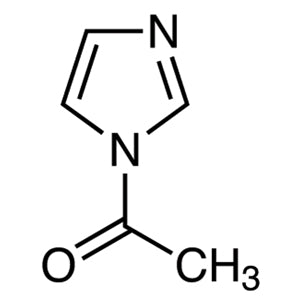
- TCI A0694 2466-76-4 N-Acetylimidazole
- TCI D1516 62365-34-8 1-(Dimethylethylsilyl)imidazole [Dimethylethylsilylating Agent]
- Organic synthesis of heterocyclic compounds due to its ability to modify hydroxyl groups effectively.
- Chemical analysis where enhanced reactivity and solubility of target compounds are required.
- Silylation reactions to improve molecular stability and structural complexity in organic compounds.
- Research in complex compound synthesis where precise chemical modifications are essential.
- Analytical procedures that demand reliable and consistent reagent performance in laboratory settings.
From the TCI brochure
- Steroids: 0.2 mL SIM added to 1-5 mg substrate in 0.1 mL pyridine, 0.5-1 hour at room temperature
- Ketosteroids: after 3 hours, add 0.2 mL BSA and leave 2 more hours at room temperature
| Brand | TCI |
|---|---|
| CAS number | 18156-74-6 |
| Molecular formula | — |
| Purity | — |
| Category | Chemistry > Building Blocks > Heterocyclic Building Blocks |
| Pack sizes | Available in various sizes as per supplier specifications |
| Physical form | Liquid |
| Storage | Store in a cool, dry place away from moisture and direct sunlight |
N-Trimethylsilylimidazole should be stored in a cool, dry place, away from moisture and direct sunlight to maintain its chemical integrity. It is recommended to use airtight containers to prevent exposure to air and potential degradation. Due to its reactivity, it should be handled with care, using appropriate personal protective equipment such as gloves and goggles. It is important to ensure proper ventilation in the laboratory when working with this reagent. Avoid contact with incompatible materials and keep it away from heat sources. Proper storage and handling practices help ensure the safety of laboratory personnel and the effectiveness of the reagent in chemical processes.
—
Product Categories
- Building BlocksHeterocyclic Building BlocksNon-Halogenated Heterocyclic Building Blocks
- Synthetic ReagentsProtection, Deprotection, DerivatizationProtecting and Derivatizing Reagents [Synthetic Reagents]
- Organometallic ReagentsOrganosilicon [Organometallic Reagents]Organosilicon Compounds (Other) [Organosilicon]
Produk Terkait
-
N-TrimethylsilylimidazoleKitSIM1mL*8/Reactionvial,capacity2mL*8[TrimethylsilylatingReagent] TCI T0693
Regular price Rp 4.161.150,00Regular priceRp 2.925.300,00Sale price Rp 4.161.150,00 -
1-(tert-Butyldimethylsilyl)imidazole[tert-ButyldimethylsilylatingAgent] TCI B1043
Regular price From Rp 2.491.650,00Regular priceRp 1.757.700,00Sale price From Rp 2.491.650,00 -
3-Trimethylsilyl-2-oxazolidinone[TrimethylsilylatingReagent] TCI T1535
Regular price Rp 2.623.950,00Regular priceRp 1.850.100,00Sale price Rp 2.623.950,00 -
N-(Trimethylsilyl)morpholine TCI T1277
Regular price From Rp 1.483.650,00Regular priceRp 1.053.150,00Sale price From Rp 1.483.650,00 -
N-Acetylimidazole TCI A0694
Regular price Rp 1.087.800,00Regular priceRp 775.950,00Sale price Rp 1.087.800,00 -
1-(Dimethylethylsilyl)imidazole[DimethylethylsilylatingAgent] TCI D1516
Regular price From Rp 1.801.800,00Regular priceRp 1.275.750,00Sale price From Rp 1.801.800,00 -
1-(Dimethylisopropylsilyl)imidazole[DimethylisopropylsilylatingAgent] TCI D1596
Regular price From Rp 2.121.000,00Regular priceRp 1.498.350,00Sale price From Rp 2.121.000,00