1-(Trifluoroacetyl)imidazole is a chemical compound widely used in organic synthesis reactions, particularly in fluorination processes. This reagent plays a crucial role in laboratories where the development of organofluorine compounds is required. Its complex molecular structure enables high reactivity under various chemical conditions, making it a valuable tool for creating new molecular entities. Due to its unique chemical properties, it is frequently employed in synthetic pathways that demand precision and control.
The compound's high reactivity and ability to interact with a wide range of organic substrates make it a preferred choice for researchers. It is stable under certain conditions but becomes highly reactive when exposed to elevated temperatures or specific catalysts. These characteristics allow it to be effectively utilized in a variety of synthetic reactions, including substitution, condensation, and bond formation. Its versatility and effectiveness in controlled environments make it a key component in advanced chemical research.
In Indonesian laboratories, 1-(Trifluoroacetyl)imidazole is commonly used in organic chemistry research, especially in the development of new compounds with applications in pharmaceuticals and materials science. It is a favored reagent for experiments requiring fluorination, offering researchers the ability to manipulate molecular structures with high accuracy. Its role in academic and industrial research settings underscores its importance in the field of synthetic chemistry.
Advantages (TCI brochure)
- Acylation reactions proceed under mild conditions
- Resulting imidazoles are inert
TCI brochures (PDF)
- GC Derivatization Reagents 2026-03-25 · p. 2
- Protecting Agents 2025-03-25 · p. 7
- Fluorination Reagents, Fluorinated Building Blocks 2026-03-18 · p. 10
Related TCI products
- TCI H0467 32477-35-3 1-(Heptafluorobutyryl)imidazole [Acylating Agent]
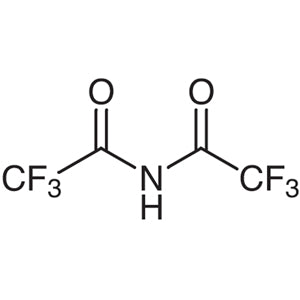
- TCI B0986 407-24-9 Bistrifluoroacetamide
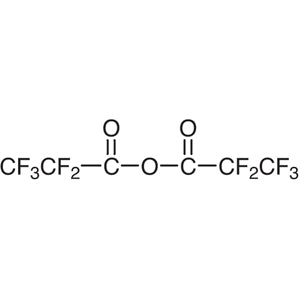
- TCI T0433 407-25-0 Trifluoroacetic Anhydride
- TCI T1531 68602-57-3 Trifluoroacetyl Triflate [Powerful Trifluoroacetylating Reagent]
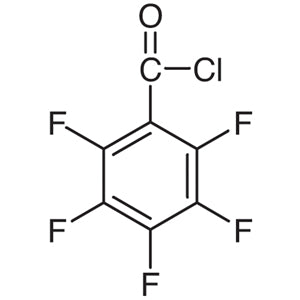
- TCI P0807 2251-50-5 Pentafluorobenzoyl Chloride
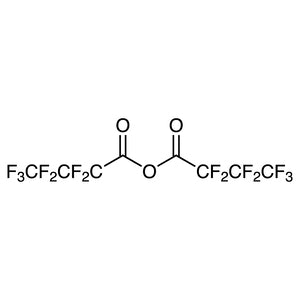
- TCI P0566 356-42-3 Pentafluoropropionic Anhydride
- Fluorination Reactions: This compound is ideal for fluorination processes due to its ability to introduce fluorine atoms into organic molecules with high efficiency.
- Organic Synthesis: Its reactivity and versatility make it suitable for a wide range of synthetic reactions, including substitution and condensation.
- Drug Development: It is used in the synthesis of pharmaceutical compounds, contributing to the creation of new drug molecules with desired properties.
- Material Science Research: The compound is employed in the development of advanced materials, where fluorinated structures offer enhanced chemical and physical properties.
- Academic Research: It is a key reagent in university and research institute laboratories, supporting studies in organic chemistry and chemical engineering.
| Brand | TCI |
|---|---|
| CAS number | 1546-79-8 |
| Molecular formula | — |
| Purity | — |
| Category | Chemistry > Synthetic Reagents > Fluorination Reagents |
| Pack sizes | Available in various quantities as per standard laboratory reagent packaging |
| Physical form | Solid, crystalline appearance |
| Storage | Store in a cool, dry place away from light and moisture |
This compound should be stored in a cool, dry environment, away from direct light and moisture to maintain its chemical stability. It is recommended to use airtight containers made of glass or high-density polyethylene to prevent contamination and degradation. Due to its reactivity, it should be handled in a well-ventilated laboratory setting, preferably with appropriate personal protective equipment. Avoid exposure to high temperatures and incompatible materials to ensure safe storage and usage. Regular monitoring of storage conditions is essential to maintain the integrity of the compound during long-term use.
—
Product Categories
Produk Terkait
-
1-(Heptafluorobutyryl)imidazole[AcylatingAgent] TCI H0467
Regular price From Rp 4.425.750,00Regular priceRp 3.110.100,00Sale price From Rp 4.425.750,00 -
Bistrifluoroacetamide TCI B0986
Regular price From Rp 3.285.450,00Regular priceRp 2.313.150,00Sale price From Rp 3.285.450,00 -
TrifluoroaceticAnhydride TCI T0433
Regular price From Rp 822.150,00Regular priceRp 590.100,00Sale price From Rp 822.150,00 -
TrifluoroacetylTriflate[PowerfulTrifluoroacetylatingReagent] TCI T1531
Regular price Rp 3.843.000,00Regular priceRp 2.702.700,00Sale price Rp 3.843.000,00 -
PentafluorobenzoylChloride TCI P0807
Regular price From Rp 1.326.150,00Regular priceRp 942.900,00Sale price From Rp 1.326.150,00 -
PentafluoropropionicAnhydride TCI P0566
Regular price From Rp 1.060.500,00Regular priceRp 757.050,00Sale price From Rp 1.060.500,00 -
HeptafluorobutyricAnhydride TCI H0337
Regular price Rp 2.332.050,00Regular priceRp 1.646.400,00Sale price Rp 2.332.050,00 -
1-(tert-Butyldimethylsilyl)imidazole[tert-ButyldimethylsilylatingAgent] TCI B1043
Regular price From Rp 2.491.650,00Regular priceRp 1.757.700,00Sale price From Rp 2.491.650,00