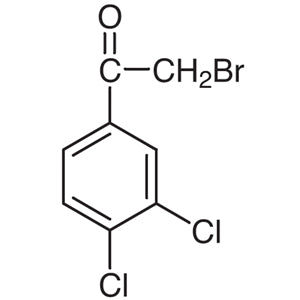
3-Bromophenacyl Bromide is a chemical compound widely used as a building block in the synthesis of complex organic compounds. It plays a crucial role in laboratory settings where organic reactions are conducted, particularly in the formation of heterocyclic and aromatic compounds. This reagent is essential for nucleophilic substitution and cross-coupling reactions, enabling the construction of more intricate molecular structures. Its reactivity makes it a valuable tool for chemists working on diverse synthetic pathways.
The compound is characterized as a highly reactive bromoaromatic substance, with a phenyl group attached to a bromo group. This structural feature allows it to participate in a wide range of chemical reactions, including substitution and bond-forming processes. Its stability under certain conditions ensures that it can be stored and used effectively in various laboratory applications. The presence of the bromo group enhances its reactivity, making it a preferred choice for synthetic chemists.
In Indonesian laboratories, 3-Bromophenacyl Bromide is extensively used in organic chemistry research, especially in the development of pharmaceutical compounds and chemical materials. Its versatility and effectiveness in synthetic reactions make it a popular choice among researchers. It is commonly found in academic and industrial settings where complex molecule synthesis is required.
- Organic synthesis applications benefit from 3-Bromophenacyl Bromide due to its reactivity in nucleophilic substitution and cross-coupling reactions, allowing the creation of complex molecular structures.
- Pharmaceutical research utilizes this compound for the synthesis of drug molecules, as its bromo group facilitates the formation of new chemical bonds during drug development.
- Material science applications leverage its ability to participate in reactions that form aromatic and heterocyclic compounds, essential for creating advanced chemical materials.
- Analytical chemistry uses it as a reference standard for identifying and quantifying compounds in complex mixtures through various analytical techniques.
- Industrial chemical processes incorporate it for the production of specialty chemicals, where its reactivity supports the synthesis of high-value products.
| Brand | TCI |
|---|---|
| CAS number | 18523-22-3 |
| Molecular formula | — |
| Purity | — |
| Category | Chemistry > Building Blocks > Non-Heterocyclic Building Blocks |
| Pack sizes | Available in various quantities as per standard supplier offerings |
| Physical form | Solid or liquid, depending on the specific formulation |
| Storage | Store in a cool, dry place away from light and moisture |
3-Bromophenacyl Bromide should be stored in a cool, dry place, away from direct light and moisture to maintain its chemical stability. It is recommended to use airtight containers made of glass or inert plastic to prevent contamination and degradation. Due to its reactivity, it should be handled in a well-ventilated area, and appropriate personal protective equipment such as gloves and goggles should be worn. Avoid contact with incompatible substances, and ensure proper disposal according to local regulations. Regular monitoring of storage conditions is essential to ensure the compound remains suitable for use in laboratory applications.
—
Produk Terkait
-
2-BromophenacylBromide TCI B4124
Regular price From Rp 1.961.400,00Regular priceRp 1.387.050,00Sale price From Rp 1.961.400,00 -
4-BromophenacylBromide TCI D0164
Regular price From Rp 2.359.350,00Regular priceRp 1.665.300,00Sale price From Rp 2.359.350,00 -
4-BromophenacylBromide[forHPLCLabeling] TCI A5501
Regular price Rp 2.332.050,00Regular priceRp 1.646.400,00Sale price Rp 2.332.050,00 -
3,4-DichlorophenacylBromide TCI B2837
Regular price From Rp 1.192.800,00Regular priceRp 849.450,00Sale price From Rp 1.192.800,00