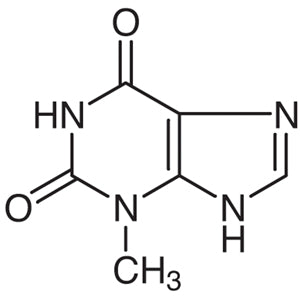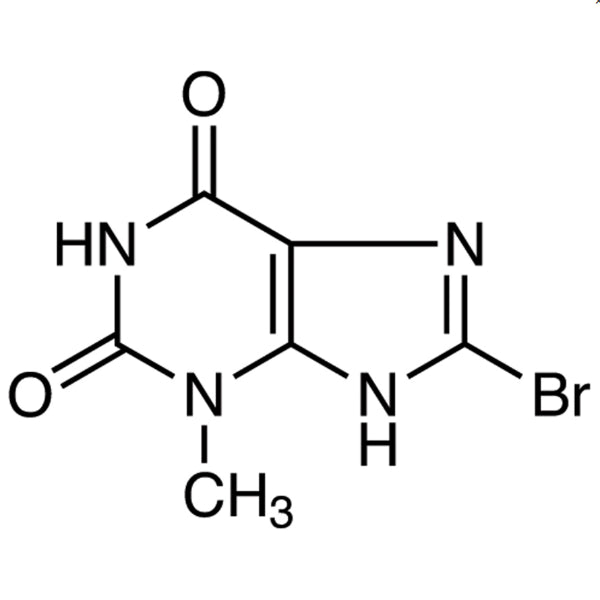
8-Bromo-3-methylxanthine is a chemical compound widely used in biochemical experiments and scientific research. It belongs to the xanthine family, which plays a significant role in the metabolism and biological activities of various organisms. This compound is commonly employed as a substrate or modulator in enzymatic reactions and studies focused on specific biological mechanisms. In the laboratory, it is used to investigate the role of xanthines in physiological and pathological processes. Its chemical structure and properties make it a versatile tool for researchers seeking to explore molecular interactions and biochemical pathways.
The compound exhibits a stable molecular structure and specific chemical properties that allow for controlled reactivity in chemical reactions. It is soluble in certain organic solvents, which facilitates its use in separation processes and experimental applications. These characteristics make it a preferred choice for experiments requiring precise and consistent results. Its chemical and biological specificity ensures that it is suitable for applications where accuracy and reproducibility are essential.
In Indonesian laboratories, 8-Bromo-3-methylxanthine is utilized in biochemical, pharmacological, and molecular biology research. It is a key component in experiments requiring chemically modified xanthine compounds. Researchers in Indonesia frequently use it to study enzyme activity, drug interactions, and molecular mechanisms. Its reliability and effectiveness make it a valuable resource in scientific investigations across various disciplines.
TCI brochures (PDF)
- Nucleosides, Nucleotides, Nucleic Acids and Related Reagents 2026-03-23 · p. 10
- Biochemical Research – This compound is ideal for studying enzyme kinetics and metabolic pathways due to its role as a substrate or modulator.
- Pharmacological Studies – It is used to investigate drug interactions and the effects of xanthine derivatives on biological systems.
- Molecular Biology Experiments – Its chemical structure makes it suitable for nucleotide-related studies and molecular interaction analysis.
- Enzymatic Reaction Analysis – The compound's reactivity allows it to be used in experiments examining enzyme activity and substrate specificity.
- Xanthine-Related Pathway Investigations – It is employed to explore the physiological and pathological roles of xanthine compounds in biological systems.
| Brand | — |
|---|---|
| CAS number | — |
| Molecular formula | — |
| Purity | — |
| Category | — |
| Pack sizes | — |
| Physical form | — |
| Storage | — |
- Brand – TCI
- CAS Number – 93703-24-3
- Category – Life Science > Biochemicals and Reagents > Nucleosides, Nucleotides, Oligonucleotides
- Pack Sizes – Available in standard laboratory quantities
- Physical Form – Solid powder
- Storage Note – Store in a cool, dry place away from light
This compound should be stored in a cool, dry environment, away from direct sunlight and sources of heat. It is recommended to use airtight containers to prevent moisture absorption and contamination. Due to its chemical nature, it should be handled with appropriate personal protective equipment, including gloves and safety goggles. Avoid exposure to incompatible substances to ensure safety during storage and use. Proper labeling of containers is essential for safe handling and to prevent accidental misuse. Maintain a clean and organized workspace to minimize the risk of contamination and ensure the integrity of the compound during experimental use.
—
Produk Terkait
-
8-Bromo-7-(2-butyn-1-yl)-3-methylxanthine TCI B4454
Regular price Rp 1.458.450,00Regular priceRp 1.035.300,00Sale price Rp 1.458.450,00 -
1-Methylxanthine TCI M2432
Regular price From Rp 2.227.050,00Regular priceRp 1.572.900,00Sale price From Rp 2.227.050,00 -
3-Methylxanthine TCI M2073
Regular price From Rp 1.033.200,00Regular priceRp 738.150,00Sale price From Rp 1.033.200,00 -
1,7-Dimethylxanthine TCI D5696
Regular price From Rp 3.127.950,00Regular priceRp 2.202.900,00Sale price From Rp 3.127.950,00 -
AdenineSulfateDihydrate TCI A0151
Regular price From Rp 3.074.400,00Regular priceRp 2.165.100,00Sale price From Rp 3.074.400,00 -
AdenineHydrochlorideHemihydrate TCI A0150
Regular price From Rp 717.150,00Regular priceRp 516.600,00Sale price From Rp 717.150,00 -
Adenine TCI A0149
Regular price From Rp 1.749.300,00Regular priceRp 1.239.000,00Sale price From Rp 1.749.300,00