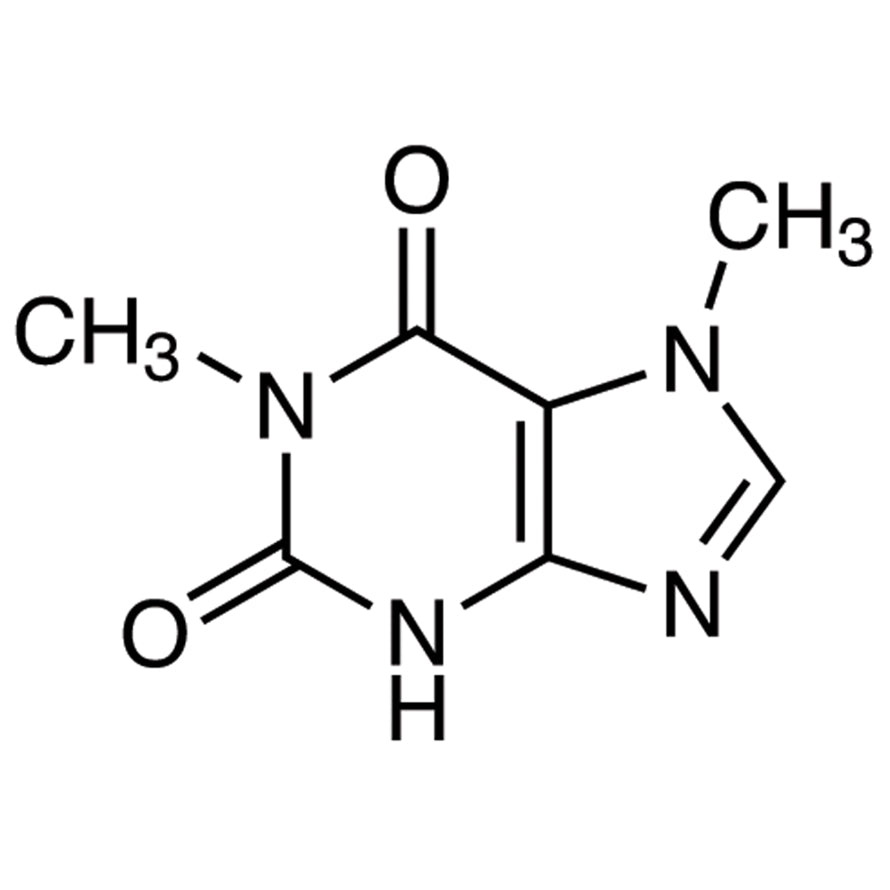
TCI D5696 1,7-Dimethylxanthine is a xanthine-class alkaloid compound widely known as paraxanthine, the principal metabolite of caffeine in the human body. The material is supplied as a pure, reagent-grade substance, allowing it to be treated as a reference material in biochemistry, pharmacology, and analytical chemistry laboratories. Its role at the bench is highly specific: it serves as both an identity comparator and a quantitative comparator whenever researchers need to confirm that a peak appearing on a chromatogram genuinely originates from paraxanthine rather than from caffeine, theophylline, or theobromine, whose underlying structures are closely similar.
The characteristic that makes this compound the preferred choice is the placement of its methyl groups at positions 1 and 7 of the xanthine core, which produces a distinctive ultraviolet absorption pattern and mass spectrometric fragmentation pattern that can be distinguished from those of the other dimethylxanthine isomers. As an alkaloid solid, the material is stable enough to be weighed and dissolved into a stock solution, which makes the preparation of graded calibration series straightforward. It is precisely this clarity of identity that gives the material its value: a single correct comparator compound determines data quality far more decisively than almost any other variable in the workflow.
In Indonesian laboratories, this material fits naturally into the daily routine of university research groups, pharmacology departments, and analytical service units that work with caffeine metabolism and related xanthine compounds. It is typically weighed out to build stock and working solutions, then carried through chromatographic and spectrometric runs as the identity and quantity reference. Because a reliable comparator underpins every subsequent number reported, it occupies a small but decisive place on the reagent shelf.
TCI brochures (PDF)
- Alkaloids 2025-10-10 · p. 7
- Phytochemicals 2025-12-17 · p. 3
- Chromatographic identity confirmation: run alongside unknown samples so that a suspected paraxanthine peak can be matched against a known comparator rather than assigned by retention time alone.
- Calibration series preparation: weighed accurately and dissolved into a stock solution, then diluted stepwise to build the graded standard curve that quantitative measurements of paraxanthine depend upon.
- Caffeine metabolism studies: used as the authentic reference for the principal human metabolite of caffeine, letting pharmacology researchers track and confirm metabolic conversion with a defined comparator.
- Isomer discrimination work: its methyl groups at positions 1 and 7 give ultraviolet and mass fragmentation patterns distinguishable from theophylline, theobromine, and caffeine in mixed samples.
- Analytical method development and verification: serves as the known input against which a newly built or revised analytical procedure is checked for correct response, separation, and identification.
| Brand | TCI |
|---|---|
| CAS number | 611-59-6 |
| Molecular formula | — |
| Purity | — |
| Category | Life Science > Biochemicals and Reagents > Alkaloids |
| Pack sizes | available in the standard TCI catalogue pack sizes for this item; please confirm the specific pack when ordering. |
| Physical form | solid (alkaloid) |
| Storage | store according to the conditions stated on the manufacturer's label and accompanying documentation. |
Store the container closed and protected from moisture and direct light, in a cool, dry place consistent with the conditions stated on the manufacturer's label. Keep the material in its original tightly sealed container, or transfer it to a clean, chemically compatible glass vial with a secure closure if aliquots are prepared. Handle the solid in a well-ventilated area or a fume hood, using gloves, safety glasses, and a laboratory coat, and avoid generating or inhaling dust during weighing. Allow a cold container to reach room temperature before opening to prevent condensation. Label all prepared stock and working solutions clearly with the compound identity and preparation date, and consult the supplier's safety data sheet before first use.
—
Produk Terkait
-
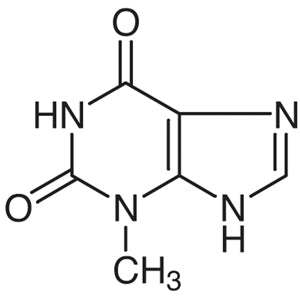
1-Methylxanthine TCI M2432
Regular price From Rp 2.174.550,00Regular price -
3-Methylxanthine TCI M2073
Regular price From Rp 980.700,00Regular price -
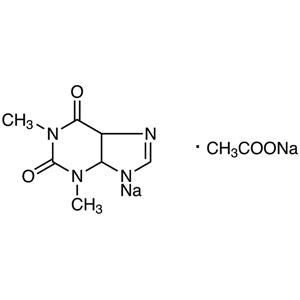
Theophyllol TCI T0180
Regular price Rp 2.094.750,00Regular price -
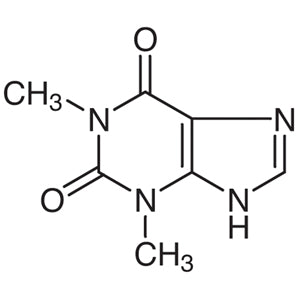
Theophylline TCI T0179
Regular price From Rp 505.050,00Regular price -
Theobromine TCI T0178
Regular price From Rp 1.220.100,00Regular price -
Dimenhydrinate TCI D6336
Regular price From Rp 1.829.100,00Regular price -
1,3-DimethyluricAcid TCI D6169
Regular price Rp 5.432.700,00Regular price -
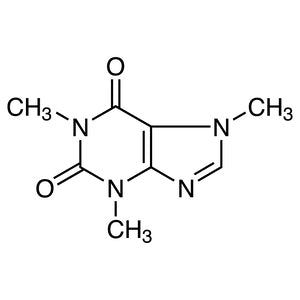
Caffeine TCI C2042
Regular price From Rp 477.750,00Regular price