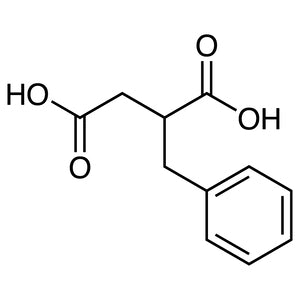
(S)-Benzylsuccinic Acid is a chiral building block widely used in asymmetric synthesis to construct molecules with specific biological activities. As a key component in chemical reactions, it serves as a versatile tool for researchers aiming to create chiral compounds with precise stereochemistry. This compound plays a crucial role in the development of pharmaceuticals and bioactive molecules, where the spatial arrangement of atoms significantly influences the final product's efficacy and selectivity. Its presence in Indonesian laboratories underscores its importance in advancing chemical research and innovation.
The compound's chemical stability and reactivity make it a preferred choice for controlled chemical reactions. Its asymmetric structure allows for the synthesis of enantiomerically pure compounds, which are essential in drug development and other specialized applications. The ability to control stereochemistry during synthesis is a major advantage, enabling scientists to tailor molecules for specific therapeutic or industrial purposes. These properties ensure that (S)-Benzylsuccinic Acid remains a reliable and effective reagent in modern chemical laboratories.
In Indonesian laboratories, (S)-Benzylsuccinic Acid is commonly used in research related to pharmaceuticals, biochemistry, and organic chemistry. Its availability in local markets facilitates access for researchers and students, supporting academic and industrial projects. The compound's role in creating chiral molecules with high precision makes it an essential resource for advanced chemical studies and innovation in the region.
TCI brochures (PDF)
- Chiral Building Blocks 2025-04-14 · p. 13
Related TCI products
- TCI B4253 884-33-3 DL-Benzylsuccinic Acid
- TCI P0936 4036-30-0 (S)-(+)-Phenylsuccinic Acid
- TCI B1613 7538-42-3 2-Buten-1-ylsuccinic Anhydride
- TCI H0616 10500-34-2 2-Hexen-1-ylsuccinic Anhydride (cis- and trans- mixture)
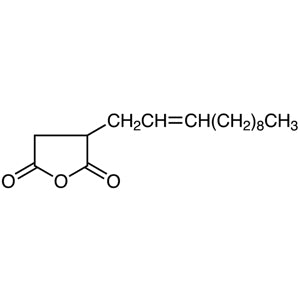
- TCI D0976 19780-11-1 2-Dodecen-1-ylsuccinic Anhydride (cis- and trans- mixture)
- TCI V0072 1196-01-6 (-)-Verbenone
- Asymmetric Synthesis: (S)-Benzylsuccinic Acid is ideal for asymmetric synthesis due to its chiral structure, enabling the creation of enantiomerically pure compounds essential in pharmaceutical research.
- Chiral Compound Development: Its unique stereochemistry allows for the synthesis of chiral molecules, which are crucial in the development of bioactive pharmaceuticals and agrochemicals.
- Organic Chemistry Research: The compound is frequently used in organic synthesis to explore new reaction pathways and functional group transformations.
- Biochemical Studies: It supports research in biochemistry by aiding in the synthesis of molecules with specific biological activities and molecular recognition properties.
- Academic and Industrial Research: Widely utilized in both academic and industrial settings, it facilitates the exploration of chemical structures and their applications in various scientific fields.
| Brand | TCI |
|---|---|
| CAS number | 3972-36-9 |
| Molecular formula | — |
| Purity | — |
| Category | Chemistry > Asymmetric Synthesis > Chiral Building Blocks |
| Pack sizes | Available in various quantities as per supplier specifications |
| Physical form | Solid |
| Storage | Store in a cool, dry place away from light and moisture |
(S)-Benzylsuccinic Acid should be stored in a cool, dry environment to maintain its chemical stability and prevent degradation. It is recommended to use airtight containers to protect it from moisture and light exposure. Proper labeling of storage containers is essential for safe handling and identification. In a laboratory setting, it should be kept away from incompatible substances to avoid any potential chemical reactions. Regular monitoring of storage conditions ensures the compound remains in optimal condition for use. All handling should follow standard laboratory safety protocols to ensure the well-being of personnel and the integrity of the compound.
—
Produk Terkait
-
DL-BenzylsuccinicAcid TCI B4253
Regular price From Rp 1.644.300,00Regular priceRp 1.149.750,00Sale price From Rp 1.644.300,00 -
(S)-(+)-PhenylsuccinicAcid TCI P0936
Regular price Rp 2.411.850,00Regular priceRp 1.686.300,00Sale price Rp 2.411.850,00 -
2-Buten-1-ylsuccinicAnhydride TCI B1613
Regular price From Rp 2.491.650,00Regular priceRp 1.757.700,00Sale price From Rp 2.491.650,00 -
2-Hexen-1-ylsuccinicAnhydride(cis-andtrans-mixture) TCI H0616
Regular price Rp 4.266.150,00Regular priceRp 2.998.800,00Sale price Rp 4.266.150,00 -
2-Dodecen-1-ylsuccinicAnhydride(cis-andtrans-mixture) TCI D0976
Regular price From Rp 662.550,00Regular priceRp 478.800,00Sale price From Rp 662.550,00 -
(-)-Verbenone TCI V0072
Regular price Rp 1.405.950,00Regular priceRp 998.550,00Sale price Rp 1.405.950,00 -
(R)-1-[4-(Trifluoromethyl)phenyl]ethan-1-ol TCI T4357
Regular price Rp 2.889.600,00Regular priceRp 2.020.200,00Sale price Rp 2.889.600,00 -
(S)-TrichostaticAcid TCI T3402
Regular price Rp 7.712.250,00Regular priceRp 5.408.550,00Sale price Rp 7.712.250,00