4,4'-Bis(4,4,5,5-tetramethyl-1,3,2-dioxaborolan-2-yl)biphenyl is a highly specialized organoboron compound used in advanced chemical research. This reagent plays a critical role in the synthesis of complex organic molecules, particularly in the field of medicinal chemistry and materials science. Its unique structure, featuring two boronic acid groups attached to a biphenyl backbone, makes it an essential component in modern synthetic strategies. In laboratory settings, it is widely utilized for its ability to participate in metal-catalyzed reactions, especially those involving palladium-based catalysts.
The compound's stability and reactivity are key factors that make it a preferred choice for chemists. Its ability to undergo selective coupling reactions, such as the Suzuki-Miyaura reaction, ensures high efficiency and yield in synthetic processes. The molecule's robust structure allows it to maintain its integrity under various reaction conditions, making it a reliable reagent for consistent results. Additionally, its compatibility with a wide range of solvents and functional groups enhances its versatility in different synthetic pathways.
In Indonesian laboratories, this compound is commonly used in research focused on drug development and polymer synthesis. Its application is particularly relevant in academic and industrial settings where precision and reliability in chemical synthesis are paramount. The compound's role in building complex molecular frameworks supports innovation in both pharmaceutical and materials research, contributing to the advancement of scientific knowledge in the region.
TCI brochures (PDF)
- Boron Compounds 2025-10-07 · p. 15
- Building Blocks for Organic Semiconductor 2026-03-24 · p. 5
Related TCI products
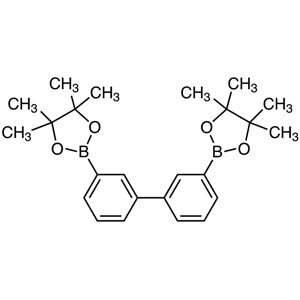
- TCI B5704 850264-92-5 3,3'-Bis(4,4,5,5-tetramethyl-1,3,2-dioxaborolan-2-yl)-1,1'-biphenyl
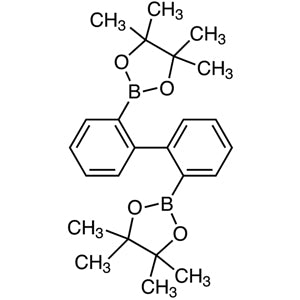
- TCI B5703 398128-09-1 2,2'-Bis(4,4,5,5-tetramethyl-1,3,2-dioxaborolan-2-yl)-1,1'-biphenyl
- TCI B6023 912844-88-3 2-([1,1'-Biphenyl]-3-yl)-4,4,5,5-tetramethyl-1,3,2-dioxaborolane
- TCI B5091 1391729-66-0 9-([1,1'-Biphenyl]-4-yl)-3-(4,4,5,5-tetramethyl-1,3,2-dioxaborolan-2-yl)-9H-carbazole
- TCI B5054 1533406-38-0 9-([1,1'-Biphenyl]-3-yl)-3-(4,4,5,5-tetramethyl-1,3,2-dioxaborolan-2-yl)-9H-carbazole
- TCI B5770 1416243-42-9 2-[10-([1,1'-Biphenyl]-4-yl)anthracen-9-yl]-4,4,5,5-tetramethyl-1,3,2-dioxaborolane
- Used in pharmaceutical research for the synthesis of complex drug molecules due to its reactivity and compatibility with palladium catalysts.
- Applied in materials science for the development of advanced polymers and nanomaterials through efficient coupling reactions.
- Utilized in organic synthesis to construct multi-ring systems and functionalized compounds with high structural complexity.
- Employed in academic research settings for teaching and experimental studies involving organoboron chemistry.
- Integrated into industrial processes for the production of specialty chemicals requiring high-purity and controlled reaction conditions.
| Brand | TCI |
|---|---|
| CAS number | 207611-87-8 |
| Molecular formula | — |
| Purity | — |
| Category | Chemistry > Organometallic Reagents > Organoboron [Organometallic Reagents] |
| Pack sizes | Available in various quantities as per standard laboratory supply requirements |
| Physical form | Solid powder |
| Storage | Store in a cool, dry place away from moisture and direct sunlight |
This compound should be stored in a cool, dry environment to maintain its chemical stability. It is recommended to use airtight containers to prevent exposure to moisture and air, which could affect its reactivity. Due to its organic nature, it should be kept away from heat sources and direct sunlight. Laboratory personnel should handle the material with care, using appropriate personal protective equipment such as gloves and safety goggles. It is important to ensure that the storage area is well-ventilated to minimize any potential risks associated with its handling. Proper labeling of containers is essential to ensure safe and efficient use in the laboratory setting.
—
Produk Terkait
-
3,3'-Bis(4,4,5,5-tetramethyl-1,3,2-dioxaborolan-2-yl)-1,1'-biphenyl TCI B5704
Regular price From Rp 1.801.800,00Regular priceRp 1.275.750,00Sale price From Rp 1.801.800,00 -
2,2'-Bis(4,4,5,5-tetramethyl-1,3,2-dioxaborolan-2-yl)-1,1'-biphenyl TCI B5703
Regular price From Rp 2.093.700,00Regular priceRp 1.479.450,00Sale price From Rp 2.093.700,00 -
2-([1,1'-Biphenyl]-3-yl)-4,4,5,5-tetramethyl-1,3,2-dioxaborolane TCI B6023
Regular price From Rp 822.150,00Regular priceRp 590.100,00Sale price From Rp 822.150,00 -
9-([1,1'-Biphenyl]-4-yl)-3-(4,4,5,5-tetramethyl-1,3,2-dioxaborolan-2-yl)-9H-carbazole TCI B5091
Regular price From Rp 2.411.850,00Regular priceRp 1.702.050,00Sale price From Rp 2.411.850,00 -
9-([1,1'-Biphenyl]-3-yl)-3-(4,4,5,5-tetramethyl-1,3,2-dioxaborolan-2-yl)-9H-carbazole TCI B5054
Regular price From Rp 822.150,00Regular priceRp 590.100,00Sale price From Rp 822.150,00 -
2-[10-([1,1'-Biphenyl]-4-yl)anthracen-9-yl]-4,4,5,5-tetramethyl-1,3,2-dioxaborolane TCI B5770
Regular price Rp 3.922.800,00Regular priceRp 2.758.350,00Sale price Rp 3.922.800,00 -
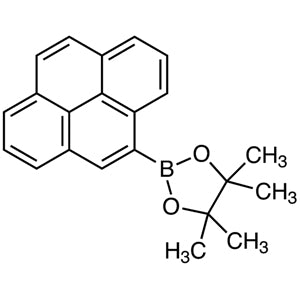
4-(4,4,5,5-Tetramethyl-1,3,2-dioxaborolan-2-yl)pyrene TCI T3857
Regular price Rp 4.452.000,00Regular priceRp 3.129.000,00Sale price Rp 4.452.000,00 -
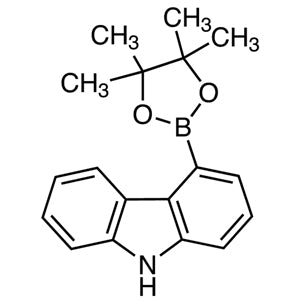
4-(4,4,5,5-Tetramethyl-1,3,2-dioxaborolan-2-yl)-9H-carbazole TCI T3747
Regular price Rp 5.246.850,00Regular priceRp 3.684.450,00Sale price Rp 5.246.850,00