Bifonazole is a chemical compound widely used in laboratory experiments, particularly in the fields of biochemistry and pharmacology. It is a potent antifungal agent that is commonly employed as a growth-inhibiting agent in microbiological research. In laboratory settings, Bifonazole plays a crucial role in various experimental procedures, including fungal sensitivity testing and the preparation of culture media that require microbial growth inhibition. Its versatility and effectiveness make it an essential component in many research protocols.
The chemical properties of Bifonazole make it a preferred choice for laboratory use. It is chemically stable and dissolves easily in organic solvents such as ethyl acetate or acetone, which simplifies its use in a variety of laboratory procedures. Additionally, it has good water solubility, making it convenient for preparing solutions and conducting chemical reactions. These characteristics ensure that Bifonazole remains a reliable and efficient reagent in both research and educational settings.
In Indonesian laboratories, Bifonazole is frequently used by researchers and educational institutions for research and development purposes. Its availability and compliance with international quality standards make it a popular choice. The compound is well-suited for applications that require precise and reliable antifungal activity, supporting a wide range of scientific investigations.
TCI brochures (PDF)
- Antimicrobials and Antitumor Agents for Research and Experimental Use 2025-04-24 · p. 9
- Pharmaceutical Ingredients for Research and Experimental Use 2026-03-09 · p. 9
- Fungal Sensitivity Testing: Bifonazole is used to determine the effectiveness of antifungal agents by inhibiting fungal growth in controlled conditions.
- Culture Media Preparation: It is commonly incorporated into culture media to suppress unwanted microbial growth and ensure the isolation of target organisms.
- Microbial Growth Inhibition Studies: Bifonazole is utilized in experiments aimed at understanding the mechanisms of antifungal resistance and microbial behavior.
- Chemical Reaction Experiments: Its solubility in organic solvents makes it suitable for use in various chemical reactions and solution preparations.
- Educational Research Projects: It is frequently used in academic settings to teach students about antifungal compounds and their applications in microbiology.
| Brand | TCI |
|---|---|
| CAS number | 60628-96-8 |
| Molecular formula | — |
| Purity | — |
| Category | Life Science > Biochemicals and Reagents > Antibiotics |
| Pack sizes | Available in various quantities as per standard laboratory supply |
| Physical form | Solid powder |
| Storage | Store in a cool, dry place away from direct sunlight |
Bifonazole should be stored in a cool, dry environment to maintain its chemical stability and effectiveness. It is recommended to keep it in airtight containers to prevent moisture absorption and contamination. Due to its potential reactivity, it should be handled with care, using appropriate personal protective equipment such as gloves and safety goggles. Avoid exposure to heat or direct sunlight to prevent degradation. In laboratory settings, it is important to follow standard safety protocols to ensure safe handling and storage. Proper labeling of containers is essential for easy identification and safe use.
—
Product Categories
- Biochemicals and ReagentsAntibioticsAntibiotics (by Application)
- Biochemicals and ReagentsPharmaceutical Research Reagents (for Experimental Use)Antifungal Ingredients (for Research and Experimental Use)
- Cell BiologyCancer ResearchAntitumor Agents for Research
- MicrobiologyAntibioticsAntibiotics (by Application)
- Pharmaceutical Development and Drug Discovery ResearchPharmaceutical Research Reagents (for Experimental Use)Antifungal Ingredients (for Research and Experimental Use)
- Pharmaceutical Development and Drug Discovery ResearchAntibioticsAntibiotics (by Application)
Produk Terkait
-
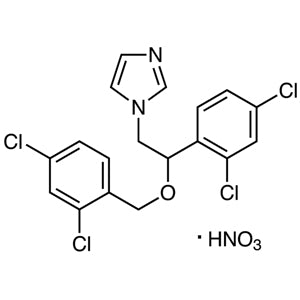
SulconazoleNitrate TCI U0112
Regular price From Rp 3.312.750,00Regular priceRp 2.332.050,00Sale price From Rp 3.312.750,00 -
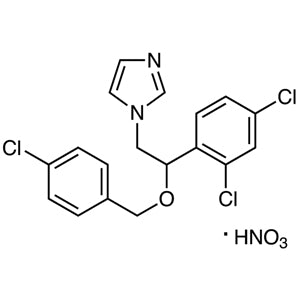
MiconazoleNitrate TCI M1769
Regular price From Rp 1.246.350,00Regular priceRp 887.250,00Sale price From Rp 1.246.350,00 -
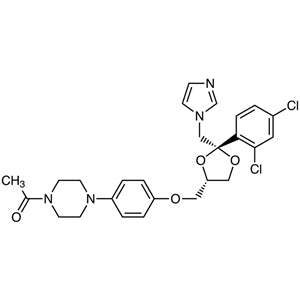
Ketoconazole TCI K0045
Regular price From Rp 1.881.600,00Regular priceRp 1.331.400,00Sale price From Rp 1.881.600,00 -
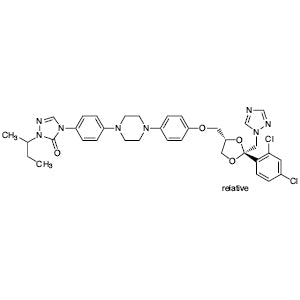
Itraconazole TCI I0732
Regular price From Rp 3.392.550,00Regular priceRp 2.387.700,00Sale price From Rp 3.392.550,00 -
EconazoleNitrate TCI E0957
Regular price From Rp 1.326.150,00Regular priceRp 942.900,00Sale price From Rp 1.326.150,00 -
VidarabineMonohydrate TCI V0098
Regular price From Rp 3.710.700,00Regular priceRp 2.610.300,00Sale price From Rp 3.710.700,00 -
Terbinafine TCI T3677
Regular price From Rp 2.173.500,00Regular priceRp 1.535.100,00Sale price From Rp 2.173.500,00 -
Thymine1-beta-D-Arabinofuranoside TCI A3756
Regular price Rp 8.585.850,00Regular priceRp 6.019.650,00Sale price Rp 8.585.850,00