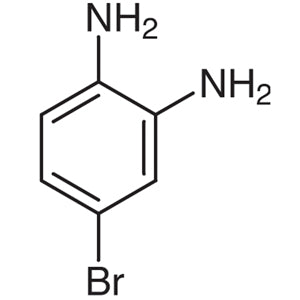
N-(tert-Butoxycarbonyl)-1,2-phenylenediamine is a chemical compound widely used in laboratory settings as a building block for the synthesis of complex molecules. It plays a crucial role in organic chemistry by serving as a versatile intermediate in various reactions. Its structural features, including the presence of amino and carbonyl groups, make it suitable for participation in substitution and coupling reactions. This compound is essential for researchers working on the development of new pharmaceuticals, industrial chemicals, and organic materials. Its utility spans across multiple disciplines, making it a valuable tool in both academic and industrial research environments.
The compound is favored for its chemical stability and controlled reactivity, which allow it to be used in a wide range of experimental conditions. Its ability to resist decomposition under normal storage conditions ensures reliability in laboratory applications. The tert-butyloxycarbonyl (Boc) group provides a protective function, making it ideal for selective chemical transformations. These properties make it a preferred choice for chemists aiming to achieve high yields and purity in their synthetic processes. Its molecular structure also facilitates its use in complex synthetic pathways, enhancing its versatility in laboratory settings.
In Indonesian laboratories, this compound is commonly used in chemical research, particularly in pharmaceutical and organic chemistry studies. It is a key component in the synthesis of various compounds, including drugs and specialty chemicals. Its availability in solid form and ease of storage make it a practical choice for researchers and students. Its application in the analysis of complex molecules further underscores its importance in both academic and industrial research.
Related TCI products
- TCI B4222 68621-88-5 N-(tert-Butoxycarbonyl)-1,3-phenylenediamine
- TCI B4081 71026-66-9 N-(tert-Butoxycarbonyl)-1,4-phenylenediamine
- TCI T3770 485831-34-3 N,N,N',N'-Tetrakis[4-(diisobutylamino)phenyl]-1,4-phenylenediamine
- TCI T3239 368-53-6 5-Trifluoromethyl-1,3-phenylenediamine
- TCI T1457 3102-87-2 2,3,5,6-Tetramethyl-1,4-phenylenediamine
- TCI T1275 3102-70-3 2,4,6-Trimethyl-1,3-phenylenediamine
- Pharmaceutical research utilizes this compound for the synthesis of drug molecules due to its reactivity and structural versatility.
- Organic chemistry experiments benefit from its role as a building block in the creation of complex aromatic and heterocyclic structures.
- Industrial chemical development incorporates it for the production of specialty chemicals requiring controlled chemical transformations.
- Analytical chemistry applications use it as a standard for the identification and quantification of complex molecular structures.
- Academic research in Indonesian universities employs it in teaching and experimental studies to illustrate synthetic methodologies and chemical reactivity.
| Brand | TCI |
|---|---|
| CAS number | 146651-75-4 |
| Molecular formula | — |
| Purity | — |
| Category | Chemistry > Building Blocks > Non-Heterocyclic Building Blocks |
| Pack sizes | Available in various quantities as per supplier specifications |
| Physical form | Solid |
| Storage | Store in a cool, dry place away from moisture and direct sunlight |
This compound should be stored in a cool, dry environment to maintain its chemical stability. It is recommended to keep it in a sealed container to prevent exposure to moisture and air. Due to its solid form, it is best stored in airtight containers made of materials such as glass or high-density polyethylene. Laboratory personnel should handle it with care, using appropriate personal protective equipment when necessary. It is important to ensure that the storage area is well-ventilated and free from potential contaminants. Proper labeling and storage practices help maintain the integrity of the compound and ensure safe handling in laboratory settings.
—
Produk Terkait
-
N-(tert-Butoxycarbonyl)-1,3-phenylenediamine TCI B4222
Regular price From Rp 1.378.650,00Regular priceRp 979.650,00Sale price From Rp 1.378.650,00 -
N-(tert-Butoxycarbonyl)-1,4-phenylenediamine TCI B4081
Regular price From Rp 2.199.750,00Regular priceRp 1.554.000,00Sale price From Rp 2.199.750,00 -
N,N,N',N'-Tetrakis[4-(diisobutylamino)phenyl]-1,4-phenylenediamine TCI T3770
Regular price From Rp 2.147.250,00Regular priceRp 1.517.250,00Sale price From Rp 2.147.250,00 -
5-Trifluoromethyl-1,3-phenylenediamine TCI T3239
Regular price Rp 1.326.150,00Regular priceRp 942.900,00Sale price Rp 1.326.150,00 -
2,3,5,6-Tetramethyl-1,4-phenylenediamine TCI T1457
Regular price From Rp 1.934.100,00Regular priceRp 1.368.150,00Sale price From Rp 1.934.100,00 -
2,4,6-Trimethyl-1,3-phenylenediamine TCI T1275
Regular price From Rp 3.658.200,00Regular priceRp 2.573.550,00Sale price From Rp 3.658.200,00 -
4-Bromo-1,2-phenylenediamine TCI B3181
Regular price From Rp 1.724.100,00Regular priceRp 1.205.400,00Sale price From Rp 1.724.100,00 -
N,N,N',N'-Tetramethyl-1,4-phenylenediamineDihydrochloride TCI T0151
Regular price From Rp 584.850,00Regular priceRp 408.450,00Sale price From Rp 584.850,00