TCI B4301 70627-52-0 4'-(Benzyloxy)benzylidene-4-fluoroaniline is a specialized chemical compound used as a building block in organic synthesis. It plays a crucial role in the development of complex molecules, particularly in research settings where precise chemical structures are required. This compound is widely utilized in laboratories for its ability to participate in various chemical reactions, making it an essential tool for chemists working on synthetic pathways. Its unique molecular structure, featuring both fluoro and benzyloxy groups, allows for versatile chemical transformations.
The compound is valued for its stability under controlled conditions and its reactivity in a range of chemical processes. Its molecular structure provides a foundation for further modifications, enabling researchers to tailor its properties for specific applications. The presence of the fluoro group enhances its reactivity in substitution and coupling reactions, while the benzyloxy group offers additional functional versatility. These characteristics make it a preferred choice for scientists seeking to design and synthesize compounds with specific biological or industrial applications.
In Indonesian laboratories, this compound is commonly used in research focused on organic chemistry and pharmaceutical development. It is a key component in experiments requiring high precision and specificity. Its application spans across academic institutions and research centers, supporting the creation of new materials and drug candidates. Due to its unique properties, it remains a valuable resource for scientific exploration in the region.
TCI brochures (PDF)
- Fluorination Reagents, Fluorinated Building Blocks 2026-03-18 · p. 13
- Organic synthesis research benefits from its ability to participate in coupling and substitution reactions, making it ideal for creating complex molecular structures.
- Pharmaceutical development utilizes this compound to design and test new drug candidates with specific biological activities.
- Academic research in chemistry leverages its reactivity and structural versatility for teaching and experimental purposes.
- Industrial chemical production uses it as a building block for the synthesis of specialty chemicals and functional materials.
- Analytical chemistry applications take advantage of its unique spectral properties for identification and characterization in advanced research.
| Brand | TCI |
|---|---|
| CAS number | 70627-52-0 |
| Molecular formula | — |
| Purity | — |
| Category | Chemistry > Building Blocks > Fluorinated Building Blocks |
| Pack sizes | — |
| Physical form | — |
| Storage | Store in a cool, dark place away from light and moisture |
This compound should be stored in a cool, dark environment to prevent degradation due to light exposure. It is recommended to use airtight containers to minimize moisture contact, as the material is sensitive to humidity. Proper ventilation should be maintained in the laboratory to ensure safe handling. Avoid direct contact with skin and eyes, and use appropriate personal protective equipment when working with the compound. Due to its chemical nature, it should be kept away from incompatible substances to prevent unwanted reactions. Regular monitoring of storage conditions ensures the integrity and stability of the material during long-term use.
—
Produk Terkait
-
3,4,5-Trifluoroaniline TCI T2355
Regular price From Rp 1.035.300,00Regular priceRp 723.450,00Sale price From Rp 1.035.300,00 -
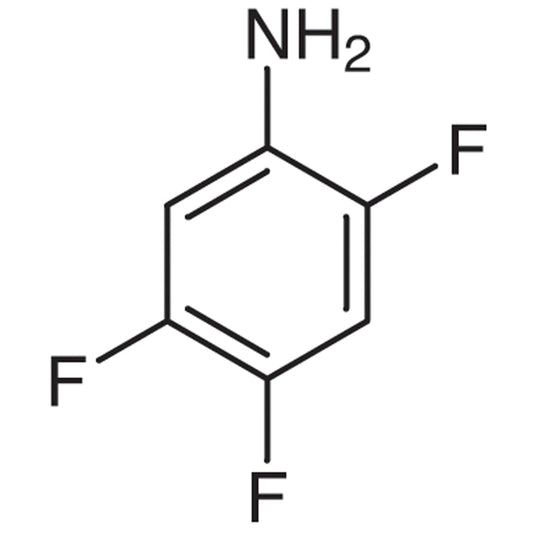
2,4,5-Trifluoroaniline TCI T1645
Regular price Rp 3.155.250,00Regular priceRp 2.206.050,00Sale price Rp 3.155.250,00 -
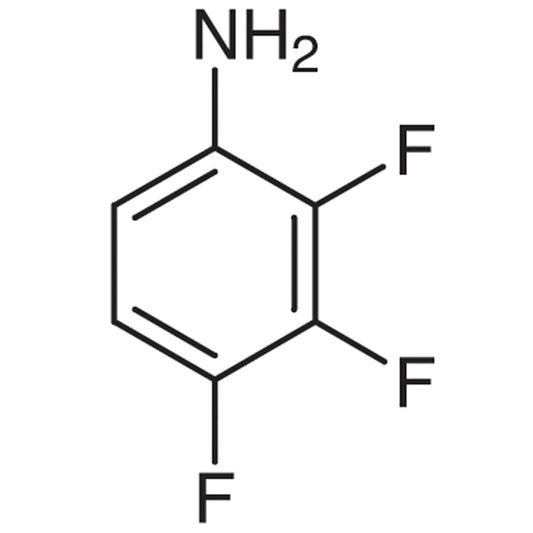
2,3,4-Trifluoroaniline TCI T1385
Regular price From Rp 769.650,00Regular priceRp 537.600,00Sale price From Rp 769.650,00 -
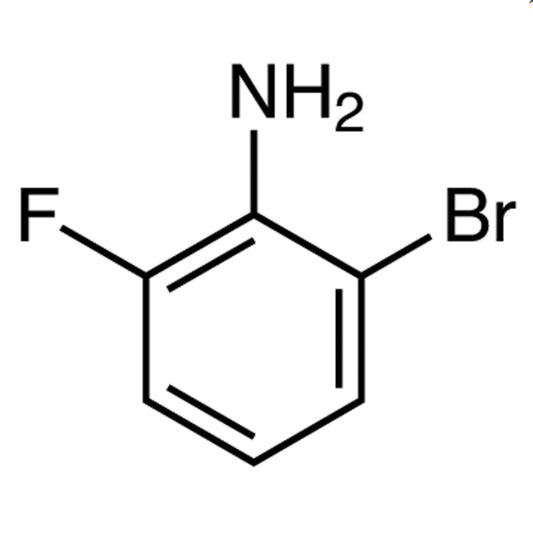
2-Bromo-6-fluoroaniline TCI B4803
Regular price From Rp 1.724.100,00Regular priceRp 1.205.400,00Sale price From Rp 1.724.100,00 -
2-Bromo-6-chloro-4-fluoroaniline TCI B3681
Regular price Rp 1.485.750,00Regular priceRp 1.038.450,00Sale price Rp 1.485.750,00 -
4-Bromo-3,5-difluoroaniline TCI B3416
Regular price From Rp 1.538.250,00Regular priceRp 1.075.200,00Sale price From Rp 1.538.250,00 -
4-Bromo-2,6-difluoroaniline TCI B3220
Regular price From Rp 452.550,00Regular priceRp 316.050,00Sale price From Rp 452.550,00 -
3-Bromo-4-fluoroaniline TCI B2957
Regular price Rp 1.936.200,00Regular priceRp 1.353.450,00Sale price Rp 1.936.200,00