2-Bromopyrazine is a chemical compound widely used as a building block in the synthesis of heterocyclic compounds. It plays a crucial role in organic chemistry laboratories, where it serves as a key intermediate in the creation of complex molecular structures. Due to its reactivity and versatility, it is frequently employed in the development of pharmaceuticals, pesticides, and industrial chemicals. Its unique molecular structure enables it to participate in various chemical reactions, making it an essential component in synthetic pathways.
The compound's reactivity is primarily attributed to the presence of the bromine atom, which enhances its ability to undergo substitution reactions and other chemical transformations. This characteristic makes it highly suitable for applications requiring functional group modification or molecular rearrangement. Additionally, its chemical stability under controlled conditions ensures reliable performance in laboratory settings. These properties make 2-Bromopyrazine a preferred choice for researchers aiming to synthesize a wide range of organic compounds.
In Indonesian laboratories, 2-Bromopyrazine is extensively used in organic chemistry research, particularly in academic institutions and research centers. Its application spans across various fields, including drug discovery, material science, and environmental chemistry. The compound's availability and well-documented properties make it a valuable resource for scientists and students alike, supporting both educational and experimental needs.
Related TCI products
- Organic synthesis applications benefit from 2-Bromopyrazine due to its reactivity and ability to form complex heterocyclic structures.
- Pharmaceutical research utilizes this compound for the development of new drugs and therapeutic agents through targeted chemical modifications.
- Pesticide formulation relies on 2-Bromopyrazine as a building block for creating effective and stable chemical compounds.
- Industrial chemical production incorporates this compound to manufacture a variety of functional materials and chemical intermediates.
- Environmental chemistry studies use 2-Bromopyrazine to analyze and synthesize compounds relevant to pollution control and ecological research.
| Brand | TCI |
|---|---|
| CAS number | 56423-63-3 |
| Molecular formula | — |
| Purity | — |
| Category | Chemistry > Building Blocks > Heterocyclic Building Blocks |
| Pack sizes | Available in various quantities as per standard laboratory requirements |
| Physical form | Solid |
| Storage | Store in a cool, dry place away from moisture and direct sunlight |
2-Bromopyrazine should be stored in a cool, dry environment to maintain its chemical stability and prevent degradation. It is recommended to keep the compound in a sealed container to avoid exposure to moisture and air. Suitable storage containers include glass or high-density polyethylene (HDPE) bottles, which provide effective protection against chemical interactions. Laboratory personnel should handle the compound with appropriate personal protective equipment (PPE) to ensure safety. Due to its reactivity, it should be stored away from incompatible substances such as strong oxidizers. Regular monitoring of storage conditions is essential to maintain the integrity of the material and ensure safe handling in laboratory settings.
—
Produk Terkait
-
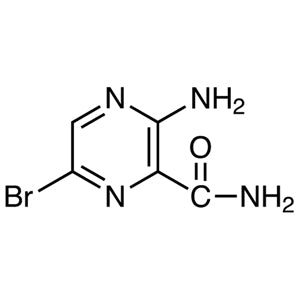
3-Amino-6-bromopyrazine-2-carboxamide TCI A2775
Regular price Rp 4.186.350,00Regular priceRp 2.943.150,00Sale price Rp 4.186.350,00 -
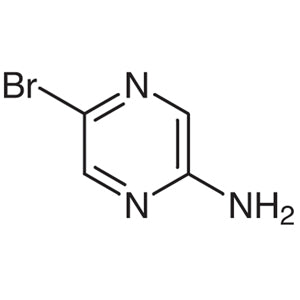
2-Amino-5-bromopyrazine TCI A1683
Regular price From Rp 1.749.300,00Regular priceRp 1.239.000,00Sale price From Rp 1.749.300,00 -
Methyl3-Amino-6-bromopyrazine-2-carboxylate TCI M2655
Regular price From Rp 822.150,00Regular priceRp 590.100,00Sale price From Rp 822.150,00 -
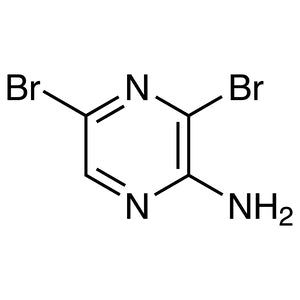
2-Amino-3,5-dibromopyrazine TCI A1806
Regular price From Rp 1.618.050,00Regular priceRp 1.146.600,00Sale price From Rp 1.618.050,00 -
2,6-Dibromopyrazine TCI D4544
Regular price From Rp 1.618.050,00Regular priceRp 1.146.600,00Sale price From Rp 1.618.050,00 -
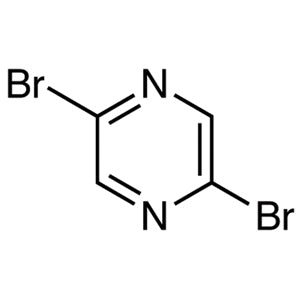
2,5-Dibromopyrazine TCI D4323
Regular price From Rp 980.700,00Regular priceRp 701.400,00Sale price From Rp 980.700,00 -
3,4,5-Tribromopyrazole TCI T2777
Regular price From Rp 955.500,00Regular priceRp 683.550,00Sale price From Rp 955.500,00 -
5-Bromopyrazolo[3,4-b]pyridine TCI B4363
Regular price Rp 2.439.150,00Regular priceRp 1.720.950,00Sale price Rp 2.439.150,00