

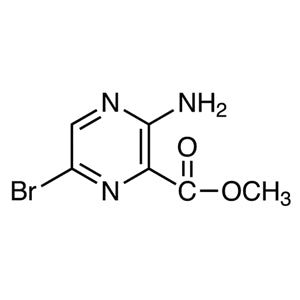
Methyl 3-Amino-6-bromopyrazine-2-carboxylate is a chemical compound widely used in organic synthesis reactions, particularly in the development of complex heterocyclic compounds. This compound plays a crucial role in laboratories where researchers aim to synthesize bioactive molecules, pharmaceuticals, and industrial chemicals. Its unique structure, containing a pyrazine ring, makes it a valuable building block for creating compounds with diverse biological and chemical properties. Due to its functional groups, it is often employed in various synthetic pathways that require reactivity and versatility.
The compound's chemical properties make it a preferred choice in laboratory settings. It exhibits stability under certain conditions but is sensitive to UV light and oxidation. The presence of an amino group and a bromo substituent enhances its reactivity, making it suitable for substitution reactions, coupling reactions, and other synthetic transformations. These characteristics allow it to be a versatile reagent in organic chemistry, especially in applications requiring functional group manipulation. Its reactivity and structural versatility contribute to its popularity among researchers.
In Indonesian laboratories, this compound is commonly used in pharmacological research, organic chemistry studies, and the development of new chemical materials. It is a key component in experiments that require heterocyclic compounds as starting materials. Many research institutions and universities in Indonesia rely on this compound for its reliability and effectiveness in synthetic processes. Its availability from reputable suppliers like TCI ensures consistent quality and accessibility for scientific use.
- Organic synthesis of heterocyclic compounds due to its pyrazine ring and reactive functional groups.
- Pharmaceutical research for the development of bioactive molecules and drug candidates.
- Industrial chemical production as a building block for complex chemical structures.
- Biochemical studies involving compounds with amino and bromo substituents.
- Academic research in organic chemistry for functional group modification and reaction studies.
| Brand | TCI |
|---|---|
| CAS number | 6966-01-4 |
| Molecular formula | — |
| Purity | — |
| Category | Chemistry > Building Blocks > Heterocyclic Building Blocks |
| Pack sizes | Available in various quantities as per supplier specifications |
| Physical form | Solid powder |
| Storage | Store in a cool, dark place away from light and oxidizing agents |
This compound should be stored in a cool, dark environment to prevent degradation due to UV exposure and oxidation. It is recommended to use airtight containers made of glass or high-density polyethylene to maintain its chemical integrity. Avoid exposure to moisture and strong oxidizing agents to ensure stability. In laboratory settings, proper personal protective equipment such as gloves and safety goggles should be worn when handling. Keep the compound away from heat sources and ensure good ventilation in the workspace to minimize potential risks. Regular monitoring of storage conditions is essential to maintain the compound's quality and effectiveness for research applications.
—
Produk Terkait
-
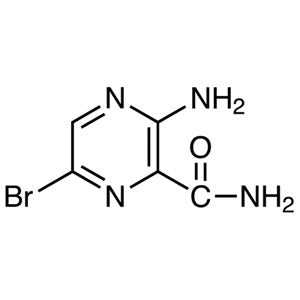
3-Amino-6-bromopyrazine-2-carboxamide TCI A2775
Regular price Rp 4.133.850,00Regular price -
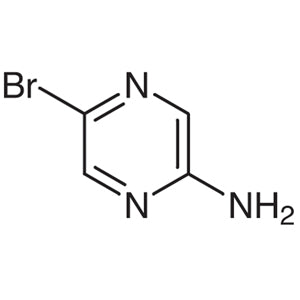
2-Amino-5-bromopyrazine TCI A1683
Regular price From Rp 1.696.800,00Regular price -
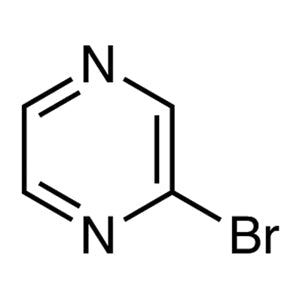
2-Bromopyrazine TCI B4352
Regular price From Rp 1.565.550,00Regular price -
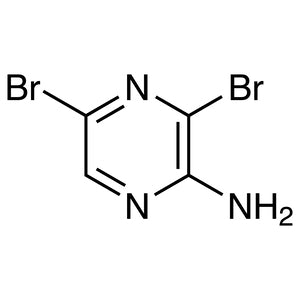
2-Amino-3,5-dibromopyrazine TCI A1806
Regular price From Rp 1.565.550,00Regular price -
2,6-Dibromopyrazine TCI D4544
Regular price From Rp 1.565.550,00Regular price -
2,5-Dibromopyrazine TCI D4323
Regular price From Rp 928.200,00Regular price -
3,4,5-Tribromopyrazole TCI T2777
Regular price From Rp 903.000,00Regular price -
5-Bromopyrazolo[3,4-b]pyridine TCI B4363
Regular price Rp 2.386.650,00Regular price



![875781-17-2 5-Bromopyrazolo[3,4-b]pyridine - AMI Scientific](http://amiscientific.com/cdn/shop/files/TCI2510B4363.jpg?v=1767091148&width=533)