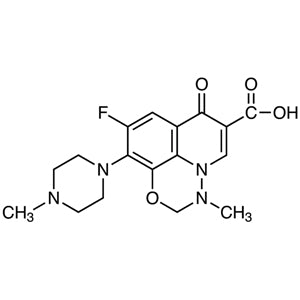
Balofloxacin dihydrate is a chemical compound belonging to the fluoroquinolone class of antibiotics. It functions by inhibiting the enzyme topoisomerase II, which is essential for bacterial DNA replication. This compound plays a crucial role in biochemical and pharmacological experiments, particularly in assessing the effectiveness of antibiotics against various bacterial strains. In laboratory settings, it serves as a key reagent for studying antibiotic mechanisms and resistance patterns. Its chemical stability and solubility make it a versatile tool for researchers in multiple scientific disciplines.
The compound is preferred due to its chemical stability under specific conditions and its solubility in organic solvents such as ethyl acetate and dimethyl sulfoxide. These properties allow for ease of use in chemical reactions and separation processes. Additionally, its good water solubility facilitates the preparation of solutions for biological experiments. These characteristics make it a reliable and efficient choice for laboratory applications, supporting both basic and applied research in microbiology and pharmaceutical sciences.
In Indonesian laboratories, Balofloxacin dihydrate is highly relevant for research in pharmacy, microbiology, and medicinal chemistry. It is commonly used in studies related to antibiotic resistance and the development of new therapeutic agents. Its availability and reliability make it a valuable resource for academic institutions and research centers in Indonesia, supporting both educational and scientific advancements.
TCI brochures (PDF)
- Antimicrobials and Antitumor Agents for Research and Experimental Use 2025-04-24 · p. 5
- Pharmaceutical Ingredients for Research and Experimental Use 2026-03-09 · p. 5
- Antibiotic Efficacy Testing: Balofloxacin dihydrate is used to evaluate the effectiveness of antibiotics against various bacterial strains, providing critical data for drug development and resistance studies.
- Antibacterial Activity Screening: It serves as a standard compound in assays that measure the antibacterial activity of new or existing compounds against a range of pathogens.
- Mechanism of Action Studies: Researchers use it to investigate how fluoroquinolone antibiotics interact with bacterial enzymes, contributing to a deeper understanding of antibiotic function.
- Synthesis of Active Compounds: It is a key reagent in the synthesis of active pharmaceutical ingredients, supporting the development of new therapeutic agents.
- Resistance Research: It is employed in studies focused on bacterial resistance mechanisms, helping scientists identify and combat emerging antibiotic-resistant strains.
| Brand | TCI |
|---|---|
| CAS number | 151060-21-8 |
| Molecular formula | — |
| Purity | — |
| Category | Life Science > Biochemicals and Reagents > Antibiotics |
| Pack sizes | — |
| Physical form | — |
| Storage | Store in a cool, dry place away from light |
Balofloxacin dihydrate should be stored in a cool, dry place away from direct light to maintain its chemical stability. It is recommended to use airtight containers to prevent moisture absorption, which could affect its solubility and purity. Proper labeling of containers is essential to ensure safe handling and prevent cross-contamination. Due to its chemical nature, it should be handled with care, and appropriate personal protective equipment should be worn when working with it. While it is generally stable under standard laboratory conditions, it should be kept away from incompatible substances to avoid any potential chemical reactions. Following these guidelines ensures the compound remains effective and safe for use in laboratory experiments.
—
Product Categories
- Biochemicals and ReagentsAntibioticsAntibiotics (Chemical Structure Class)
- Biochemicals and ReagentsPharmaceutical Research Reagents (for Experimental Use)Antimicrobial Ingredients (for Research and Experimental Use)
- MicrobiologyAntibioticsAntibiotics (Chemical Structure Class)
- Pharmaceutical Development and Drug Discovery ResearchPharmaceutical Research Reagents (for Experimental Use)Antimicrobial Ingredients (for Research and Experimental Use)
- Pharmaceutical Development and Drug Discovery ResearchAntibioticsAntibiotics (Chemical Structure Class)
Produk Terkait
-
Marbofloxacin TCI M2240
Regular price Rp 2.306.850,00Regular priceRp 1.628.550,00Sale price Rp 2.306.850,00 -
LevofloxacinHydrochloride TCI L0460
Regular price Rp 2.359.350,00Regular priceRp 1.665.300,00Sale price Rp 2.359.350,00 -
Levofloxacin TCI L0193
Regular price From Rp 1.829.100,00Regular priceRp 1.294.650,00Sale price From Rp 1.829.100,00 -
Enrofloxacin TCI E0786
Regular price From Rp 1.246.350,00Regular priceRp 887.250,00Sale price From Rp 1.246.350,00 -
Ciprofloxacin TCI C2510
Regular price From Rp 1.033.200,00Regular priceRp 738.150,00Sale price From Rp 1.033.200,00 -
CiprofloxacinHydrochlorideMonohydrate TCI C2227
Regular price From Rp 689.850,00Regular priceRp 497.700,00Sale price From Rp 689.850,00 -
4-AminosalicylicAcid TCI A0420
Regular price From Rp 822.150,00Regular priceRp 590.100,00Sale price From Rp 822.150,00 -
Sodium4-AminosalicylateDihydrate TCI A0423
Regular price From Rp 928.200,00Regular priceRp 664.650,00Sale price From Rp 928.200,00