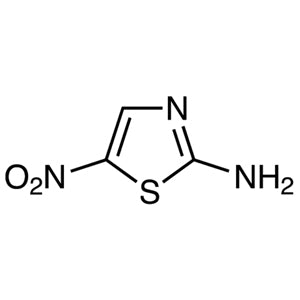
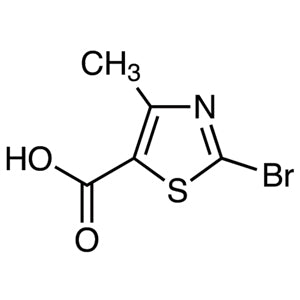
2-Bromo-5-nitrothiazole is a chemical compound classified under the heterocyclic category, commonly used as a building block in the synthesis of complex molecules. It is a versatile intermediate in organic chemistry due to its unique molecular structure, which includes nitrogen and sulfur atoms bonded in a heterocyclic ring. This structure allows for a wide range of chemical reactions, making it a valuable resource for researchers. In the laboratory, it serves as a key component in the development of pharmaceutical compounds, industrial chemicals, and organic reaction auxiliaries.
The compound’s stable chemical structure and controlled reactivity make it a preferred choice for synthetic applications. Its ability to undergo substitution reactions at the bromine and nitro groups enhances its utility in various chemical transformations. These properties enable chemists to tailor the compound for specific applications, expanding its use in both academic and industrial research. Its predictable behavior in different reaction conditions ensures reliability in experimental settings.
In Indonesian laboratories, 2-Bromo-5-nitrothiazole is widely used in organic chemistry research, drug development, and the study of complex chemical reactions. It is a common reagent in academic and industrial settings, supporting a variety of synthetic pathways. Many research institutions and universities in Indonesia rely on this compound for experiments requiring heterocyclic building blocks. Its relevance in pharmaceutical and chemical research makes it an essential material for scientific advancement.
Related TCI products
- Organic synthesis projects benefit from 2-Bromo-5-nitrothiazole due to its reactivity and structural versatility, allowing for the creation of complex heterocyclic compounds.
- Pharmaceutical research utilizes this compound as a key intermediate in the development of new drugs, leveraging its ability to undergo substitution reactions.
- Industrial chemical synthesis relies on its stability and controlled reactivity to produce a wide range of chemical products efficiently.
- Academic research in chemistry often incorporates this compound to explore new synthetic methods and reaction mechanisms.
- Drug discovery programs use it as a building block to design and test novel compounds with potential therapeutic applications.
| Brand | TCI |
|---|---|
| CAS number | 3034-48-8 |
| Molecular formula | — |
| Purity | — |
| Category | Chemistry > Building Blocks > Heterocyclic Building Blocks |
| Pack sizes | Available in various quantities as per supplier specifications |
| Physical form | Solid |
| Storage | Store in a cool, dry place away from light and incompatible materials |
2-Bromo-5-nitrothiazole should be stored in a cool, dry place, away from direct sunlight and sources of heat. It is recommended to use airtight containers made of materials that are chemically inert to the compound, such as glass or high-density polyethylene. The substance should be kept in a well-ventilated area to prevent the accumulation of harmful vapors. It is important to avoid contact with incompatible materials like strong oxidizers or acids. Always follow standard laboratory safety protocols when handling this compound, including the use of personal protective equipment. Proper storage ensures the compound remains stable and safe for use in research applications.
—
Produk Terkait
-
2-Acetamido-5-nitrothiazole TCI A0689
Regular price From Rp 1.113.000,00Regular priceRp 793.800,00Sale price From Rp 1.113.000,00 -
2-Amino-5-nitrothiazole TCI A0381
Regular price Rp 1.563.450,00Regular priceRp 1.108.800,00Sale price Rp 1.563.450,00 -
5-Bromo-1-methylpyridin-2(1H)-one TCI B5482
Regular price Rp 2.384.550,00Regular priceRp 1.683.150,00Sale price Rp 2.384.550,00 -
2-Bromo-5-(2-ethylhexyl)thiophene TCI B5475
Regular price From Rp 3.180.450,00Regular priceRp 2.239.650,00Sale price From Rp 3.180.450,00 -
9-Benzyl-3-bromo-9H-carbazole TCI B5461
Regular price From Rp 1.563.450,00Regular priceRp 1.108.800,00Sale price From Rp 1.563.450,00 -
2-Bromo-5-dodecylthiophene TCI B5407
Regular price From Rp 2.889.600,00Regular priceRp 2.035.950,00Sale price From Rp 2.889.600,00 -
2-Bromo-4-methylthiazole-5-carboxylicAcid TCI B5336
Regular price Rp 1.590.750,00Regular priceRp 1.127.700,00Sale price Rp 1.590.750,00 -
5-Bromo-2,3-dimethylindole TCI B5272
Regular price Rp 2.491.650,00Regular priceRp 1.757.700,00Sale price Rp 2.491.650,00