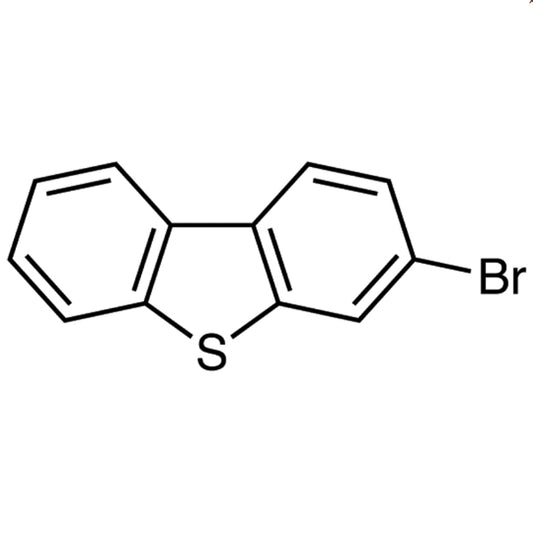
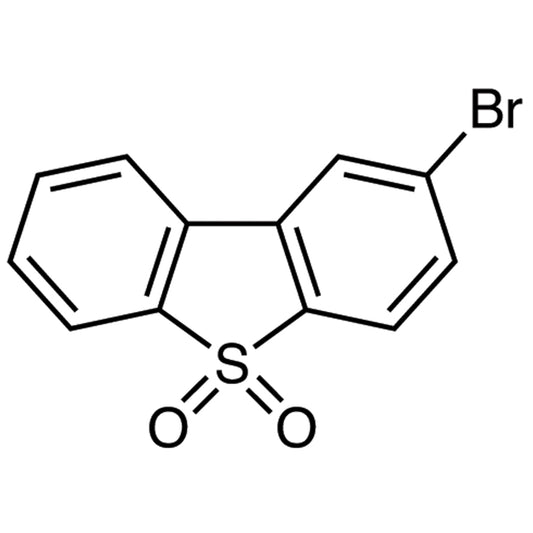
4-Bromodibenzothiophene is an organic compound widely utilized in scientific research, especially within the field of semiconductor materials. This compound plays a crucial role in laboratories where the development of advanced materials is essential. Its unique molecular structure, consisting of two benzene rings connected by a sulfur atom, makes it a valuable building block for synthesizing complex compounds. The presence of a bromo group enhances its reactivity, enabling it to participate in various chemical transformations. As a result, it is frequently employed in the creation of materials with tailored electronic properties.
The chemical properties of 4-Bromodibenzothiophene make it a preferred choice for researchers. It exhibits stability under controlled conditions, yet it remains highly reactive in chemical reactions such as substitution, addition, and electrophilic reactions. This reactivity allows it to be a versatile reagent in the synthesis of complex organic molecules. Additionally, its solubility in organic solvents simplifies handling and application in laboratory settings. These characteristics ensure that it is a reliable and effective material for use in advanced material research.
In Indonesian laboratories, 4-Bromodibenzothiophene is commonly used in semiconductor material research. It is particularly relevant in the development of optoelectronic devices and electronic components. Its role in creating materials with unique electronic properties supports innovation in both academic and industrial research. The compound's availability and chemical versatility make it an essential resource for scientists working on next-generation materials.
TCI brochures (PDF)
- Thiophenes 2026-06-29 · p. 11
- Building Blocks for Organic Semiconductor 2026-03-24 · p. 27
Related TCI products
- TCI B5452 97511-04-1 3-Bromodibenzothiophene
- TCI B5268 116668-69-0 3-Bromodibenzothiophene 5,5-Dioxide
- TCI B5267 53846-85-8 2-Bromodibenzothiophene 5,5-Dioxide
- TCI B3525 22439-61-8 2-Bromodibenzothiophene
- TCI B5861 65642-94-6 1-Bromodibenzothiophene
- TCI T3236 912824-84-1 4-(4,4,5,5-Tetramethyl-1,3,2-dioxaborolan-2-yl)dibenzothiophene
- Semiconductor material synthesis: 4-Bromodibenzothiophene is ideal for creating complex organic compounds used in semiconductor research due to its reactivity and structural versatility.
- Optoelectronic device development: The compound's electronic properties make it suitable for synthesizing materials used in optoelectronic components, enhancing device performance.
- Organic chemistry research: Its reactivity and solubility in organic solvents make it a valuable reagent for various chemical transformations in synthetic chemistry.
- Material characterization studies: The compound's stable nature under controlled conditions allows for accurate analysis in material testing and characterization.
- Advanced material development: Its role as a building block enables researchers to design materials with tailored electronic and optical properties for specialized applications.
| Brand | TCI |
|---|---|
| CAS number | 97511-05-2 |
| Molecular formula | — |
| Purity | — |
| Category | Materials Science > Material Building Blocks > Small Molecule Semiconductor Building Blocks |
| Pack sizes | Available in standard laboratory quantities |
| Physical form | Solid, crystalline |
| Storage | Store in a cool, dry place away from light and moisture |
4-Bromodibenzothiophene should be stored in a cool, dry environment, away from direct light and moisture to maintain its chemical stability. It is recommended to use airtight containers made of glass or high-density polyethylene to prevent contamination and degradation. Due to its reactivity, it should be handled with care, using appropriate personal protective equipment such as gloves and safety goggles. It is important to ensure proper ventilation in the laboratory when working with this compound to minimize exposure. Avoid contact with incompatible substances to prevent unwanted chemical reactions. Proper storage and handling are essential to maintain the integrity and effectiveness of the material in research applications.
—
Produk Terkait
-
3-Bromodibenzothiophene TCI B5452
Regular price From Rp 3.153.150,00Regular priceRp 2.220.750,00Sale price From Rp 3.153.150,00 -
3-Bromodibenzothiophene5,5-Dioxide TCI B5268
Regular price Rp 2.809.800,00Regular priceRp 1.980.300,00Sale price Rp 2.809.800,00 -
2-Bromodibenzothiophene5,5-Dioxide TCI B5267
Regular price From Rp 2.041.200,00Regular priceRp 1.442.700,00Sale price From Rp 2.041.200,00 -
2-Bromodibenzothiophene TCI B3525
Regular price From Rp 2.942.100,00Regular priceRp 2.072.700,00Sale price From Rp 2.942.100,00 -
1-Bromodibenzothiophene TCI B5861
Regular price Rp 4.399.500,00Regular priceRp 3.092.250,00Sale price Rp 4.399.500,00 -
4-(4,4,5,5-Tetramethyl-1,3,2-dioxaborolan-2-yl)dibenzothiophene TCI T3236
Regular price From Rp 1.272.600,00Regular priceRp 905.100,00Sale price From Rp 1.272.600,00 -
4-(4-Bromophenyl)dibenzothiophene TCI B5384
Regular price From Rp 1.378.650,00Regular priceRp 979.650,00Sale price From Rp 1.378.650,00 -
3,7-Dibromodibenzothiophene5,5-Dioxide TCI D5052
Regular price Rp 2.013.900,00Regular priceRp 1.423.800,00Sale price Rp 2.013.900,00