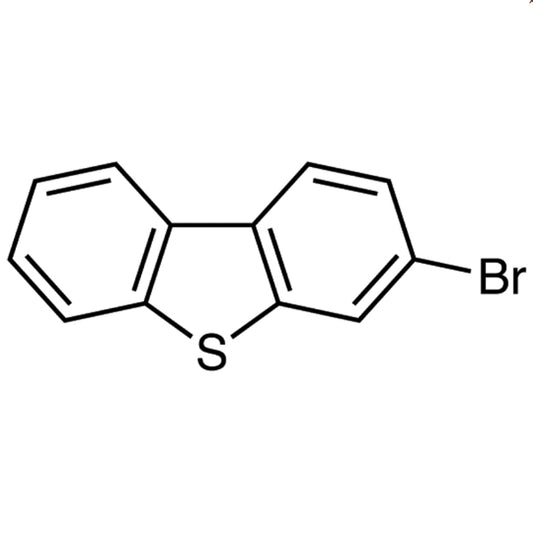
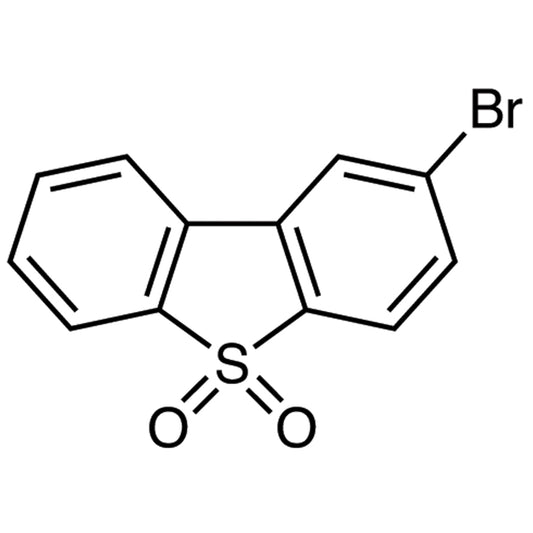
4-(4-Bromophenyl)dibenzothiophene is an organic compound widely used in semiconductor material research. This compound plays a crucial role in the development of advanced electronic materials, particularly in the field of organic semiconductors. Its unique chemical structure allows it to serve as a foundational building block for various electronic devices, including organic solar cells and polymer-based electronic components. Due to its complex molecular framework, it is also a valuable reagent in the synthesis of other compounds with potential applications in modern technology.
The compound's high reactivity, attributed to the bromo group on the phenyl chain, makes it ideal for substitution reactions and other chemical modifications. This reactivity, combined with its structural versatility, enables researchers to tailor its properties for specific applications. Its chemical stability and compatibility with various synthetic methods further enhance its utility in laboratory settings. These characteristics make it a preferred choice for scientists working on cutting-edge material science projects.
In Indonesian laboratories, 4-(4-Bromophenyl)dibenzothiophene is commonly used in material science and technology research. It supports the development of new materials with unique electronic properties, contributing to advancements in renewable energy and electronic device innovation. Its presence in research labs underscores its importance in the pursuit of next-generation semiconductor technologies.
TCI brochures (PDF)
- Thiophenes 2026-06-29 · p. 11
- Building Blocks for Organic Semiconductor 2026-03-24 · p. 28
Related TCI products
- TCI T3236 912824-84-1 4-(4,4,5,5-Tetramethyl-1,3,2-dioxaborolan-2-yl)dibenzothiophene
- TCI B5452 97511-04-1 3-Bromodibenzothiophene
- TCI B5268 116668-69-0 3-Bromodibenzothiophene 5,5-Dioxide
- TCI B5267 53846-85-8 2-Bromodibenzothiophene 5,5-Dioxide
- TCI B4904 1206544-88-8 2-Bromo-8-iododibenzothiophene
- TCI B4449 97511-05-2 4-Bromodibenzothiophene
- Organic Semiconductor Development: This compound is essential for creating organic semiconductors due to its molecular structure and reactivity, enabling the synthesis of materials with tailored electronic properties.
- Organic Solar Cell Research: Its role in organic photovoltaic materials makes it a key component in the development of efficient and sustainable solar energy solutions.
- Polymer-Based Electronic Components: The compound's chemical versatility allows it to be integrated into polymer systems, enhancing the performance of flexible and lightweight electronic devices.
- Chemical Synthesis of Advanced Materials: Its reactivity supports the synthesis of complex organic compounds used in modern electronic and optoelectronic applications.
- Material Science Innovation: Researchers use it to explore new material properties, contributing to advancements in nanotechnology and electronic device engineering.
| Brand | TCI |
|---|---|
| CAS number | 530402-77-8 |
| Molecular formula | — |
| Purity | — |
| Category | Materials Science > Material Building Blocks > Small Molecule Semiconductor Building Blocks |
| Pack sizes | Available in standard laboratory quantities |
| Physical form | Solid |
| Storage | Store in a cool, dry place away from light and moisture |
This compound should be stored in a cool, dry environment, away from direct light and moisture to maintain its chemical integrity. It is recommended to use airtight containers made of glass or high-density polyethylene to prevent contamination and degradation. Due to its reactivity, it should be handled with appropriate personal protective equipment, including gloves and safety goggles. It is important to ensure proper ventilation when working with this compound to avoid inhalation of vapors. The compound should not be exposed to incompatible materials such as strong oxidizing agents. Regular monitoring of storage conditions is advised to ensure the material remains stable and suitable for use in laboratory applications.
—
Produk Terkait
-
4-(4,4,5,5-Tetramethyl-1,3,2-dioxaborolan-2-yl)dibenzothiophene TCI T3236
Regular price From Rp 1.272.600,00Regular priceRp 905.100,00Sale price From Rp 1.272.600,00 -
3-Bromodibenzothiophene TCI B5452
Regular price From Rp 3.153.150,00Regular priceRp 2.220.750,00Sale price From Rp 3.153.150,00 -
3-Bromodibenzothiophene5,5-Dioxide TCI B5268
Regular price Rp 2.809.800,00Regular priceRp 1.980.300,00Sale price Rp 2.809.800,00 -
2-Bromodibenzothiophene5,5-Dioxide TCI B5267
Regular price From Rp 2.041.200,00Regular priceRp 1.442.700,00Sale price From Rp 2.041.200,00 -
2-Bromo-8-iododibenzothiophene TCI B4904
Regular price From Rp 3.207.750,00Regular priceRp 2.258.550,00Sale price From Rp 3.207.750,00 -
4-Bromodibenzothiophene TCI B4449
Regular price From Rp 1.272.600,00Regular priceRp 905.100,00Sale price From Rp 1.272.600,00 -
2-Bromodibenzothiophene TCI B3525
Regular price From Rp 2.942.100,00Regular priceRp 2.072.700,00Sale price From Rp 2.942.100,00 -
4-Phenyldibenzothiophene TCI P2510
Regular price Rp 6.493.200,00Regular priceRp 4.555.950,00Sale price Rp 6.493.200,00