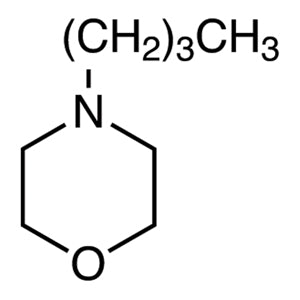
4-Butylmorpholine is a chemical compound classified under heterocyclic building blocks, playing a crucial role in organic synthesis within laboratory settings. It serves as a foundational material for creating complex molecular structures, particularly in reactions involving nitrogen-containing cyclic frameworks. This compound is widely used in synthetic chemistry due to its ability to participate in various reaction pathways, enabling the development of new compounds with tailored properties. Its presence in laboratory workflows is essential for researchers aiming to design and synthesize advanced chemical entities.
The chemical properties of 4-Butylmorpholine make it a preferred choice for synthetic applications. It exhibits stability under controlled conditions, allowing for reliable use in laboratory experiments. The compound’s volatility and tendency to degrade upon exposure to heat or UV light necessitate careful handling and storage. However, under appropriate conditions, it remains a versatile and effective reagent. Its unique molecular structure, featuring a nitrogen atom within a cyclic framework, contributes to its reactivity and utility in organic transformations.
In Indonesian laboratories, 4-Butylmorpholine is commonly utilized in organic chemistry research, especially in the synthesis of pharmaceutical compounds and industrial chemicals. Its role as a building block enables the development of complex molecules with specific functional groups. Due to its chemical versatility and stability, it is a go-to material for researchers seeking to explore new synthetic routes and chemical applications.
- Organic synthesis of pharmaceutical compounds due to its nitrogen-containing cyclic structure and reactivity.
- Development of industrial chemicals through its ability to form complex molecular frameworks.
- Research in heterocyclic chemistry as a fundamental building block for advanced synthetic pathways.
- Creation of specialized chemical intermediates requiring controlled reactivity and structural versatility.
- Exploration of novel reaction mechanisms in synthetic chemistry laboratories for innovation and discovery.
| Brand | TCI |
|---|---|
| CAS number | 1005-67-0 |
| Molecular formula | — |
| Purity | — |
| Category | Chemistry > Building Blocks > Heterocyclic Building Blocks |
| Pack sizes | As per supplier specifications |
| Physical form | Liquid |
| Storage | Store in a cool, dark place away from heat and UV light |
4-Butylmorpholine should be stored in a cool, dark environment to maintain its chemical stability and prevent degradation. It is recommended to use sealed containers made of materials compatible with its chemical properties, such as glass or high-density polyethylene. Due to its volatility, it should be kept in a well-ventilated area, away from sources of heat and direct sunlight. Laboratory personnel should wear appropriate personal protective equipment, including gloves and safety goggles, when handling this compound. Proper labeling and storage practices are essential to ensure safe handling and minimize exposure risks. Always follow standard laboratory safety protocols to maintain a secure working environment.
—
Produk Terkait
-
4-Isobutylmorpholine TCI I0254
Regular price Rp 2.121.000,00Regular priceRp 1.498.350,00Sale price Rp 2.121.000,00 -
4-Acetylmorpholine TCI A0102
Regular price From Rp 717.150,00Regular priceRp 516.600,00Sale price From Rp 717.150,00 -
N-Acetoacetylmorpholine TCI A0726
Regular price Rp 1.192.800,00Regular priceRp 849.450,00Sale price Rp 1.192.800,00 -
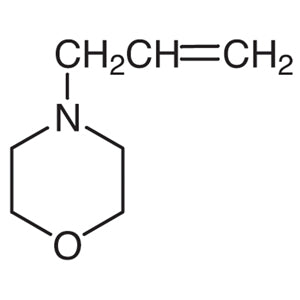
4-Allylmorpholine TCI A0756
Regular price From Rp 3.048.150,00Regular priceRp 2.147.250,00Sale price From Rp 3.048.150,00 -
4-Phenylmorpholine TCI P0196
Regular price From Rp 955.500,00Regular priceRp 683.550,00Sale price From Rp 955.500,00 -
2-Methylmorpholine TCI M3564
Regular price Rp 3.815.700,00Regular priceRp 2.683.800,00Sale price Rp 3.815.700,00 -
4-Methylmorpholine TCI M0370
Regular price From Rp 530.250,00Regular priceRp 386.400,00Sale price From Rp 530.250,00 -
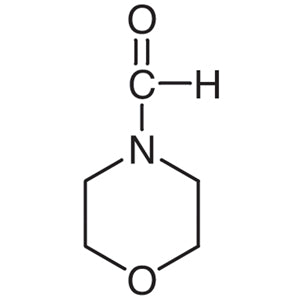
4-Formylmorpholine TCI F0157
Regular price From Rp 637.350,00Regular priceRp 460.950,00Sale price From Rp 637.350,00