2-Bromo-13,13-dimethyl-6H-indeno[1,2-b]anthracene-6,11(13H)-dione is a complex organic compound widely used in materials science research. This compound plays a crucial role in the development of advanced semiconductor materials and inorganic materials due to its unique molecular structure. Its presence in laboratory settings enables researchers to explore new chemical pathways and synthesize compounds with tailored electronic properties. As a building block for complex molecular structures, it is essential in the field of material synthesis and chemical innovation.
The compound is valued for its chemical stability under controlled conditions, which makes it reliable for use in various experimental setups. However, it is sensitive to UV light and oxidation, requiring careful handling and storage. Its complex molecular framework allows for high reactivity, making it ideal for chemical modifications that lead to the creation of new functional materials. This reactivity is particularly useful in applications where structural changes are necessary to achieve specific electronic or optical properties.
In Indonesian laboratories, this compound is commonly used in material science and inorganic chemistry research. Researchers at academic and research institutions rely on it for experiments involving semiconductor synthesis and the development of novel materials. Its application in these contexts highlights its importance in advancing scientific understanding and technological innovation in the region.
TCI brochures (PDF)
- Fluorenes and Fluorenones 2026-04-15 · p. 5
- Building Blocks for Organic Semiconductor 2026-03-24 · p. 13
Related TCI products
- TCI D4573 853234-57-8 2,8-Dibromoindeno[1,2-b]fluorene-6,12-dione
- TCI B3758 14233-37-5 1,4-Bis(isopropylamino)anthracene-9,10-dione
- TCI B6984 2378498-93-0 7-Bromo-2,12-di-tert-butyl-5,9-dioxa-13b-boranaphtho[3,2,1-de]anthracene
- TCI B5456 1308671-90-0 3-(5-Bromo-2-thienyl)-2,5-bis(2-ethylhexyl)-6-(2-thienyl)pyrrolo[3,4-c]pyrrole-1,4-dione
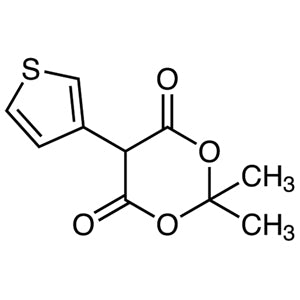
- TCI D3759 61857-83-8 2,2-Dimethyl-5-(3-thienyl)-1,3-dioxane-4,6-dione
- TCI M3301 1514864-84-6 2-Methoxy-9,9-dimethyl-9H-fluorene
- Semiconductor synthesis experiments benefit from this compound’s ability to form complex molecular structures, enabling the creation of advanced electronic materials.
- Inorganic material development utilizes its unique chemical properties to design new compounds with tailored electronic characteristics.
- Organic synthesis applications take advantage of its reactivity for modifying molecular frameworks in the pursuit of functional materials.
- Material characterization studies often incorporate this compound to analyze its structural and electronic behavior under various conditions.
- Research into optoelectronic devices leverages its molecular complexity to explore new possibilities in light-emitting and photovoltaic technologies.
| Brand | TCI |
|---|---|
| CAS number | 1196107-73-9 |
| Molecular formula | — |
| Purity | — |
| Category | Materials Science > Material Building Blocks > Small Molecule Semiconductor Building Blocks |
| Pack sizes | Available in standard laboratory quantities as per supplier specifications |
| Physical form | Solid, as per standard chemical product form |
| Storage | Store in a cool, dark place away from UV light and oxidizing agents |
This compound should be stored in a cool, dark environment to prevent degradation due to UV exposure and oxidation. It is recommended to use airtight containers made of materials such as glass or inert polymer to minimize chemical interaction. Laboratory personnel should wear appropriate personal protective equipment, including gloves and safety goggles, when handling the compound. Due to its reactivity, it should be kept away from incompatible substances like strong oxidizers. Proper ventilation is essential in work areas where this compound is used to ensure safe handling and reduce exposure risks. Always follow standard laboratory safety protocols when working with this material.
—
Produk Terkait
-
2,8-Dibromoindeno[1,2-b]fluorene-6,12-dione TCI D4573
Regular price Rp 5.460.000,00Regular priceRp 3.833.550,00Sale price Rp 5.460.000,00 -
1,4-Bis(isopropylamino)anthracene-9,10-dione TCI B3758
Regular price Rp 980.700,00Regular priceRp 701.400,00Sale price Rp 980.700,00 -
7-Bromo-2,12-di-tert-butyl-5,9-dioxa-13b-boranaphtho[3,2,1-de]anthracene TCI B6984
Regular price Rp 3.870.300,00Regular priceRp 2.721.600,00Sale price Rp 3.870.300,00 -
3-(5-Bromo-2-thienyl)-2,5-bis(2-ethylhexyl)-6-(2-thienyl)pyrrolo[3,4-c]pyrrole-1,4-dione TCI B5456
Regular price Rp 7.075.950,00Regular priceRp 4.963.350,00Sale price Rp 7.075.950,00 -
2,2-Dimethyl-5-(3-thienyl)-1,3-dioxane-4,6-dione TCI D3759
Regular price Rp 4.849.950,00Regular priceRp 3.407.250,00Sale price Rp 4.849.950,00 -
2-Methoxy-9,9-dimethyl-9H-fluorene TCI M3301
Regular price From Rp 1.035.300,00Regular priceRp 723.450,00Sale price From Rp 1.035.300,00 -
9,9-Dimethyl-N-(naphthalen-2-yl)-9H-fluoren-2-amine TCI D5801
Regular price From Rp 980.700,00Regular priceRp 685.650,00Sale price From Rp 980.700,00