4,4'-Bis[4-(di-p-tolylamino)styryl]biphenyl is an organic compound widely used in the development of materials for optoelectronic devices, particularly in the field of OLED (Organic Light-Emitting Diode) technology. This compound plays a crucial role in laboratory settings where researchers are working on advanced light-emitting materials. It is a key component in the fabrication of OLEDs, contributing to the overall performance and efficiency of the devices. Its molecular structure enables it to function as an emissive layer, which is essential for generating light in OLED applications.
The compound is preferred due to its excellent electronic conductivity and high light-emission efficiency. These properties make it ideal for use in OLEDs, where it helps in the efficient transfer of charge carriers and the subsequent generation of light. Its ability to interact effectively with both electrons and holes enhances the overall efficiency of the light-emitting process. Additionally, the compound exhibits good environmental stability and chemical resistance, which are critical for maintaining performance under various experimental conditions.
In Indonesian laboratories, this material is commonly used by researchers in academic and research institutions. It is a vital component in the study and development of new OLED materials, supporting advancements in display technologies and optoelectronic applications. Its reliability and performance make it a preferred choice for scientists working on cutting-edge light-emitting materials in the region.
TCI brochures (PDF)
- Organic Light-Emitting Diode (OLED) Materials 2026-08-18 · p. 7
Related TCI products
- TCI B2080 55035-43-3 1,4-Bis[4-(di-p-tolylamino)styryl]benzene
- TCI B5820 55035-42-2 1,4-Bis[4-(N,N-diphenylamino)styryl]benzene
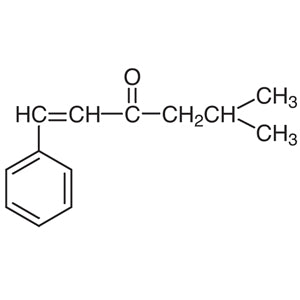
- TCI I0253 2892-18-4 Isobutyl Styryl Ketone
- TCI T3007 72811-73-5 4-(m-Tolylamino)pyridine-3-sulfonamide
- TCI M2572 86672-58-4 6-Methyl-2-(p-tolylamino)-4H-3,1-benzoxazin-4-one
- TCI D2737 42906-19-4 4-(Di-p-tolylamino)benzaldehyde
- OLED material development for high-efficiency light-emitting devices due to its excellent light-emission properties and electronic conductivity.
- Research in optoelectronic applications where stable and efficient organic materials are required for device performance.
- Fabrication of emissive layers in OLED structures to ensure optimal light output and device longevity.
- Testing of new organic compounds for use in display technologies requiring high brightness and color purity.
- Academic and industrial research into advanced materials for next-generation lighting and display solutions.
| Brand | TCI |
|---|---|
| CAS number | 119586-44-6 |
| Molecular formula | — |
| Purity | — |
| Category | Materials Science > Electronic Materials > Organic Light-Emitting Diode (OLED) Materials |
| Pack sizes | Available in standard laboratory quantities as per supplier specifications |
| Physical form | Solid (as per typical organic compound form) |
| Storage | Store in a cool, dry place away from light and moisture |
This compound should be stored in a cool, dry environment, away from direct sunlight and moisture to maintain its chemical stability. It is recommended to use airtight containers made of materials that are chemically inert to prevent any unwanted reactions. Due to its organic nature, it should be handled with care to avoid exposure to air and moisture, which could affect its performance. In laboratory settings, it is important to ensure proper ventilation when handling the material to minimize any potential health risks. Always follow standard safety protocols for handling organic compounds, including the use of personal protective equipment. Proper storage and handling are essential to preserve the material's integrity and ensure safe usage in research applications.
—
Produk Terkait
-
1,4-Bis[4-(di-p-tolylamino)styryl]benzene TCI B2080
Regular price Rp 7.949.550,00Regular priceRp 5.574.450,00Sale price Rp 7.949.550,00 -
1,4-Bis[4-(N,N-diphenylamino)styryl]benzene TCI B5820
Regular price Rp 2.942.100,00Regular priceRp 2.072.700,00Sale price Rp 2.942.100,00 -
IsobutylStyrylKetone TCI I0253
Regular price Rp 3.683.400,00Regular priceRp 2.575.650,00Sale price Rp 3.683.400,00 -
4-(m-Tolylamino)pyridine-3-sulfonamide TCI T3007
Regular price Rp 2.384.550,00Regular priceRp 1.683.150,00Sale price Rp 2.384.550,00 -
6-Methyl-2-(p-tolylamino)-4H-3,1-benzoxazin-4-one TCI M2572
Regular price From Rp 1.988.700,00Regular priceRp 1.405.950,00Sale price From Rp 1.988.700,00 -
4-(Di-p-tolylamino)benzaldehyde TCI D2737
Regular price From Rp 1.167.600,00Regular priceRp 831.600,00Sale price From Rp 1.167.600,00 -
2,4,6-Tri([1,1'-biphenyl]-3-yl)-1,3,5-triazine TCI T3997
Regular price From Rp 2.306.850,00Regular priceRp 1.628.550,00Sale price From Rp 2.306.850,00 -
N,N,N',N'-Tetra([1,1'-biphenyl]-4-yl)[1,1':4',1''-terphenyl]-4,4''-diamine TCI T3656
Regular price Rp 4.001.550,00Regular priceRp 2.814.000,00Sale price Rp 4.001.550,00