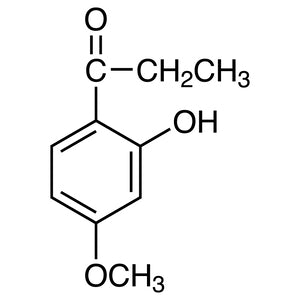
5'-Bromo-2'-hydroxypropiophenone is a chemical compound widely used in organic reactions for the synthesis of complex molecules. It serves as a crucial building block in laboratory settings, particularly in the development of new compounds such as pharmaceuticals, industrial chemicals, and advanced materials. This compound is essential for researchers aiming to create novel structures through various synthetic pathways. Its versatility makes it a valuable tool in both academic and industrial research environments.
The compound's high reactivity is primarily due to the presence of bromo and hydroxyl functional groups, which enable it to participate in a wide range of chemical reactions. These groups make it suitable for nucleophilic and electrophilic substitution reactions, as well as condensation processes. Its molecular structure also allows it to act as a precursor in the synthesis of heterocyclic compounds and phenolic derivatives. These properties make it a preferred choice for chemists working on complex synthetic routes.
In Indonesian laboratories, 5'-Bromo-2'-hydroxypropiophenone is commonly used in both fundamental and applied chemical research. It is widely utilized in pharmaceutical and material science studies, where its reactivity and structural versatility are highly valued. Many research institutions and universities in Indonesia rely on this compound for the development of new compounds, particularly in drug discovery and advanced material synthesis. Its availability and chemical properties make it an essential reagent in the chemical research landscape of Indonesia.
- Organic synthesis applications benefit from this compound due to its reactivity and ability to participate in substitution and condensation reactions.
- Pharmaceutical research utilizes it for the development of new drugs, as its functional groups can be modified to create bioactive molecules.
- Material science applications leverage its structure for the creation of advanced polymers and functional materials.
- Heterocyclic compound synthesis relies on its ability to act as a building block for the formation of complex ring structures.
- Phenolic derivative production benefits from its hydroxyl group, which can be further modified for various chemical transformations.
| Brand | TCI |
|---|---|
| CAS number | 17764-93-1 |
| Molecular formula | — |
| Purity | — |
| Category | Chemistry > Building Blocks > Non-Heterocyclic Building Blocks |
| Pack sizes | Available in various quantities as per standard laboratory supply |
| Physical form | Solid or liquid, depending on the specific product variant |
| Storage | Store in a cool, dry place away from light and moisture |
This compound should be stored in a cool, dry environment, away from direct light and moisture to maintain its chemical integrity. It is recommended to use airtight containers to prevent exposure to air and humidity, which could affect its reactivity. Laboratory personnel should handle it with care, using appropriate personal protective equipment such as gloves and safety goggles. Due to its reactive nature, it should be kept in a well-ventilated area to minimize any potential risks. Proper labeling and storage practices are essential to ensure safe handling and prevent accidental contamination.
—
Produk Terkait
-
4'-Hydroxypropiophenone TCI H0299
Regular price From Rp 610.050,00Regular priceRp 442.050,00Sale price From Rp 610.050,00 -
2'-Hydroxypropiophenone TCI H0298
Regular price Rp 662.550,00Regular priceRp 478.800,00Sale price Rp 662.550,00 -
2',4',6'-Trihydroxypropiophenone TCI T0887
Regular price Rp 3.472.350,00Regular priceRp 2.443.350,00Sale price Rp 3.472.350,00 -
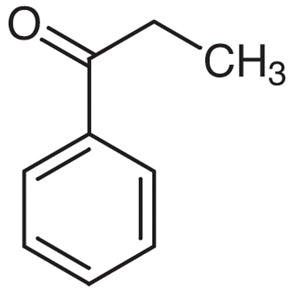
Propiophenone TCI P0519
Regular price From Rp 610.050,00Regular priceRp 426.300,00Sale price From Rp 610.050,00 -
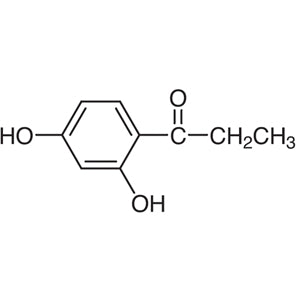
2',4'-Dihydroxypropiophenone TCI D2694
Regular price Rp 1.326.150,00Regular priceRp 942.900,00Sale price Rp 1.326.150,00 -
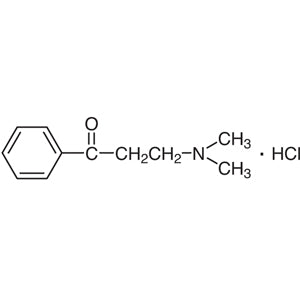
3-(Dimethylamino)propiophenoneHydrochloride TCI D2400
Regular price Rp 1.510.950,00Regular priceRp 1.056.300,00Sale price Rp 1.510.950,00 -
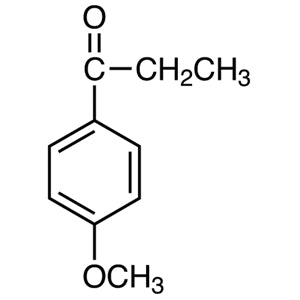
4'-Methoxypropiophenone TCI M1719
Regular price Rp 1.563.450,00Regular priceRp 1.108.800,00Sale price Rp 1.563.450,00 -
2'-Hydroxy-4'-methoxypropiophenone TCI H1207
Regular price Rp 2.279.550,00Regular priceRp 1.609.650,00Sale price Rp 2.279.550,00