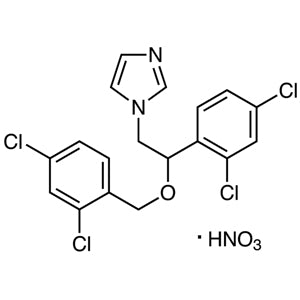
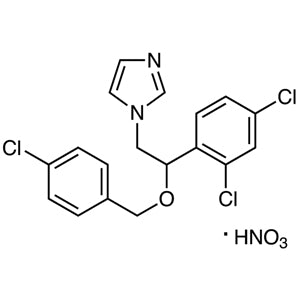
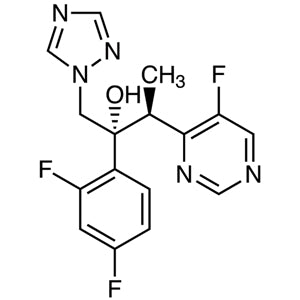
Butoconazole Nitrate is a chemical compound widely utilized in scientific laboratories for its antimicrobial properties, particularly against fungal infections. As a derivative of the azole class, it plays a crucial role in research related to infection control and drug development. Its chemical structure enables it to interact effectively with microbial cell membranes, making it a valuable tool in various biochemical and pharmacological studies. This compound is essential for researchers aiming to understand microbial resistance mechanisms and develop new therapeutic agents.
The compound is preferred due to its stability and controlled reactivity, which make it suitable for use in a wide range of laboratory applications. Its non-toxic nature and relative safety under proper handling conditions further enhance its appeal. Butoconazole Nitrate is also noted for its versatility in solubility, allowing it to be dissolved in various solvents depending on the experimental needs. These properties ensure that it remains a reliable and efficient reagent for both academic and industrial research settings.
In Indonesian laboratories, Butoconazole Nitrate is commonly used in pharmacological, microbiological, and medicinal chemistry research. It is frequently employed in fungal efficacy testing, antimicrobial screening, and the development of antifungal agents. Its presence in these research areas underscores its importance in advancing scientific understanding and innovation in the field of infectious disease management.
TCI brochures (PDF)
- Antimicrobials and Antitumor Agents for Research and Experimental Use 2025-04-24 · p. 9
- Pharmaceutical Ingredients for Research and Experimental Use 2026-03-09 · p. 9
- Fungal Infection Research – Butoconazole Nitrate is ideal for studying the mechanisms of fungal resistance and the effectiveness of antifungal treatments.
- Antimicrobial Screening – Its antimicrobial activity makes it suitable for evaluating the efficacy of new compounds against various microbial strains.
- Drug Development – The compound is used in the formulation and testing of new antifungal drugs, supporting pharmaceutical research efforts.
- Biochemical Analysis – Its chemical stability and solubility properties make it a reliable reagent for biochemical assays and analytical procedures.
- Microbiological Testing – It is commonly used in laboratory tests to assess microbial growth inhibition and to identify effective antifungal agents.
| Brand | TCI |
|---|---|
| CAS number | 64872-77-1 |
| Molecular formula | — |
| Purity | — |
| Category | Life Science > Biochemicals and Reagents > Antibiotics |
| Pack sizes | Available in various quantities as per standard laboratory supply |
| Physical form | Solid, typically in powder or crystalline form |
| Storage | Store in a cool, dry place away from direct sunlight and moisture |
Butoconazole Nitrate should be stored in a cool, dry environment to maintain its chemical stability and prevent degradation. It is recommended to keep the compound in airtight containers to avoid exposure to moisture and contaminants. Proper labeling of storage containers is essential for safe handling and easy identification. Laboratory personnel should wear appropriate personal protective equipment, such as gloves and safety goggles, when handling the compound. While it is considered relatively safe, adherence to standard laboratory safety protocols is necessary to ensure safe usage and minimize any potential risks. Regular monitoring of storage conditions helps maintain the integrity of the compound for reliable experimental results.
—
Product Categories
- Biochemicals and ReagentsAntibioticsAntibiotics (by Application)
- Biochemicals and ReagentsPharmaceutical Research Reagents (for Experimental Use)Antifungal Ingredients (for Research and Experimental Use)
- Biochemicals and Reagents
- MicrobiologyAntibioticsAntibiotics (by Application)
- Pharmaceutical Development and Drug Discovery ResearchPharmaceutical Research Reagents (for Experimental Use)Antifungal Ingredients (for Research and Experimental Use)
- Pharmaceutical Development and Drug Discovery ResearchAntibioticsAntibiotics (by Application)
Produk Terkait
-
MiconazoleNitrate TCI M1769
Regular price From Rp 1.246.350,00Regular priceRp 887.250,00Sale price From Rp 1.246.350,00 -
EconazoleNitrate TCI E0957
Regular price From Rp 1.326.150,00Regular priceRp 942.900,00Sale price From Rp 1.326.150,00 -
Ketoconazole TCI K0045
Regular price From Rp 1.881.600,00Regular priceRp 1.331.400,00Sale price From Rp 1.881.600,00 -
SulconazoleNitrate TCI U0112
Regular price From Rp 3.312.750,00Regular priceRp 2.332.050,00Sale price From Rp 3.312.750,00 -
IsoconazoleNitrate TCI I0834
Regular price Rp 1.881.600,00Regular priceRp 1.331.400,00Sale price Rp 1.881.600,00 -
FenticonazoleNitrate TCI F1008
Regular price Rp 1.749.300,00Regular priceRp 1.239.000,00Sale price Rp 1.749.300,00 -
Voriconazole TCI V0116
Regular price From Rp 1.696.800,00Regular priceRp 1.202.250,00Sale price From Rp 1.696.800,00 -
Posaconazole TCI P2477
Regular price From Rp 2.809.800,00Regular priceRp 1.980.300,00Sale price From Rp 2.809.800,00