1-Butyl-1-methylpiperidinium Bis(trifluoromethanesulfonyl)imide is an ionic liquid widely used in specialized chemical reactions within laboratory settings. As a member of the ionic liquid family, it serves as a versatile medium for various synthetic processes due to its unique chemical properties. This compound is particularly valuable in organic synthesis and catalytic reactions, where its stability and non-volatile nature provide a reliable environment for chemical transformations. Its low viscosity and high solubility make it an effective solvent or reaction medium, enabling researchers to achieve better control over reaction conditions and outcomes.
The properties of this ionic liquid make it a preferred choice for advanced chemical applications. It exhibits low volatility, which reduces the risk of evaporation and ensures a stable reaction environment. Additionally, its high thermal stability allows it to remain effective under a wide range of reaction conditions. The non-flammable and non-toxic nature of the compound enhances safety in laboratory operations. These characteristics make it ideal for use in both academic and industrial research settings, where precision and reliability are essential.
In Indonesian laboratories, this ionic liquid is commonly used in applied chemistry and organic synthesis research. It supports the development of new materials and technologies, particularly in the fields of pure chemistry and material science. Many research institutions and universities in Indonesia rely on such compounds to advance scientific innovation and meet the demands of modern chemical research.
TCI brochures (PDF)
- Ionic Liquids for Battery Research 2026-04-13 · p. 2
- Ionic Liquids 2026-06-08 · p. 10
- Quaternary Ammonium Salts 2025-11-10 · p. 10
Related TCI products
- TCI V0145 1013027-27-4 1-Vinylimidazole Bis(trifluoromethanesulfonyl)imide
- TCI T2761 268536-05-6 Trimethylpropylammonium Bis(trifluoromethanesulfonyl)imide
- TCI T2679 405514-94-5 Tributylmethylammonium Bis(trifluoromethanesulfonyl)imide
- TCI T2314 321746-49-0 Triethylsulfonium Bis(trifluoromethanesulfonyl)imide
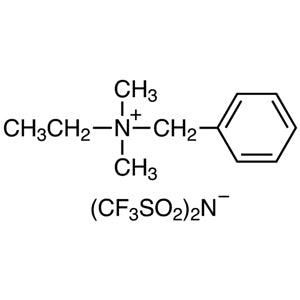
- TCI B5427 1186103-43-4 Benzyl(ethyl)dimethylammonium Bis(trifluoromethanesulfonyl)imide
- TCI B5421 1312310-16-9 3,3'-(Butane-1,4-diyl)bis(1-vinyl-3-imidazolium) Bis(trifluoromethanesulfonyl)imide
- Organic synthesis reactions benefit from this ionic liquid due to its low viscosity and ability to stabilize complex chemical transformations.
- Catalytic processes are enhanced by its thermal stability and non-volatile nature, ensuring consistent reaction conditions.
- Green chemistry initiatives utilize this compound as a sustainable alternative to traditional volatile solvents, reducing environmental impact.
- Material synthesis applications leverage its unique properties for creating novel polymers and nanomaterials with controlled structures.
- Analytical chemistry procedures benefit from its inertness and solubility, allowing it to serve as a medium for precise and reproducible experiments.
| Brand | TCI |
|---|---|
| CAS number | 623580-02-9 |
| Molecular formula | — |
| Purity | — |
| Category | Chemistry > Specialty Synthesis > Ionic Liquids |
| Pack sizes | Available in various quantities as per supplier specifications |
| Physical form | Liquid |
| Storage | Store in a cool, dry place away from direct sunlight |
This ionic liquid should be stored in a cool, dry environment, away from direct sunlight and sources of heat. It is recommended to use sealed, non-reactive containers to prevent contamination and maintain its chemical integrity. Due to its non-volatile nature, it does not require special containment, but proper labeling is essential for safety. In laboratory settings, it should be handled with standard chemical safety practices, including the use of personal protective equipment. Regular monitoring of storage conditions ensures the material remains stable and suitable for use in chemical experiments.
—
Produk Terkait
-
1-VinylimidazoleBis(trifluoromethanesulfonyl)imide TCI V0145
Regular price Rp 2.809.800,00Regular priceRp 1.980.300,00Sale price Rp 2.809.800,00 -
TrimethylpropylammoniumBis(trifluoromethanesulfonyl)imide TCI T2761
Regular price From Rp 1.908.900,00Regular priceRp 1.350.300,00Sale price From Rp 1.908.900,00 -
TributylmethylammoniumBis(trifluoromethanesulfonyl)imide TCI T2679
Regular price From Rp 1.749.300,00Regular priceRp 1.239.000,00Sale price From Rp 1.749.300,00 -
TriethylsulfoniumBis(trifluoromethanesulfonyl)imide TCI T2314
Regular price Rp 2.862.300,00Regular priceRp 2.017.050,00Sale price Rp 2.862.300,00 -
Benzyl(ethyl)dimethylammoniumBis(trifluoromethanesulfonyl)imide TCI B5427
Regular price Rp 3.790.500,00Regular priceRp 2.665.950,00Sale price Rp 3.790.500,00 -
3,3'-(Butane-1,4-diyl)bis(1-vinyl-3-imidazolium)Bis(trifluoromethanesulfonyl)imide TCI B5421
Regular price Rp 2.439.150,00Regular priceRp 1.720.950,00Sale price Rp 2.439.150,00 -
ButyltrimethylammoniumBis(trifluoromethanesulfonyl)imide TCI B3233
Regular price Rp 1.856.400,00Regular priceRp 1.313.550,00Sale price Rp 1.856.400,00 -
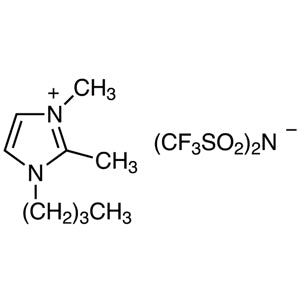
1-Butyl-2,3-dimethylimidazoliumBis(trifluoromethanesulfonyl)imide TCI B3159
Regular price From Rp 1.431.150,00Regular priceRp 1.016.400,00Sale price From Rp 1.431.150,00