1-Butyl-2,3-dimethylimidazolium Bis(trifluoromethanesulfonyl)imide is an ionic liquid widely used in chemical synthesis and laboratory research. As a unique compound in the field of specialty synthesis, it serves as both a solvent and catalyst in various organic reactions. Its role in the laboratory is critical for the development of complex organic compounds and advanced materials. This ionic liquid is particularly valued for its stability and versatility in different reaction conditions.
The properties of this ionic liquid make it a preferred choice for modern laboratory applications. It has a high boiling point and is non-volatile, which means it does not evaporate under normal conditions. This characteristic allows it to be used in reactions that require high temperatures or vacuum environments without significant loss of material. Additionally, it is non-toxic and environmentally friendly compared to traditional organic solvents, making it a safer and more sustainable option for laboratory use.
In Indonesian laboratories, this ionic liquid is highly relevant for research in organic chemistry, materials science, and emerging technologies. It is commonly used in academic and industrial settings to support the development of new compounds and applications. Its unique properties make it an essential tool for researchers aiming to innovate in various scientific fields.
TCI brochures (PDF)
- Ionic Liquids 2026-06-08 · p. 7
Related TCI products
- TCI V0145 1013027-27-4 1-Vinylimidazole Bis(trifluoromethanesulfonyl)imide
- TCI B5421 1312310-16-9 3,3'-(Butane-1,4-diyl)bis(1-vinyl-3-imidazolium) Bis(trifluoromethanesulfonyl)imide
- TCI B2477 174899-83-3 1-Butyl-3-methylimidazolium Bis(trifluoromethanesulfonyl)imide
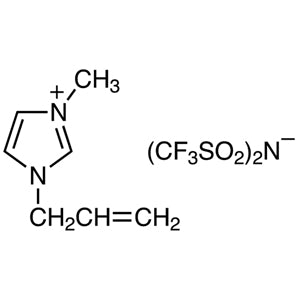
- TCI A3210 655249-87-9 1-Allyl-3-methylimidazolium Bis(trifluoromethanesulfonyl)imide
- TCI M3210 353239-08-4 1-Methylimidazole Bis(trifluoromethanesulfonyl)imide
- TCI M3119 909390-59-6 1-Methyl-3-(4-sulfobutyl)imidazolium Bis(trifluoromethanesulfonyl)imide
- Organic synthesis reactions benefit from this ionic liquid due to its non-volatile nature and catalytic properties, enabling efficient and stable reaction conditions.
- Material science research utilizes this compound for the synthesis of advanced polymers and nanomaterials, leveraging its stability under high-temperature processes.
- Green chemistry initiatives incorporate this ionic liquid as a sustainable alternative to traditional solvents, reducing environmental impact and enhancing safety.
- Analytical chemistry applications take advantage of its chemical stability and low volatility, making it suitable for precise and controlled experimental setups.
- Industrial process development uses this compound for its ability to maintain reaction efficiency in high-temperature or vacuum environments, improving process reliability.
| Brand | TCI |
|---|---|
| CAS number | 350493-08-2 |
| Molecular formula | — |
| Purity | — |
| Category | Chemistry > Specialty Synthesis > Ionic Liquids |
| Pack sizes | — |
| Physical form | Liquid |
| Storage | Store in a cool, dry place away from moisture and direct sunlight |
This ionic liquid should be stored in a cool, dry place, away from moisture and direct sunlight to maintain its chemical stability. It is recommended to use sealed containers made of inert materials such as glass or stainless steel to prevent contamination and evaporation. Due to its non-volatile nature, it does not require special containment under normal conditions, but care should be taken to avoid spills. In laboratory settings, proper personal protective equipment should be worn when handling this material to ensure safety. It is important to keep the container tightly closed when not in use to prevent any potential exposure.
—
Produk Terkait
-
1-VinylimidazoleBis(trifluoromethanesulfonyl)imide TCI V0145
Regular price Rp 2.809.800,00Regular priceRp 1.980.300,00Sale price Rp 2.809.800,00 -
3,3'-(Butane-1,4-diyl)bis(1-vinyl-3-imidazolium)Bis(trifluoromethanesulfonyl)imide TCI B5421
Regular price Rp 2.439.150,00Regular priceRp 1.720.950,00Sale price Rp 2.439.150,00 -
1-Butyl-3-methylimidazoliumBis(trifluoromethanesulfonyl)imide TCI B2477
Regular price From Rp 1.351.350,00Regular priceRp 960.750,00Sale price From Rp 1.351.350,00 -
1-Allyl-3-methylimidazoliumBis(trifluoromethanesulfonyl)imide TCI A3210
Regular price From Rp 2.093.700,00Regular priceRp 1.479.450,00Sale price From Rp 2.093.700,00 -
1-MethylimidazoleBis(trifluoromethanesulfonyl)imide TCI M3210
Regular price From Rp 1.934.100,00Regular priceRp 1.368.150,00Sale price From Rp 1.934.100,00 -
1-Methyl-3-(4-sulfobutyl)imidazoliumBis(trifluoromethanesulfonyl)imide TCI M3119
Regular price From Rp 1.618.050,00Regular priceRp 1.146.600,00Sale price From Rp 1.618.050,00 -
1-Methyl-3-propylimidazoliumBis(trifluoromethanesulfonyl)imide TCI M3059
Regular price From Rp 1.538.250,00Regular priceRp 1.090.950,00Sale price From Rp 1.538.250,00 -
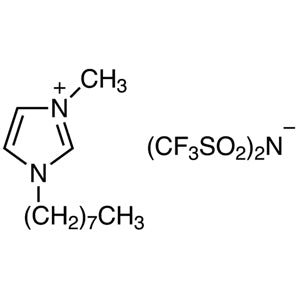
1-Methyl-3-n-octylimidazoliumBis(trifluoromethanesulfonyl)imide TCI M3039
Regular price From Rp 1.856.400,00Regular priceRp 1.313.550,00Sale price From Rp 1.856.400,00