1-Butyl-3-methylimidazolium Bis(trifluoromethanesulfonyl)imide is an ionic liquid widely used in chemical reactions and specialized synthesis processes within laboratories. This compound serves as a versatile medium for various chemical transformations, offering unique properties that make it suitable for a wide range of applications. Its role as a non-volatile solvent and reaction medium is critical in maintaining stable reaction conditions, especially in high-temperature or long-duration experiments. In the context of Indonesian laboratories, this ionic liquid is a key component in both academic and industrial research settings, supporting advancements in organic and electrochemical synthesis.
The compound’s unique structure, consisting of a cationic imidazolium and a bulky bis(trifluoromethanesulfonyl)imide anion, contributes to its exceptional chemical and physical properties. These include high thermal stability, non-volatility, and a high dielectric constant, which make it ideal for use in electrochemical processes and catalytic systems. Its inert nature and ability to dissolve a wide range of substances enhance its utility as a reaction medium, while its low toxicity and environmental stability further support its adoption in modern laboratory practices.
In Indonesian laboratories, this ionic liquid is commonly used in organic synthesis, catalytic reactions, and electrochemical studies. Its ability to stabilize reactants and improve reaction efficiency makes it a preferred choice for researchers working on complex chemical processes. The compound’s stability under various conditions ensures reliable results, making it an essential tool for both teaching and research in the chemical sciences.
TCI brochures (PDF)
- Ionic Liquids for Battery Research 2026-04-13 · p. 1
- Ionic Liquids 2026-06-08 · p. 7
- Solar Cell Materials 2026-04-21 · p. 10
Related TCI products
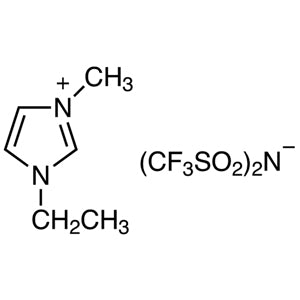
- TCI E0599 174899-82-2 1-Ethyl-3-methylimidazolium Bis(trifluoromethanesulfonyl)imide
- TCI B2195 174501-65-6 1-Butyl-3-methylimidazolium Tetrafluoroborate
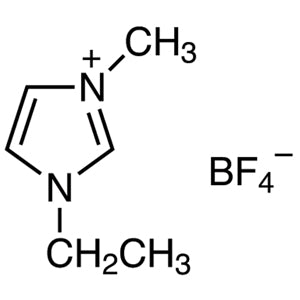
- TCI E0496 143314-16-3 1-Ethyl-3-methylimidazolium Tetrafluoroborate
- TCI V0145 1013027-27-4 1-Vinylimidazole Bis(trifluoromethanesulfonyl)imide
- TCI B5421 1312310-16-9 3,3'-(Butane-1,4-diyl)bis(1-vinyl-3-imidazolium) Bis(trifluoromethanesulfonyl)imide
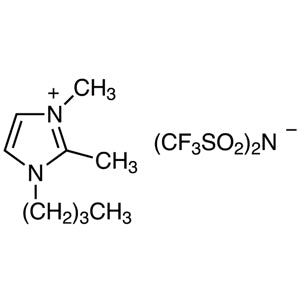
- TCI B3159 350493-08-2 1-Butyl-2,3-dimethylimidazolium Bis(trifluoromethanesulfonyl)imide
- Organic synthesis reactions benefit from this ionic liquid due to its ability to dissolve a wide range of organic compounds and stabilize reactive intermediates, enhancing reaction efficiency and yield.
- Electrochemical processes utilize this material because of its high dielectric constant and non-volatile nature, which support stable and reproducible electrochemical measurements.
- Catalytic systems incorporate this ionic liquid as a medium to improve catalyst dispersion and reaction kinetics, promoting more efficient and selective chemical transformations.
- Solvent-free reactions rely on this compound as a green alternative to traditional volatile solvents, reducing environmental impact while maintaining reaction efficiency.
- Separation and purification processes use this ionic liquid for its ability to selectively dissolve target compounds, enabling efficient extraction and purification of complex mixtures.
| Brand | TCI |
|---|---|
| CAS number | 174899-83-3 |
| Molecular formula | — |
| Purity | — |
| Category | Chemistry > Specialty Synthesis > Ionic Liquids |
| Pack sizes | Available in various sizes as per supplier specifications |
| Physical form | Liquid |
| Storage | Store in a cool, dry place away from direct sunlight and incompatible materials |
This ionic liquid should be stored in a cool, dry environment, away from direct sunlight and sources of heat. It is recommended to use sealed, non-reactive containers such as glass or high-density polyethylene to prevent contamination and evaporation. Due to its non-volatile nature, it does not require refrigeration but should be kept in a well-ventilated area to ensure safe handling. Laboratory personnel should wear appropriate personal protective equipment, including gloves and safety goggles, when handling this material. While it is considered non-toxic, it is advisable to follow standard chemical safety protocols to minimize exposure and ensure safe usage in all laboratory settings.
—
Product Categories
Produk Terkait
-
1-Ethyl-3-methylimidazoliumBis(trifluoromethanesulfonyl)imide TCI E0599
Regular price From Rp 2.068.500,00Regular priceRp 1.461.600,00Sale price From Rp 2.068.500,00 -
1-Butyl-3-methylimidazoliumTetrafluoroborate TCI B2195
Regular price From Rp 1.060.500,00Regular priceRp 757.050,00Sale price From Rp 1.060.500,00 -
1-Ethyl-3-methylimidazoliumTetrafluoroborate TCI E0496
Regular price From Rp 1.643.250,00Regular priceRp 1.164.450,00Sale price From Rp 1.643.250,00 -
1-VinylimidazoleBis(trifluoromethanesulfonyl)imide TCI V0145
Regular price Rp 2.809.800,00Regular priceRp 1.980.300,00Sale price Rp 2.809.800,00 -
3,3'-(Butane-1,4-diyl)bis(1-vinyl-3-imidazolium)Bis(trifluoromethanesulfonyl)imide TCI B5421
Regular price Rp 2.439.150,00Regular priceRp 1.720.950,00Sale price Rp 2.439.150,00 -
1-Butyl-2,3-dimethylimidazoliumBis(trifluoromethanesulfonyl)imide TCI B3159
Regular price From Rp 1.431.150,00Regular priceRp 1.016.400,00Sale price From Rp 1.431.150,00 -
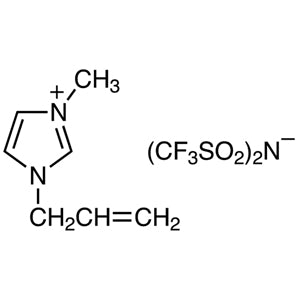
1-Allyl-3-methylimidazoliumBis(trifluoromethanesulfonyl)imide TCI A3210
Regular price From Rp 2.093.700,00Regular priceRp 1.479.450,00Sale price From Rp 2.093.700,00 -
1-MethylimidazoleBis(trifluoromethanesulfonyl)imide TCI M3210
Regular price From Rp 1.934.100,00Regular priceRp 1.368.150,00Sale price From Rp 1.934.100,00