1-Butyl-3-methylimidazolium Tetrafluoroborate is an ionic liquid widely used in various chemical reactions and synthesis processes. As a unique type of solvent, it plays a critical role in modern laboratory research by offering stability and versatility in chemical environments. Its non-volatile nature makes it ideal for applications where maintaining consistent reaction conditions is essential. This material is commonly found in laboratories worldwide, supporting a broad range of chemical investigations and industrial applications.
The properties of 1-Butyl-3-methylimidazolium Tetrafluoroborate make it a preferred choice for researchers. It exhibits thermal stability and resistance to degradation, ensuring long-term performance in chemical processes. Additionally, it is anhydrous, making it suitable for reactions that are sensitive to moisture. Its ability to dissolve both organic and inorganic compounds enhances its utility as a reaction medium or solvent. These characteristics contribute to its growing popularity in both academic and industrial research settings.
In Indonesian laboratories, 1-Butyl-3-methylimidazolium Tetrafluoroborate is commonly used in organic synthesis, catalytic processes, and material research. Its availability and high quality make it a favored option for scientists and students in educational and research institutions. The material supports a wide range of experimental applications, contributing to the advancement of chemical studies in the region.
Advantages (TCI brochure)
- Diels-Alder: similar reactivity to Lewis basic emimCl/(AlCl3)X for cyclopentadiene and methyl acrylate
- Heck reaction of vinyl ethers with aryl halides gives only alpha-substituents specifically
- Suzuki-Miyaura: product extracted with ether while catalyst and ionic liquid are retained and reused
- Wittig: product and triphenylphosphine oxide separated by ether and toluene extraction
- Reduction of benzaldehyde with tributylborane gives 93% yield at 100 °C, 16 h
TCI brochures (PDF)
- Ionic Liquids for Battery Research 2026-04-13 · p. 1
- Ionic Liquids 2026-06-08 · p. 7
- Solar Cell Materials 2026-04-21 · p. 10
- Boron Compounds 2025-10-07 · p. 24
Related TCI products
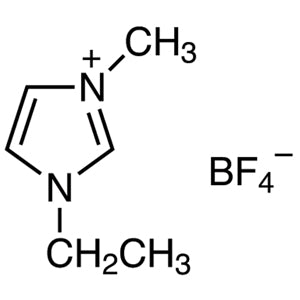
- TCI E0496 143314-16-3 1-Ethyl-3-methylimidazolium Tetrafluoroborate
- TCI B2477 174899-83-3 1-Butyl-3-methylimidazolium Bis(trifluoromethanesulfonyl)imide
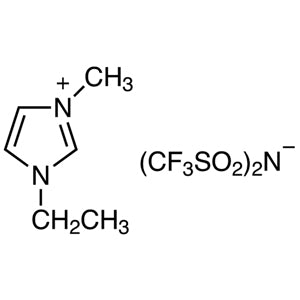
- TCI E0599 174899-82-2 1-Ethyl-3-methylimidazolium Bis(trifluoromethanesulfonyl)imide
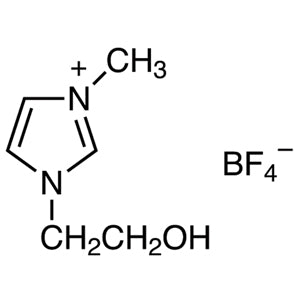
- TCI H1492 374564-83-7 1-(2-Hydroxyethyl)-3-methylimidazolium Tetrafluoroborate
- TCI H1099 244193-50-8 1-Hexyl-3-methylimidazolium Tetrafluoroborate
- TCI D5373 244193-56-4 1-Decyl-3-methylimidazolium Tetrafluoroborate
- Organic synthesis where stable and non-volatile solvents are required for complex reaction systems.
- Catalytic reactions that benefit from the unique solvation properties of ionic liquids.
- Material research involving the preparation of new polymers and nanomaterials.
- Analytical chemistry applications requiring anhydrous and inert environments.
- Green chemistry initiatives aiming to reduce volatile organic compound emissions.
From the TCI brochure
- Diels-Alder reaction
- Heck reaction
- Aldol condensation
- Suzuki-Miyaura coupling
- Wittig reaction
- Stille reaction
- Friedel-Crafts benzoylation
- Asymmetric hydrogenation in two-phase system with alcohol
- Reduction of aldehydes with trialkylboranes
- Electrophilic fluorination of indoles
- Ring opening of epoxides with amines
- Enzymatic (lipase) transesterification
| Brand | TCI |
|---|---|
| CAS number | 174501-65-6 |
| Molecular formula | — |
| Purity | — |
| Category | Chemistry > Specialty Synthesis > Ionic Liquids |
| Pack sizes | Available in various quantities as per supplier specifications |
| Physical form | Liquid |
| Storage | Store in a cool, dry place away from direct sunlight |
Data from the TCI brochure
| Y (%) Diels-Alder (endo + exo) | 91 (cyclopentadiene + methyl acrylate, r.t., 72 h) |
|---|---|
| Y (%) Heck, vinyl ether (entry 4) | 95 (Pd(OAc)2 (2.5 mol%), DPPP (2 eq.), Et3N, 100 °C, 24 h) |
| Y (%) Wittig, 1st use | 82 (Ph3P=CH-C(=O)Me + PhCHO, 60 °C, 2.5 h) |
| Y (%) Suzuki-Miyaura, 1st use | 81 (Pd(PPh3)4 (cat.), Na2CO3 aq., 110 °C, 10 min) |
| Y (%) reduction of benzaldehyde by Bu3B | 93 (Bu3B 1 eq., 100 °C, 16 h) |
| ee (%) asymmetric hydrogenation, 1st use | 78 (S) (H2 50 atm, [RuCl2-(S)-BINAP]2·NEt3 (cat.), iPrOH-bmimBF4, r.t., 20 h) |
Source: TCI brochure R5058 (2026-06-08)
This ionic liquid should be stored in a cool, dry place, away from direct sunlight and sources of heat. It is recommended to use airtight, non-reactive containers such as glass or high-density polyethylene to prevent contamination and evaporation. Due to its non-volatile nature, it does not require refrigeration but should be kept in a controlled environment. Laboratory personnel should wear appropriate personal protective equipment when handling this material to ensure safety. Regular monitoring of storage conditions is advised to maintain its chemical integrity and ensure safe usage in experimental settings.
—
Product Categories
Produk Terkait
-
1-Ethyl-3-methylimidazoliumTetrafluoroborate TCI E0496
Regular price From Rp 1.643.250,00Regular priceRp 1.164.450,00Sale price From Rp 1.643.250,00 -
1-Butyl-3-methylimidazoliumBis(trifluoromethanesulfonyl)imide TCI B2477
Regular price From Rp 1.351.350,00Regular priceRp 960.750,00Sale price From Rp 1.351.350,00 -
1-Ethyl-3-methylimidazoliumBis(trifluoromethanesulfonyl)imide TCI E0599
Regular price From Rp 2.068.500,00Regular priceRp 1.461.600,00Sale price From Rp 2.068.500,00 -
1-(2-Hydroxyethyl)-3-methylimidazoliumTetrafluoroborate TCI H1492
Regular price From Rp 1.405.950,00Regular priceRp 998.550,00Sale price From Rp 1.405.950,00 -
1-Hexyl-3-methylimidazoliumTetrafluoroborate TCI H1099
Regular price From Rp 1.246.350,00Regular priceRp 887.250,00Sale price From Rp 1.246.350,00 -
1-Decyl-3-methylimidazoliumTetrafluoroborate TCI D5373
Regular price From Rp 2.147.250,00Regular priceRp 1.517.250,00Sale price From Rp 2.147.250,00 -
1-Benzyl-3-methylimidazoliumTetrafluoroborate TCI B5725
Regular price Rp 769.650,00Regular priceRp 553.350,00Sale price Rp 769.650,00 -
1-Butyl-3-methylimidazoliumTricyanomethanide TCI B5487
Regular price From Rp 1.856.400,00Regular priceRp 1.313.550,00Sale price From Rp 1.856.400,00