3,3'-Bi[1,4]benzoxazino[2,3,4-kl]phenoxazine is an organic compound widely used in laboratory research for its unique optical and electronic properties. This material plays a crucial role in the development of organic light-emitting diodes (OLEDs), where it functions as a light-emitting layer or an organic conductor. Its molecular structure enables efficient light emission, making it a key component in advanced display technologies. Due to its stability and tunable emission characteristics, it is highly valued in both academic and industrial research settings.
The compound’s complex molecular architecture allows for high-efficiency light emission across a range of wavelengths. This makes it a preferred choice for researchers aiming to develop next-generation OLED devices with improved performance and energy efficiency. Its chemical and electronic properties are well-suited for use in thin-film applications, where precise control over light output is essential. Additionally, its compatibility with various fabrication techniques enhances its versatility in experimental setups.
In Indonesian laboratories, this compound is commonly used by researchers in higher education institutions and research organizations. It supports the development of advanced display technologies and optical devices, contributing to the country’s focus on innovation in information and communication technology. Its application is widespread in both fundamental and applied research, driving progress in the field of organic electronics.
Advantages (TCI brochure)
- On-top π-stack structure by one-dimensionally arranged molecules in crystal
- Anisotropic mobility in amorphous film
- Amorphous film shows high carrier mobility perpendicular to the device layer
TCI brochures (PDF)
- Pseudoplanar Hole Conductor HN-D 2025-01-21 · p. 1
- Organic Light-Emitting Diode (OLED) Materials 2026-08-18 · p. 5
Related TCI products
- TCI B4908 1395881-55-6 7,7'-Bi[1,4]benzoxazino[2,3,4-kl]phenoxazine
- TCI B2717 261733-18-0 4,6-Bis(diphenylphosphino)phenoxazine
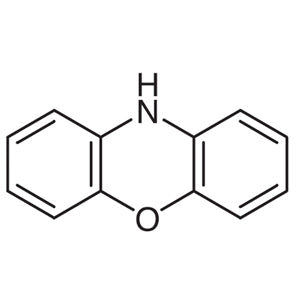
- TCI P0899 135-67-1 Phenoxazine
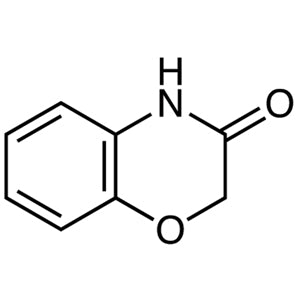
- TCI B4553 5466-88-6 2H-1,4-Benzoxazin-3(4H)-one
- TCI B4402 24036-52-0 6-Bromo-2H-1,4-benzoxazin-3(4H)-one
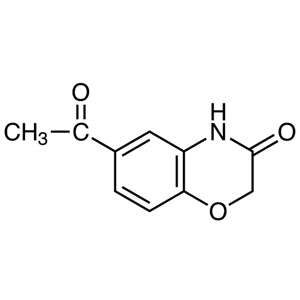
- TCI A2755 26518-71-8 6-Acetyl-2H-1,4-benzoxazin-3(4H)-one
- OLED Device Development: This compound is ideal for creating light-emitting layers in OLEDs due to its high photoluminescence efficiency and stability under operational conditions.
- Organic Conductor Research: Its electronic properties make it suitable for studying charge transport mechanisms in organic semiconductors.
- Display Technology Innovation: It is used in the fabrication of flexible and high-resolution displays, supporting advancements in next-generation screen technologies.
- Material Characterization Studies: Its well-defined molecular structure allows for detailed analysis using spectroscopic and electrochemical techniques.
- Light Emission Tuning: Researchers use it to explore how molecular structure influences emission wavelength, aiding in the design of tailored optical materials.
From the TCI brochure
- Anisotropy of carrier mobility
| Brand | TCI |
|---|---|
| CAS number | 1395881-58-9 |
| Molecular formula | — |
| Purity | — |
| Category | Materials Science > Electronic Materials > Organic Light-Emitting Diode (OLED) Materials |
| Pack sizes | Available in various quantities as per standard laboratory supply specifications |
| Physical form | Solid, typically in crystalline or powder form |
| Storage | Store in a cool, dry place away from light and moisture |
Data from the TCI brochure
| Carrier mobility (crystal, red arrow direction) | 0.34 cm2/Vs (crystal) |
|---|---|
| Carrier mobility (crystal, blue arrow direction) | 0.09 cm2/Vs (crystal) |
| Carrier mobility (crystal, vertical direction) | 0.10 cm2/Vs (crystal) |
| Carrier mobility (amorphous film, vertical red arrow) | 0.57 cm2/Vs (amorphous film, by TRMC method) |
| Carrier mobility (amorphous film, blue arrow) | 0.19 cm2/Vs (amorphous film, by TRMC method) |
Source: TCI brochure FF044 (2025-01-21)
This compound should be stored in a cool, dry environment, away from direct light and moisture to maintain its stability and optical properties. It is recommended to use airtight containers made of materials such as glass or high-density polyethylene to prevent contamination and degradation. Due to its organic nature, it should be handled with appropriate personal protective equipment, including gloves and safety goggles, to ensure laboratory safety. Proper ventilation should be maintained in the workspace to minimize exposure to vapors. Regular monitoring of storage conditions is advised to ensure the material remains suitable for use in research applications.
—
Produk Terkait
-
7,7'-Bi[1,4]benzoxazino[2,3,4-kl]phenoxazine TCI B4908
Regular price From Rp 5.062.050,00Regular priceRp 3.555.300,00Sale price From Rp 5.062.050,00 -
4,6-Bis(diphenylphosphino)phenoxazine TCI B2717
Regular price From Rp 610.050,00Regular priceRp 442.050,00Sale price From Rp 610.050,00 -
Phenoxazine TCI P0899
Regular price From Rp 1.140.300,00Regular priceRp 812.700,00Sale price From Rp 1.140.300,00 -
2H-1,4-Benzoxazin-3(4H)-one TCI B4553
Regular price From Rp 662.550,00Regular priceRp 478.800,00Sale price From Rp 662.550,00 -
6-Bromo-2H-1,4-benzoxazin-3(4H)-one TCI B4402
Regular price From Rp 742.350,00Regular priceRp 534.450,00Sale price From Rp 742.350,00 -
6-Acetyl-2H-1,4-benzoxazin-3(4H)-one TCI A2755
Regular price From Rp 1.298.850,00Regular priceRp 924.000,00Sale price From Rp 1.298.850,00 -
2,2'-(1,4-Phenylene)bis(4H-3,1-benzoxazin-4-one) TCI P2656
Regular price From Rp 1.378.650,00Regular priceRp 979.650,00Sale price From Rp 1.378.650,00 -
6-Nitro-2H-1,4-benzoxazin-3(4H)-one TCI N0999
Regular price Rp 1.590.750,00Regular priceRp 1.127.700,00Sale price Rp 1.590.750,00