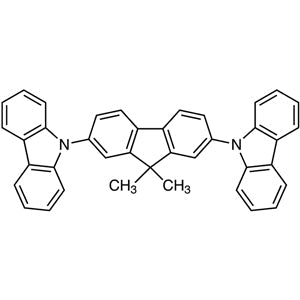
2,7-Bis(9H-carbazol-9-yl)-9,9-dimethylfluorene is a complex organic compound widely used in laboratory settings for the synthesis of heterocyclic compounds and complex molecular structures. As a building block in organic chemistry, it plays a crucial role in the development of advanced materials and functional molecules. This compound is particularly valued for its ability to participate in various chemical reactions, enabling the creation of compounds with unique optical and electronic properties. Its versatility makes it an essential tool for researchers working on innovative material development and molecular design.
The compound's unique structure, featuring carbazole groups at both ends of a fluorene core, gives it distinct electronic and optical characteristics. These properties make it highly suitable for applications requiring stable molecular frameworks and tunable reactivity. The presence of carbazole groups enhances its ability to interact with other molecules, making it a preferred choice for synthetic chemists. Its controlled reactivity allows for precise manipulation in reaction conditions, which is essential in advanced chemical synthesis.
In Indonesian laboratories, this compound is commonly used in organic chemistry, materials science, and information technology research. Researchers in academic and research institutions frequently utilize it for experiments aimed at developing new materials or understanding reaction mechanisms. Its role in creating functional materials such as OLEDs and sensors underscores its importance in modern scientific research.
TCI brochures (PDF)
- Carbazoles 2025-06-27 · p. 6
- Fluorenes and Fluorenones 2026-04-15 · p. 4
- Building Blocks for Organic Semiconductor 2026-03-24 · p. 18
Related TCI products
- TCI D5567 894791-43-6 N,9-Diphenyl-9H-carbazol-3-amine
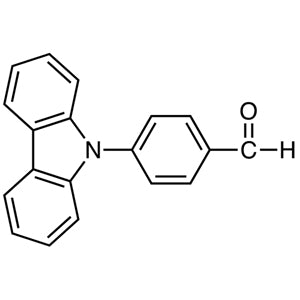
- TCI C3481 110677-45-7 4-(9H-Carbazol-9-yl)benzaldehyde
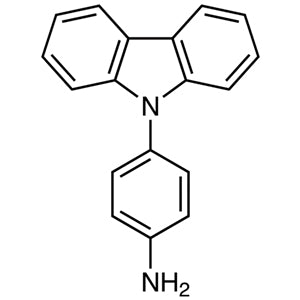
- TCI C3082 52708-37-9 4-(9H-Carbazol-9-yl)aniline
- TCI C2967 864377-33-3 3-(9H-Carbazol-9-yl)phenylboronic Acid (contains varying amounts of Anhydride)
- TCI C2926 419536-33-7 4-(9H-Carbazol-9-yl)phenylboronic Acid (contains varying amounts of Anhydride)
- TCI D4981 866100-16-5 9-(9,9-Dimethylfluoren-2-yl)-9H-carbazole
- Organic synthesis for creating heterocyclic compounds and complex molecular structures due to its versatile reactivity and structural stability.
- Development of organic electronic materials such as OLEDs and sensors because of its unique optical and electronic properties.
- Research in materials science for designing new functional materials with tailored properties through chemical modifications.
- Investigation of reaction mechanisms in organic chemistry due to its predictable and controllable reactivity in various synthetic pathways.
- Exploration of advanced material applications in information technology research for creating high-performance electronic components.
| Brand | TCI |
|---|---|
| CAS number | 226958-06-1 |
| Molecular formula | — |
| Purity | — |
| Category | Chemistry > Building Blocks > Heterocyclic Building Blocks |
| Pack sizes | Available in standard laboratory quantities as per supplier specifications |
| Physical form | Solid, typically in crystalline or powder form |
| Storage | Store in a cool, dry place away from light and moisture |
This compound should be stored in a cool, dry place, away from direct light and moisture to maintain its stability and prevent degradation. It is recommended to use airtight containers made of materials such as glass or polyethylene to minimize exposure to air and humidity. Due to its chemical nature, it should be handled with appropriate personal protective equipment, including gloves and safety goggles, to ensure laboratory safety. Proper ventilation is also important when working with this compound to avoid inhalation of vapors. Always follow standard laboratory safety protocols to prevent accidental exposure and ensure safe handling procedures are followed.
—
Produk Terkait
-
N,9-Diphenyl-9H-carbazol-3-amine TCI D5567
Regular price From Rp 2.411.850,00Regular priceRp 1.702.050,00Sale price From Rp 2.411.850,00 -
4-(9H-Carbazol-9-yl)benzaldehyde TCI C3481
Regular price From Rp 3.207.750,00Regular priceRp 2.258.550,00Sale price From Rp 3.207.750,00 -
4-(9H-Carbazol-9-yl)aniline TCI C3082
Regular price Rp 10.865.400,00Regular priceRp 7.613.550,00Sale price Rp 10.865.400,00 -
3-(9H-Carbazol-9-yl)phenylboronicAcid(containsvaryingamountsofAnhydride) TCI C2967
Regular price From Rp 1.298.850,00Regular priceRp 924.000,00Sale price From Rp 1.298.850,00 -
4-(9H-Carbazol-9-yl)phenylboronicAcid(containsvaryingamountsofAnhydride) TCI C2926
Regular price From Rp 1.538.250,00Regular priceRp 1.090.950,00Sale price From Rp 1.538.250,00 -
9-(9,9-Dimethylfluoren-2-yl)-9H-carbazole TCI D4981
Regular price From Rp 3.498.600,00Regular priceRp 2.462.250,00Sale price From Rp 3.498.600,00 -
[9-(Naphthalen-2-yl)-9H-carbazol-3-yl]boronicAcid(containsvaryingamountsofAnhydride) TCI N1098
Regular price Rp 4.081.350,00Regular priceRp 2.869.650,00Sale price Rp 4.081.350,00 -
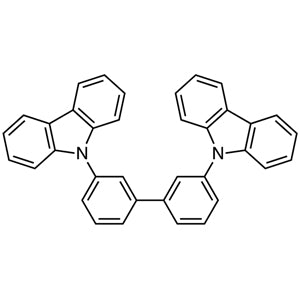
3,3'-Di(9H-carbazol-9-yl)-1,1'-biphenyl(purifiedbysublimation) TCI D5594
Regular price From Rp 2.702.700,00Regular priceRp 1.905.750,00Sale price From Rp 2.702.700,00