3-Butynoic Acid is a chemical compound widely utilized in various chemical and biochemical experiments within laboratory settings. As a key component in Click Chemistry, it plays a vital role in molecular synthesis due to its unique reactivity and specificity. This compound is particularly valuable in conjugation chemistry applications, where precise and efficient chemical reactions are essential. Its utility extends to the development of complex molecules, especially in pharmaceutical and biotechnology research.
The chemical properties of 3-Butynoic Acid, including its alkyne functional group, make it a preferred choice for researchers. The presence of the alkyne group enables rapid and specific reactions, such as azide-alkyne cycloaddition, which is fundamental in Click Chemistry. This reactivity, combined with its stability under certain conditions, allows for reliable experimental outcomes. Its molecular structure also supports versatility in various synthetic pathways, making it a staple in modern chemical research.
In Indonesian laboratories, 3-Butynoic Acid is commonly used in chemical, biochemical, and pharmaceutical studies. Its role in facilitating specific chemical reactions and its compatibility with Click Chemistry methodologies make it an essential reagent. Researchers in Indonesia rely on this compound for its efficiency and reliability in experimental processes, contributing to advancements in scientific research and innovation.
TCI brochures (PDF)
- Click Chemistry 2026-09-08 · p. 14
- Click Chemistry Reactions: 3-Butynoic Acid is ideal for Click Chemistry due to its alkyne functionality, enabling efficient and specific molecular synthesis.
- Conjugation Chemistry Studies: Its reactivity supports the development of conjugated molecules, crucial in bioconjugation and drug delivery systems.
- Pharmaceutical Research: The compound is used in the synthesis of complex pharmaceutical compounds, aiding in drug development and modification.
- Biochemical Experiments: It plays a role in biochemical assays where specific chemical interactions are required for accurate results.
- Synthetic Organic Chemistry: Its versatility makes it a valuable reagent in the creation of diverse organic compounds for research purposes.
| Brand | TCI |
|---|---|
| CAS number | 2345-51-9 |
| Molecular formula | — |
| Purity | — |
| Category | Chemistry > Chemical Biology > Conjugation Chemistry/Click Chemistry |
| Pack sizes | Available in various quantities as per supplier specifications |
| Physical form | Solid |
| Storage | Store in a cool, dry place away from light and moisture |
3-Butynoic Acid should be stored in a cool, dry place, away from direct light and moisture to maintain its chemical integrity. It is recommended to use airtight containers to prevent exposure to air and humidity, which could affect its stability. Proper labeling of storage containers is essential for safety and traceability. In laboratory settings, it is important to handle the compound with appropriate personal protective equipment, such as gloves and safety goggles, to minimize exposure. While it is generally stable under normal storage conditions, it should be kept away from incompatible substances to avoid any potential chemical reactions. Regular inspection of storage conditions ensures the compound remains suitable for use in experiments.
—
Product Categories
- Chemical BiologyConjugation Chemistry/Click ChemistryTerminal Alkynes [Conjugation Chemistry/Click Chemistry]
- Chemical BiologyLinkers and CrosslinkersHeterobifunctional Cross-Linkers
- Chemical BiologyBioconjugationHeterobifunctional Cross-Linkers
- Pharmaceutical Development and Drug Discovery Research ReagentsLinkers and CrosslinkersHeterobifunctional Cross-Linkers
- Biochemicals and ReagentsBioconjugationHeterobifunctional Cross-Linkers
- Pharmaceutical Development and Drug Discovery ResearchBioconjugationHeterobifunctional Cross-Linkers
- Pharmaceutical Development and Drug Discovery ResearchLinkers and CrosslinkersHeterobifunctional Cross-Linkers
- Pharmaceutical Development and Drug Discovery ResearchConjugation Chemistry/Click ChemistryTerminal Alkynes [Conjugation Chemistry/Click Chemistry]
Produk Terkait
-
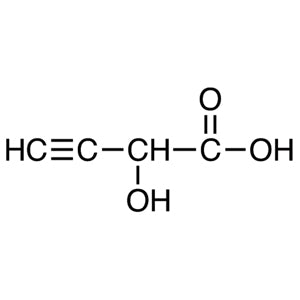
2-Hydroxy-3-butynoicAcid TCI H0905
Regular price From Rp 4.001.550,00Regular priceRp 2.814.000,00Sale price From Rp 4.001.550,00 -
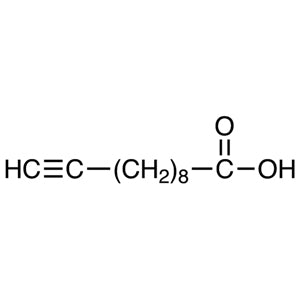
10-UndecynoicAcid TCI U0054
Regular price From Rp 1.060.500,00Regular priceRp 757.050,00Sale price From Rp 1.060.500,00 -
TriethyleneGlycolMono(2-propynyl)Ether TCI T3114
Regular price From Rp 2.464.350,00Regular priceRp 1.738.800,00Sale price From Rp 2.464.350,00 -
4-PentynoicAcid TCI P2341
Regular price From Rp 1.590.750,00Regular priceRp 1.127.700,00Sale price From Rp 1.590.750,00 -
Propargyl-PEG5-NHSEster TCI P2283
Regular price Rp 4.266.150,00Regular priceRp 2.998.800,00Sale price Rp 4.266.150,00 -
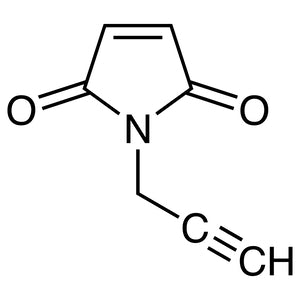
N-Propargylmaleimide TCI P2139
Regular price From Rp 2.147.250,00Regular priceRp 1.517.250,00Sale price From Rp 2.147.250,00 -
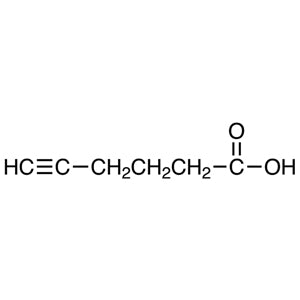
5-HexynoicAcid TCI H0882
Regular price From Rp 2.199.750,00Regular priceRp 1.554.000,00Sale price From Rp 2.199.750,00 -
GlycidylPropargylEther TCI G0445
Regular price From Rp 980.700,00Regular priceRp 685.650,00Sale price From Rp 980.700,00