TCI H0905 2-Hydroxy-3-butynoic Acid is a short-chain α-hydroxy acid that carries a terminal alkyne group at the third position. The combination of a carboxylic acid group, an alpha hydroxyl, and a terminal triple bond within such a small molecule is unusual, and it is precisely that combination that makes the compound a high-value reagent. In the laboratory it is widely recognised as a substrate used in enzymology research, particularly for studying α-hydroxy acid oxidising enzymes, and equally as a synthetic starting material that provides a handle for alkyne chemistry.
The most notable property of this compound is its behaviour as a mechanism-based substrate for flavin enzymes that oxidise α-hydroxy acids, such as lactate oxidase and other hydroxy acid oxidases. When the enzyme processes the α-hydroxy group, the adjacent alkyne group can be activated into a reactive species that binds the cofactor covalently, so the enzyme is specifically inhibited. This property is what makes the material a highly informative tool for probing enzyme mechanism. In addition, its terminal alkyne remains available for click chemistry and cross-coupling, while the acid group can be esterified or otherwise derivatised.
In Indonesian laboratories, this reagent is typically found in university and institutional research settings where enzymology, biochemistry, and synthetic organic chemistry work is carried out. It is generally ordered in small research quantities for mechanistic studies of flavin-dependent oxidases, for the preparation of alkyne-bearing intermediates, and for method development work. Because it is a specialist building block rather than a bulk chemical, it is usually purchased per project rather than held as routine stock.
TCI brochures (PDF)
- Click Chemistry 2026-09-08 · p. 13
Related TCI products
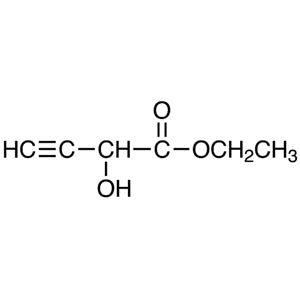
- TCI H0823 18418-08-1 Ethyl 2-Hydroxy-3-butynoate
- TCI B4969 2345-51-9 3-Butynoic Acid
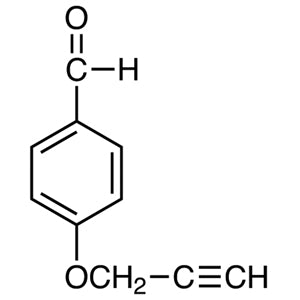
- TCI P2339 5651-86-5 4-(Propargyloxy)benzaldehyde
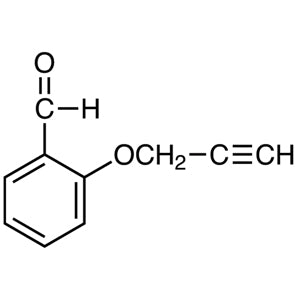
- TCI P2338 29978-83-4 2-(Propargyloxy)benzaldehyde
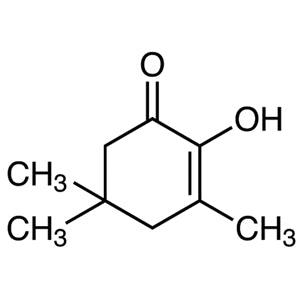
- TCI T2723 4883-60-7 2-Hydroxy-3,5,5-trimethyl-2-cyclohexen-1-one
- TCI B4681 2973-59-3 2-Bromo-5-hydroxy-4-methoxybenzaldehyde
- Mechanistic enzymology of flavin oxidases — the compound acts as a mechanism-based substrate, allowing researchers to observe covalent cofactor modification and specific inhibition during catalytic turnover.
- Study of α-hydroxy acid oxidising enzymes such as lactate oxidase — its α-hydroxy acid core is recognised by the active site, making it a direct and informative probe of substrate processing.
- Click chemistry conjugation work — the terminal alkyne remains chemically available after the acid and hydroxyl functions are used, supporting azide–alkyne coupling to labels or carriers.
- Synthetic building block preparation — the carboxylic acid can be esterified or otherwise derivatised while the triple bond is retained, giving a convenient handle for further elaboration.
- Cross-coupling reaction development — the terminal alkyne participates in standard alkyne cross-coupling chemistry, so the molecule serves as a compact, multifunctional starting point for new scaffolds.
| Brand | TCI |
|---|---|
| CAS number | 38628-65-8 |
| Molecular formula | — |
| Purity | — |
| Category | Chemistry > Building Blocks > Non-Heterocyclic Building Blocks |
| Pack sizes | available in research-scale pack sizes; please confirm the currently offered packs when ordering. |
| Physical form | — |
| Storage | store according to the manufacturer's stated conditions on the product label and certificate of analysis. |
- Product Code: H0905
Store the container tightly closed in a cool, dry, well-ventilated area, away from direct sunlight, heat sources, and incompatible materials such as strong oxidising agents and strong bases. Keep the material in its original supplier container, or in a chemically compatible sealed vessel that is clearly labelled with the product name and CAS number. Handle only in a fume hood using safety glasses, gloves, and a laboratory coat, and avoid generating dust or aerosols. Because the compound carries both an acid function and a reactive terminal alkyne, protect it from moisture and avoid prolonged exposure to air during weighing. Always consult the manufacturer's Safety Data Sheet before use and follow your institution's chemical waste disposal procedures.
—
Product Categories
- Building BlocksNon-Heterocyclic Building BlocksCarbonyl Compounds [Non-Heterocyclic Building Blocks]
- Building BlocksNon-Heterocyclic Building BlocksOxygen Compounds [Non-Heterocyclic Building Blocks]
- Chemical BiologyConjugation Chemistry/Click ChemistryTerminal Alkynes [Conjugation Chemistry/Click Chemistry]
Produk Terkait
-
Ethyl2-Hydroxy-3-butynoate TCI H0823
Regular price Rp 7.632.450,00Regular priceRp 5.352.900,00Sale price Rp 7.632.450,00 -
3-ButynoicAcid TCI B4969
Regular price Rp 2.147.250,00Regular priceRp 1.517.250,00Sale price Rp 2.147.250,00 -
4-(Propargyloxy)benzaldehyde TCI P2339
Regular price From Rp 1.458.450,00Regular priceRp 1.019.550,00Sale price From Rp 1.458.450,00 -
2-(Propargyloxy)benzaldehyde TCI P2338
Regular price From Rp 717.150,00Regular priceRp 500.850,00Sale price From Rp 717.150,00 -
2-Hydroxy-3,5,5-trimethyl-2-cyclohexen-1-one TCI T2723
Regular price Rp 1.273.650,00Regular priceRp 890.400,00Sale price Rp 1.273.650,00 -
2-Bromo-5-hydroxy-4-methoxybenzaldehyde TCI B4681
Regular price Rp 4.293.450,00Regular priceRp 3.001.950,00Sale price Rp 4.293.450,00 -
4-Bromo-3-hydroxy-2-naphthoicAcid TCI B3229
Regular price From Rp 2.227.050,00Regular priceRp 1.572.900,00Sale price From Rp 2.227.050,00 -
7-Bromo-3-hydroxy-2-naphthoicAcid TCI B3180
Regular price From Rp 822.150,00Regular priceRp 590.100,00Sale price From Rp 822.150,00