4-Pentynoic Acid is a short-chain carboxylic acid with five carbon atoms. It carries a terminal alkyne at the end opposite the carboxyl group. TCI lists it under Conjugation Chemistry/Click Chemistry. In the laboratory it serves as a simple linker for adding an alkyne "handle" to other molecules. The carboxyl group is linked to amines or alcohols, and the terminal alkyne is then available for click reactions with azide-bearing partners. This makes it a basic building block for modular conjugation work in chemical biology and materials research.
Researchers choose this compound because it is small and simple, and its two ends react in different ways. The carboxyl group is easy to activate as an NHS ester. It can also be coupled directly with carbodiimide reagents to form amides with proteins, peptides, polymers or amine-bearing surfaces. The terminal alkyne holds up under many reaction conditions, yet it reacts efficiently and selectively in copper-catalysed azide–alkyne cycloaddition. The short aliphatic chain keeps the two groups far enough apart without adding much molecular weight. Chemists can therefore attach a clickable group without greatly changing the size or behaviour of the parent molecule.
Chemical biology, biotechnology, polymer science and nanomaterials research groups in Indonesia increasingly use click chemistry to label biomolecules, modify surfaces and build functional materials. University laboratories, research institutes and industrial R&D teams use 4-Pentynoic Acid as a starting reagent to make alkyne-tagged intermediates for these workflows. Its simple structure and well-known reactivity suit both teaching laboratories that introduce conjugation chemistry and research groups working on more advanced bioconjugation and materials projects.
TCI brochures (PDF)
- Cross-linkers 2026-04-14 · p. 2
- Bioconjugation Reagents 2026-07-07 · p. 8
- Click Chemistry 2026-09-08 · p. 14
- Reagents for Biological Research 2025-03-11 · p. 29
Related TCI products
- Introducing alkyne handles onto amines: The carboxyl group can be activated or coupled with carbodiimides to form stable amides, which places a terminal alkyne on proteins, peptides or amine-functionalised molecules for later click reactions.
- Copper-catalysed azide–alkyne cycloaddition (CuAAC): The terminal alkyne reacts efficiently and selectively with azide-bearing partners, so it suits building triazole-linked conjugates under controlled click chemistry conditions.
- Preparing NHS-ester alkyne reagents: The carboxyl group converts readily into an NHS ester, giving an amine-reactive intermediate that researchers can use to label several different substrates with an alkyne group.
- Polymer and surface functionalisation: Coupling the acid to amine- or hydroxyl-bearing polymers and surfaces adds clickable sites that can later be decorated with azide-modified molecules for functional materials.
- Nanomaterial modification and linker design: Its short aliphatic chain gives a compact spacer between reactive groups, which helps when attaching ligands to nanoparticles without adding much molecular weight.
| Brand | TCI (product code P2341) |
|---|---|
| CAS number | 6089-09-4 |
| Molecular formula | — |
| Purity | — |
| Category | Chemistry > Chemical Biology > Conjugation Chemistry/Click Chemistry |
| Pack sizes | See the pack size options on this product page |
| Physical form | Check the product label and TCI documentation |
| Storage | Follow the storage conditions on the label and safety data sheet |
Keep 4-Pentynoic Acid in its original tightly closed container in a cool, dry, well-ventilated place, away from direct sunlight, heat and incompatible materials such as strong oxidising agents and strong bases. Always follow the storage conditions on the product label and the TCI safety data sheet. Handle the compound in a fume hood or well-ventilated area while wearing suitable personal protective equipment, including gloves, safety glasses and a laboratory coat. Avoid contact with skin and eyes and avoid breathing dust or vapour. Reseal the container promptly after use to protect it from moisture. Dispose of waste according to local regulations and institutional laboratory safety procedures.
—
Product Categories
- Chemical BiologyConjugation Chemistry/Click ChemistryCrosslinker Azides/Alkynes [Conjugation Chemistry/Click Chemistry]
- Chemical BiologyConjugation Chemistry/Click ChemistryTerminal Alkynes [Conjugation Chemistry/Click Chemistry]
- Chemical BiologyLinkers and CrosslinkersHeterobifunctional Cross-Linkers
- Chemical BiologyBioconjugationHeterobifunctional Cross-Linkers
- Pharmaceutical Development and Drug Discovery Research ReagentsLinkers and CrosslinkersHeterobifunctional Cross-Linkers
- Biochemicals and ReagentsBioconjugationHeterobifunctional Cross-Linkers
- Pharmaceutical Development and Drug Discovery ResearchBioconjugationHeterobifunctional Cross-Linkers
- Pharmaceutical Development and Drug Discovery ResearchLinkers and CrosslinkersHeterobifunctional Cross-Linkers
- Pharmaceutical Development and Drug Discovery ResearchConjugation Chemistry/Click ChemistryCrosslinker Azides/Alkynes [Conjugation Chemistry/Click Chemistry]
- Pharmaceutical Development and Drug Discovery ResearchConjugation Chemistry/Click ChemistryTerminal Alkynes [Conjugation Chemistry/Click Chemistry]
Produk Terkait
-
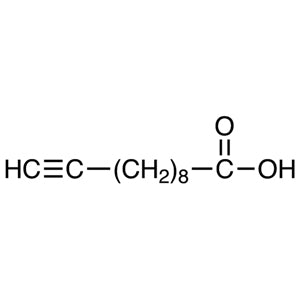
10-UndecynoicAcid TCI U0054
Regular price From Rp 1.060.500,00Regular priceRp 757.050,00Sale price From Rp 1.060.500,00 -
TriethyleneGlycolMono(2-propynyl)Ether TCI T3114
Regular price From Rp 2.464.350,00Regular priceRp 1.738.800,00Sale price From Rp 2.464.350,00 -
Propargyl-PEG5-NHSEster TCI P2283
Regular price Rp 4.266.150,00Regular priceRp 2.998.800,00Sale price Rp 4.266.150,00 -
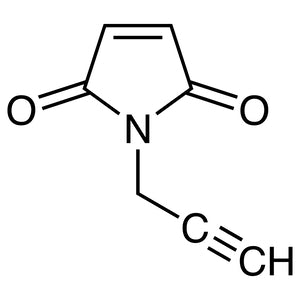
N-Propargylmaleimide TCI P2139
Regular price From Rp 2.147.250,00Regular priceRp 1.517.250,00Sale price From Rp 2.147.250,00 -
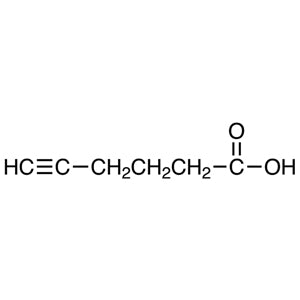
5-HexynoicAcid TCI H0882
Regular price From Rp 2.199.750,00Regular priceRp 1.554.000,00Sale price From Rp 2.199.750,00 -
DiethyleneGlycolMono(2-propyn-1-yl)Ether TCI D4580
Regular price Rp 4.559.100,00Regular priceRp 3.203.550,00Sale price Rp 4.559.100,00 -
2-Hexyl-4-pentynoicAcid TCI H0964
Regular price From Rp 6.122.550,00Regular priceRp 4.296.600,00Sale price From Rp 6.122.550,00 -
3-ButynoicAcid TCI B4969
Regular price Rp 2.147.250,00Regular priceRp 1.517.250,00Sale price Rp 2.147.250,00