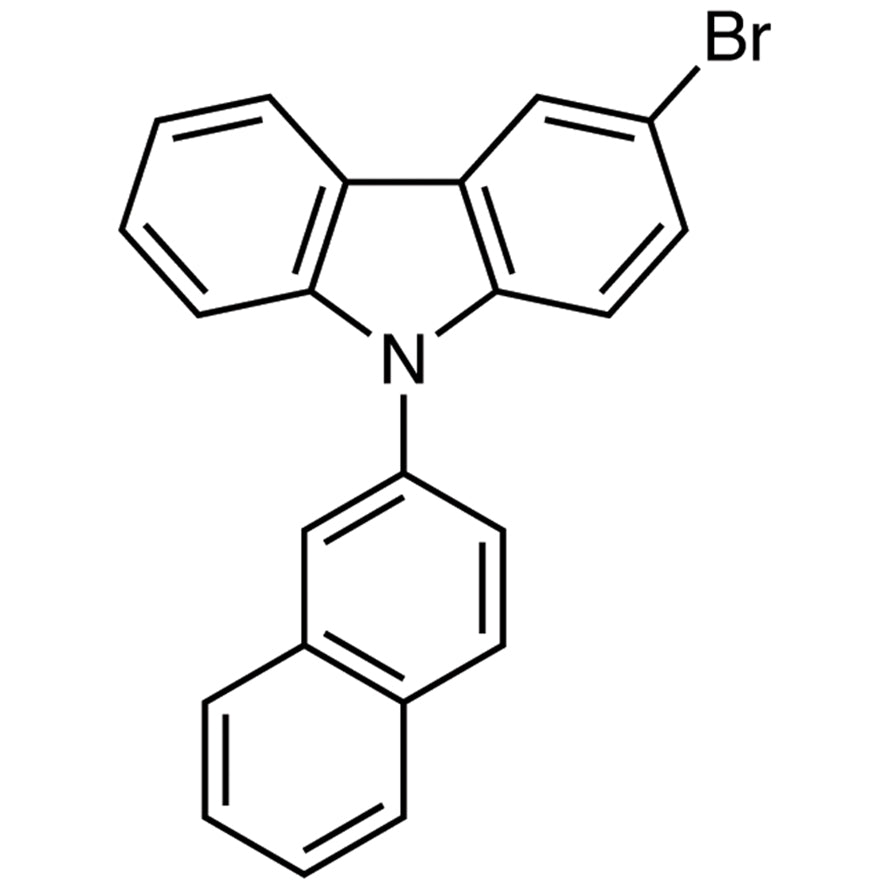
3-Bromo-9-(2-naphthyl)carbazole is an organic compound widely used in semiconductor and materials research. It serves as a foundational building block for the synthesis of complex molecules with specific molecular structures. This compound is essential in laboratories where researchers aim to develop advanced materials with tailored optical and electronic properties. Its versatility makes it a key component in the creation of novel materials for various technological applications.
The compound's unique chemical structure, combining a carbazole core with bromo and naphthyl groups, provides stability and controlled reactivity. These characteristics allow researchers to fine-tune the properties of the final material, making it ideal for applications requiring high efficiency and long-term stability. Its chemical stability and predictable behavior under various reaction conditions further enhance its appeal in material science research.
In Indonesian laboratories, 3-Bromo-9-(2-naphthyl)carbazole is commonly used in semiconductor material development and optoelectronic applications. Researchers in academic and research institutions rely on this compound for experiments involving light-emitting diodes (LEDs), solar cells, and other optoelectronic devices. Its availability in solid form and ease of processing make it a preferred choice for experimental work in material science.
TCI brochures (PDF)
- Carbazoles 2025-06-27 · p. 6
- Building Blocks for Organic Semiconductor 2026-03-24 · p. 18
Related TCI products
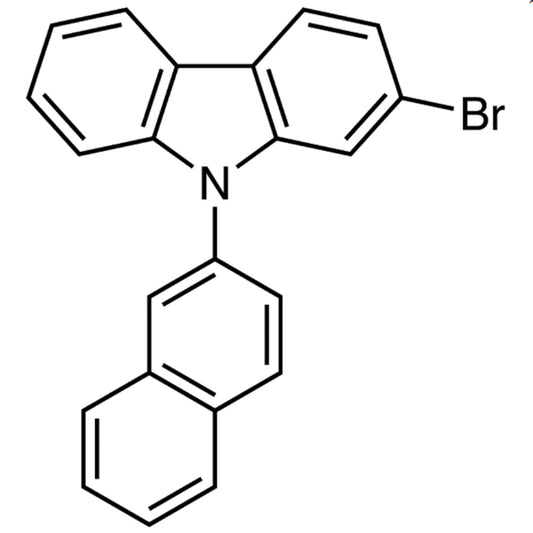
- TCI B5051 1427316-53-7 2-Bromo-9-(2-naphthyl)-9H-carbazole
- TCI B5050 934545-83-2 3-Bromo-9-(1-naphthyl)-9H-carbazole
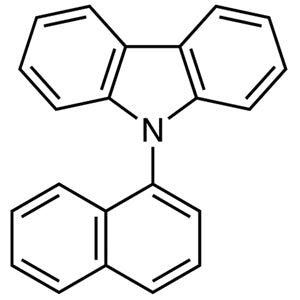
- TCI N1012 22034-43-1 9-(1-Naphthyl)carbazole
- TCI B5502 750573-24-1 9,9'-(5-Bromo-1,3-phenylene)bis(9H-carbazole)
- TCI B5471 177775-87-0 9-Benzoyl-3-bromo-9H-carbazole
- TCI B5461 339576-55-5 9-Benzyl-3-bromo-9H-carbazole
- Semiconductor material development due to its optical and electronic properties suitable for advanced material synthesis.
- Optoelectronic device fabrication as it contributes to the creation of materials with high efficiency and stability.
- LED and solar cell research because of its role in enhancing light emission and energy conversion properties.
- Organic semiconductor synthesis as a key building block for complex molecular structures.
- Material characterization studies due to its well-defined chemical structure and predictable reactivity.
| Brand | TCI |
|---|---|
| CAS number | 934545-80-9 |
| Molecular formula | — |
| Purity | — |
| Category | Materials Science > Material Building Blocks > Small Molecule Semiconductor Building Blocks |
| Pack sizes | Available in standard laboratory quantities |
| Physical form | Solid |
| Storage | Store in a cool, dry place away from light and moisture |
This compound should be stored in a cool, dry environment, away from direct light and moisture to maintain its chemical integrity. It is recommended to use airtight containers made of materials that are chemically inert to prevent any unwanted reactions. In a laboratory setting, it is important to handle the compound with appropriate personal protective equipment to ensure safety. Proper ventilation should be maintained when working with the substance to minimize exposure. The compound is stable under normal storage conditions and does not require refrigeration unless specified otherwise. Always follow standard laboratory safety protocols when handling and storing this material.
—
Produk Terkait
-
2-Bromo-9-(2-naphthyl)-9H-carbazole TCI B5051
Regular price From Rp 875.700,00Regular priceRp 627.900,00Sale price From Rp 875.700,00 -
3-Bromo-9-(1-naphthyl)-9H-carbazole TCI B5050
Regular price From Rp 557.550,00Regular priceRp 405.300,00Sale price From Rp 557.550,00 -
9-(1-Naphthyl)carbazole TCI N1012
Regular price From Rp 900.900,00Regular priceRp 645.750,00Sale price From Rp 900.900,00 -
9,9'-(5-Bromo-1,3-phenylene)bis(9H-carbazole) TCI B5502
Regular price From Rp 2.835.000,00Regular priceRp 1.998.150,00Sale price From Rp 2.835.000,00 -
9-Benzoyl-3-bromo-9H-carbazole TCI B5471
Regular price Rp 1.934.100,00Regular priceRp 1.368.150,00Sale price Rp 1.934.100,00 -
9-Benzyl-3-bromo-9H-carbazole TCI B5461
Regular price From Rp 1.563.450,00Regular priceRp 1.108.800,00Sale price From Rp 1.563.450,00 -
9-Benzyl-2-bromo-9H-carbazole TCI B5460
Regular price From Rp 1.856.400,00Regular priceRp 1.313.550,00Sale price From Rp 1.856.400,00 -
9-(2'-Bromo-4-biphenylyl)carbazole TCI B5312
Regular price From Rp 1.008.000,00Regular priceRp 720.300,00Sale price From Rp 1.008.000,00