1,2-Benzenediboronic Acid Bis(pinacol) Ester is a versatile chemical compound widely used in organic reactions, particularly in the synthesis of heterocyclic compounds and boron-based molecules. This reagent plays a crucial role in modern synthetic chemistry due to its ability to participate in various reaction mechanisms. It is especially valuable in catalytic processes where controlled reactivity and selectivity are required. Its unique structure allows it to interact effectively with different ligands, making it an essential tool for chemists working in both academic and industrial settings.
The compound is known for its stability and reactivity, which make it a preferred choice in laboratory applications. It exhibits good solubility in organic solvents, enabling efficient use in reaction mixtures. Its stability under certain conditions ensures that it remains effective throughout the reaction process without premature decomposition. These properties make it ideal for use in complex synthetic pathways where precision and reliability are paramount. Additionally, its compatibility with a wide range of substrates enhances its utility in diverse chemical transformations.
In Indonesian laboratories, 1,2-Benzenediboronic Acid Bis(pinacol) Ester is commonly used in organic chemistry research, especially in the development of heterocyclic and boron-based compounds. It is also employed in inorganic material studies and catalytic research. Its availability in the local market makes it a relevant and practical choice for researchers seeking to advance their work in synthetic chemistry and related fields.
TCI brochures (PDF)
- Suzuki-Miyaura Cross Coupling Reaction 2025-12-01 · p. 17
- Boron Compounds 2025-10-07 · p. 15
Related TCI products
- TCI B5070 196212-27-8 1,3-Benzenediboronic Acid Bis(pinacol) Ester
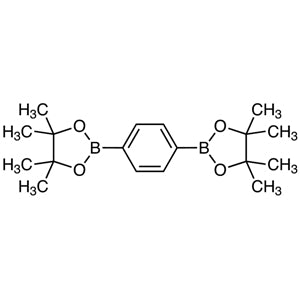
- TCI B4633 99770-93-1 1,4-Benzenediboronic Acid Bis(pinacol) Ester
- TCI B6050 5565-36-6 1,4-Benzenediboronic Acid Bis(neopentyl Glycol) Ester
- TCI D0691 76-09-5 Pinacol
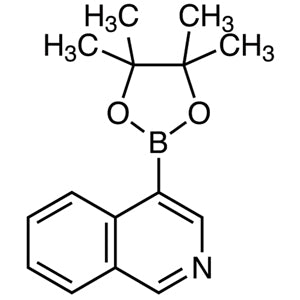
- TCI I0739 685103-98-4 4-(4,4,5,5-Tetramethyl-1,3,2-dioxaborolan-2-yl)isoquinoline
- TCI T4407 1609484-75-4 4,4,5,5-Tetramethyl-2-(spiro[fluorene-9,9'-xanthen]-4-yl)-1,3,2-dioxaborolane
- Used in Suzuki-Miyaura cross-coupling reactions due to its ability to facilitate efficient carbon-carbon bond formation.
- Applied in the synthesis of heterocyclic compounds because of its reactivity with various aromatic substrates.
- Employed in boron-based compound synthesis due to its structural compatibility with boronic acid derivatives.
- Utilized in catalytic processes for its stability and compatibility with transition metal catalysts.
- Integrated into material science research for the development of novel inorganic-organic hybrid materials.
| Brand | TCI |
|---|---|
| CAS number | 269410-07-3 |
| Molecular formula | — |
| Purity | — |
| Category | Chemistry > Organometallic Reagents > Organoboron [Organometallic Reagents] |
| Pack sizes | Available in various quantities as per supplier specifications |
| Physical form | Solid or liquid, depending on the specific formulation |
| Storage | Store in a cool, dry place away from moisture and direct sunlight |
This compound should be stored in a cool, dry environment to maintain its stability and reactivity. It is recommended to use airtight containers to prevent exposure to moisture and air, which could lead to degradation. Proper labeling of storage containers is essential to ensure safe handling and prevent accidental use. Laboratory personnel should wear appropriate personal protective equipment, such as gloves and safety goggles, when handling this material. It should be kept away from incompatible substances to avoid any potential chemical interactions. Regular monitoring of storage conditions ensures that the compound remains in optimal condition for use in research applications.
—
Produk Terkait
-
1,3-BenzenediboronicAcidBis(pinacol)Ester TCI B5070
Regular price Rp 3.445.050,00Regular priceRp 2.424.450,00Sale price Rp 3.445.050,00 -
1,4-BenzenediboronicAcidBis(pinacol)Ester TCI B4633
Regular price From Rp 3.260.250,00Regular priceRp 2.295.300,00Sale price From Rp 3.260.250,00 -
1,4-BenzenediboronicAcidBis(neopentylGlycol)Ester TCI B6050
Regular price Rp 2.121.000,00Regular priceRp 1.498.350,00Sale price Rp 2.121.000,00 -
Pinacol TCI D0691
Regular price From Rp 1.405.950,00Regular priceRp 998.550,00Sale price From Rp 1.405.950,00 -
4-(4,4,5,5-Tetramethyl-1,3,2-dioxaborolan-2-yl)isoquinoline TCI I0739
Regular price From Rp 2.439.150,00Regular priceRp 1.720.950,00Sale price From Rp 2.439.150,00 -
4,4,5,5-Tetramethyl-2-(spiro[fluorene-9,9'-xanthen]-4-yl)-1,3,2-dioxaborolane TCI T4407
Regular price From Rp 1.008.000,00Regular priceRp 720.300,00Sale price From Rp 1.008.000,00 -
1-(4,4,5,5-Tetramethyl-1,3,2-dioxaborolan-2-yl)-9H-carbazole TCI T4406
Regular price Rp 3.074.400,00Regular priceRp 2.165.100,00Sale price Rp 3.074.400,00 -
4-(4,4,5,5-Tetramethyl-1,3,2-dioxaborolan-2-yl)-1H-pyrrolo[2,3-b]pyridine TCI T4400
Regular price From Rp 3.683.400,00Regular priceRp 2.591.400,00Sale price From Rp 3.683.400,00