1,3-Benzenediboronic Acid Bis(pinacol) Ester is a key organoboron compound widely used in chemical reactions, particularly in organic synthesis. This reagent plays a crucial role in coupling reactions such as the Suzuki-Miyaura reaction, which is essential for the formation of aromatic and heterocyclic compounds. Its unique molecular structure enables high reactivity under specific conditions, making it a valuable tool for chemists working in both academic and industrial settings. The compound is commonly found in laboratories where complex molecule synthesis and advanced organic reactions are required.
The compound is valued for its chemical stability under controlled conditions, as well as its sensitivity to moisture and oxidation. Its molecular composition, which includes boron and pinacol ester groups, contributes to its reactivity and efficiency in various synthetic processes. These properties make it an ideal reagent for reactions that require the presence of boron atoms. Its versatility and effectiveness have made it a preferred choice among researchers in Indonesia and beyond.
In Indonesian laboratories, this compound is frequently used in pure chemical research and pharmaceutical development. It is a staple in higher education institutions and research organizations that focus on organic chemistry and molecular synthesis. Its role in advancing scientific knowledge and industrial applications is significant, making it an essential component of many laboratory workflows.
TCI brochures (PDF)
- Boron Compounds 2025-10-07 · p. 15
- Building Blocks for Organic Semiconductor 2026-03-24 · p. 39
Related TCI products
- TCI B5069 269410-07-3 1,2-Benzenediboronic Acid Bis(pinacol) Ester
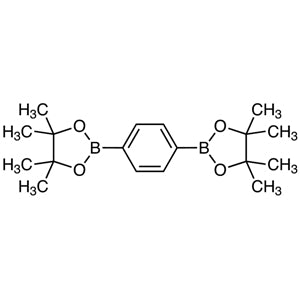
- TCI B4633 99770-93-1 1,4-Benzenediboronic Acid Bis(pinacol) Ester
- TCI B6050 5565-36-6 1,4-Benzenediboronic Acid Bis(neopentyl Glycol) Ester
- TCI B5470 1467776-41-5 5,10-Bis(4,4,5,5-tetramethyl-1,3,2-dioxaborolan-2-yl)naphtho[1,2-c:5,6-c']bis([1,2,5]thiadiazole)
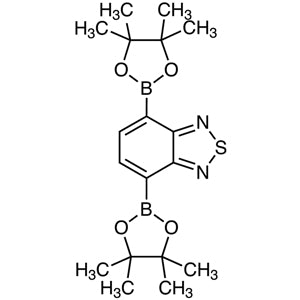
- TCI B3573 934365-16-9 4,7-Bis(4,4,5,5-tetramethyl-1,3,2-dioxaborolan-2-yl)-2,1,3-benzothiadiazole
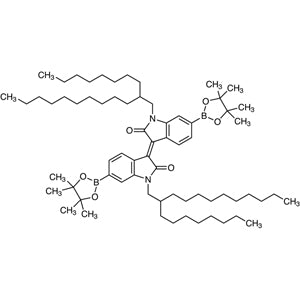
- TCI B5994 1563062-80-5 N,N'-Bis(2-octyldodecyl)-6,6'-bis(4,4,5,5-tetramethyl-1,3,2-dioxaborolan-2-yl)isoindigo
- Organic synthesis applications benefit from its reactivity in coupling reactions, enabling efficient formation of aromatic and heterocyclic compounds.
- Pharmaceutical research utilizes this compound for the development of complex molecules, supporting drug discovery and synthesis processes.
- Academic research relies on its stability and reactivity for exploring new synthetic pathways and reaction mechanisms.
- Industrial chemical processes incorporate it for the production of specialty chemicals and advanced materials.
- Analytical chemistry uses it as a reference standard for identifying and quantifying boronic acid derivatives in various samples.
| Brand | TCI |
|---|---|
| CAS number | 196212-27-8 |
| Molecular formula | — |
| Purity | — |
| Category | Chemistry > Organometallic Reagents > Organoboron [Organometallic Reagents] |
| Pack sizes | Available in various quantities as per supplier specifications |
| Physical form | Solid or liquid, depending on formulation |
| Storage | Requires storage in a dry, cool, and well-ventilated area away from moisture and oxidizing agents |
This compound should be stored in a dry, cool, and well-ventilated environment to prevent moisture exposure and oxidation. It is recommended to use airtight containers made of materials such as glass or polyethylene to maintain its chemical integrity. Due to its sensitivity, it should be kept away from strong oxidizing agents and moisture sources. Proper labeling and storage conditions are essential to ensure safety and maintain the compound's effectiveness. Laboratory personnel should always wear appropriate personal protective equipment when handling this material to minimize potential exposure risks.
—
Produk Terkait
-
1,2-BenzenediboronicAcidBis(pinacol)Ester TCI B5069
Regular price From Rp 3.975.300,00Regular priceRp 2.795.100,00Sale price From Rp 3.975.300,00 -
1,4-BenzenediboronicAcidBis(pinacol)Ester TCI B4633
Regular price From Rp 3.260.250,00Regular priceRp 2.295.300,00Sale price From Rp 3.260.250,00 -
1,4-BenzenediboronicAcidBis(neopentylGlycol)Ester TCI B6050
Regular price Rp 2.121.000,00Regular priceRp 1.498.350,00Sale price Rp 2.121.000,00 -
5,10-Bis(4,4,5,5-tetramethyl-1,3,2-dioxaborolan-2-yl)naphtho[1,2-c:5,6-c']bis([1,2,5]thiadiazole) TCI B5470
Regular price Rp 7.737.450,00Regular priceRp 5.426.400,00Sale price Rp 7.737.450,00 -
4,7-Bis(4,4,5,5-tetramethyl-1,3,2-dioxaborolan-2-yl)-2,1,3-benzothiadiazole TCI B3573
Regular price From Rp 5.855.850,00Regular priceRp 4.110.750,00Sale price From Rp 5.855.850,00 -
N,N'-Bis(2-octyldodecyl)-6,6'-bis(4,4,5,5-tetramethyl-1,3,2-dioxaborolan-2-yl)isoindigo TCI B5994
Regular price Rp 5.512.500,00Regular priceRp 3.870.300,00Sale price Rp 5.512.500,00 -
N,N'-Bis(2-ethylhexyl)-6,6'-bis(4,4,5,5-tetramethyl-1,3,2-dioxaborolan-2-yl)isoindigo TCI B5993
Regular price Rp 5.883.150,00Regular priceRp 4.129.650,00Sale price Rp 5.883.150,00 -
TCI B5774 5,10-Bis(4,4,5,5-tetramethyl-1,3,2-dioxaborolan-2-yl)naphtho[1,2-c:5,6-c']bis([1,2,5]oxadiazole)
Regular price Rp 10.307.850,00Regular priceRp 7.224.000,00Sale price Rp 10.307.850,00